
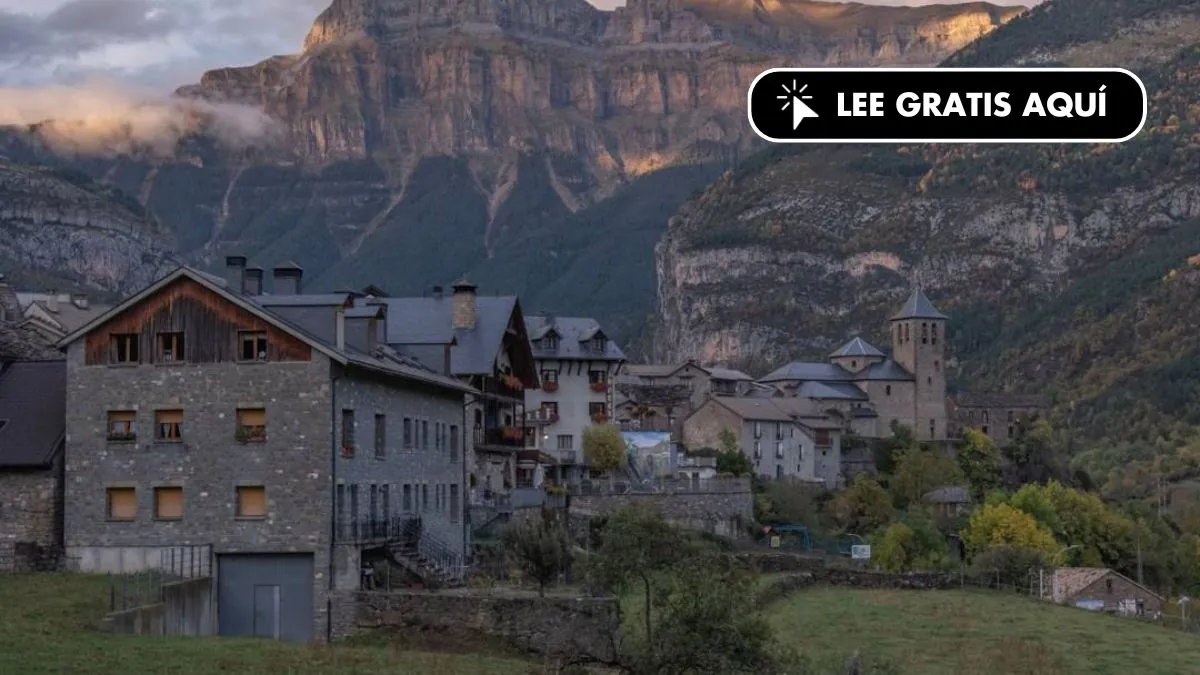
With fewer than 500 inhabitants, Torla-Ordesa is a tiny corner of the Aragonese Pyrenees that delights visitors with its charm and an atmosphere that many compare to German towns during Christmas. Nestled at the entrance to Ordesa y Monte Perdido National Park and just a short distance from the French border, Torla blends history, nature, and traditions in a setting of unmatched beauty.
The Ara River, with its cold, crystal-clear waters, winds through the valley providing a refreshing breath that contrasts with the warmth of home in winter. Above the village rises Mondarruego, known as the “red mountain” for the hue it takes at sunset. Torla’s architecture is another of its major attractions: stone and slate houses that preserve the traditional style of the Alto Aragón and emblematic buildings such as the Church of San Salvador or the remains of the medieval castle, today converted into an Ethnological Museum.
History and tradition on every street
The origin of Torla is even reflected in its name, derived from the word “torre,” which recalls its defensive role against Gaulish invaders. For centuries, its geographic isolation favored the preservation of local traditions and folklore. In the 16th century, its military deeds earned it the title of villa, and subsequently, its development was linked to trade and cross-border smuggling. Although many noble houses were rebuilt after various wars, they still retain their historical essence and medieval character.
Pasear por Torla es sumergirse en su pasado. Las espantabrujas, chimeneas coronadas con piedras cónicas para ahuyentar brujas, y las tizoneras, salientes de piedra que indicaban dónde encender el fuego, muestran el ingenio de generaciones pasadas. La Plaza Mayor, rodeada de casonas solariegas y presidida por la casa consistorial, sigue siendo hoy el corazón social del pueblo, un espacio donde la vida cotidiana y la historia se entrelazan.
What to See in Torla?
Torla, the gateway to Ordesa y Monte Perdido National Park, blends the historical richness of its heritage with the majesty of its natural landscapes. Every corner of the village invites you to trace its past and step into the grandeur of the Pyrenees.
Church of San Salvador and Crypt of San Jorge
Located on a rocky outcrop with Mondarruego in the background, the Church of San Salvador, built in the 16th century, is one of Torla’s emblems. Its architecture reflects both the religiosity and the defensive function of the era. Inside lies the Ethnological Museum and the Crypt of San Jorge, which preserves medieval murals of great artistic value. The church has become one of the most recognizable images of the town, appearing on postcards and photos by all visitors.
@manty_vlogs Torla Huesca, puerta de Ordesa y Monte Perdido Un día cualquiera con lluvia y en la lejanía la tormenta se deja sentir. El olor a tierra mojada es muy característico algo único. Torla, siempre Torla #montaña #mountain #lluvia #autumnvibes #lospirineos ♬ sonido original – Manty_vlogs
Gateway to Ordesa and Monte Perdido
Torla is also the ideal starting point for exploring Ordesa y Monte Perdido National Park, designated a Biosphere Reserve and a World Heritage Site. Its 15,000 hectares offer stunning landscapes, with peaks exceeding 3,000 meters, lush forests, and the Ara River carving through deep glacial valleys. From the village, hiking routes are available for all levels, from the easy walk to the Cola de Caballo waterfall to the demanding ascent to Monte Perdido, which takes about 12 hours round trip.
Pyrenean gastronomy in Torla
Despite its size, Torla offers a surprisingly rich culinary scene. La Cocinilla, housed in an old manor, serves traditional dishes such as veal from the Broto Valley, while Restaurante L’Atalaya presents oven-roasted lamb and pears in wine with cinnamon in a family-friendly setting. The combination of good cuisine, history, and dreamlike landscapes makes the village an irresistible destination for any visitor.
