
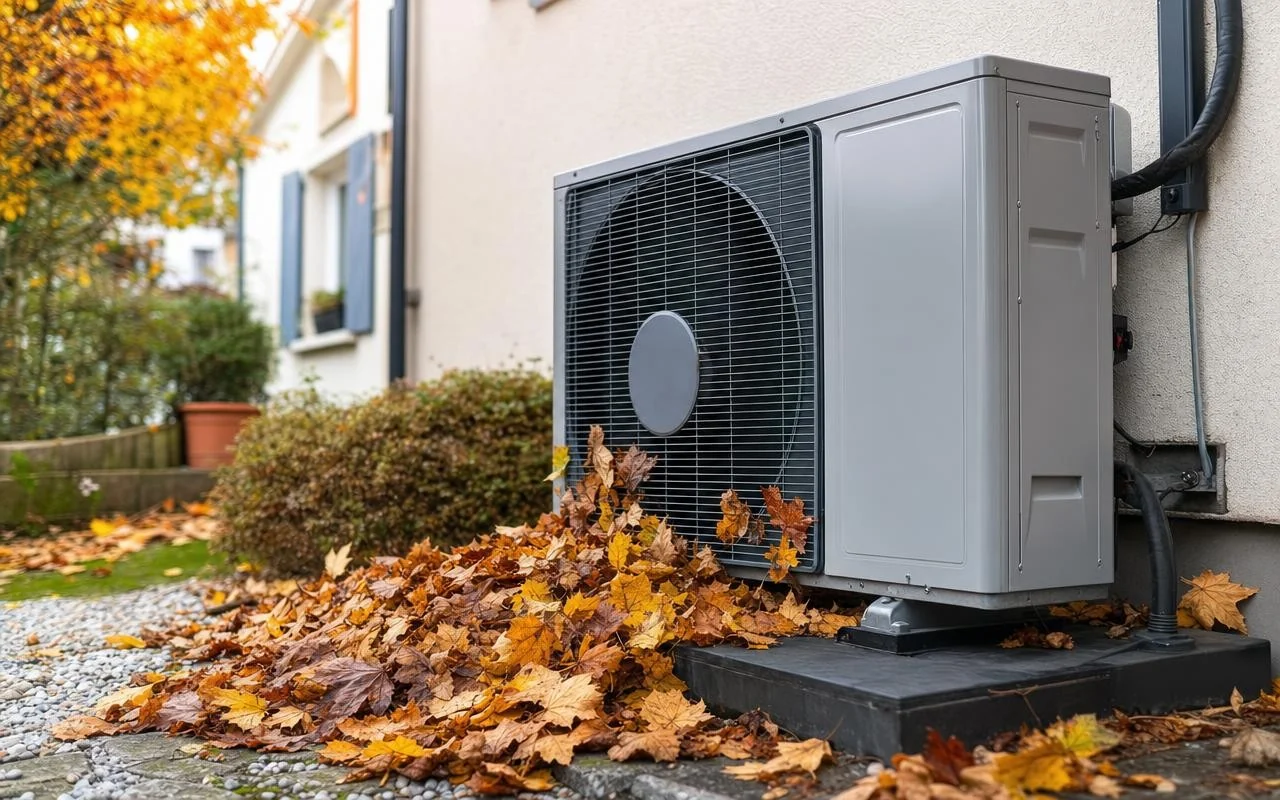
In the wake of a gusty wind, people often inspect the roof, the fence, and sometimes the gutters. The heat pump starts up, the fan spins, air flows through the rooms: everything seems normal. Yet, around the outdoor unit, a mat of dead leaves, twigs, and dust may have formed within just a few hours. This small, discreet pile is already enough to disrupt the heating system’s operation.
For an aero-thermal heat pump, the outdoor air is the primary fuel. As soon as debris accumulates around the unit, the machine keeps running but works under less favorable conditions, exerting more effort to achieve the same result. The ADEME (Agence de la transition écologique) recommends keeping the outdoor unit clear and regularly cleaned. The question remains why these leaves hinder so much, and what actions to take after each windy episode.
Why dead leaves around the outdoor unit of the heat pump pose a problem
The principle behind an outdoor heat pump unit is straightforward: a fan draws in air, passes it over an exchanger, and the machine captures the heat. For this exchange to occur properly, air must circulate freely across the entire surface of the fins. If dead leaves press against this surface, the thermal transfer is reduced and the pump draws less heat from the air.
As a result, the compressor must run longer to reach the requested temperature. Electrical consumption rises, wear on components increases, and there is no immediate warning on the control panel. Over time, this degraded operation can precipitate a breakdown in the middle of winter. To prevent this scenario, the ADEME advises keeping the area around the unit completely clear.
Signs that your heat pump is starved of air due to dead leaves
In everyday life, one often notices a pile of leaves stuck to the grille. Yet, a simple ring of debris at the base of the outdoor unit is enough to hinder air circulation. Leaves can also become wedged between the fins of the exchanger or behind the fan. After a gusty autumn wind, these zones deserve careful inspection.
A blockage sometimes manifests as longer-than-usual heating cycles. The air emanating from the indoor units seems less warm, and rooms take longer to reach the setpoint. You may also hear the fan strain slightly or vibrate if a leaf is trapped. In winter, abnormally thick frost on the outdoor exchanger should also raise an alert.
The right reflexes to clear the outdoor unit after a wind gust
Following each windy episode, a quick survey of the outdoor heat pump is enough. Check the ground, the rear, and the sides and, if needed, switch off the power before approaching the fan. Manufacturers like Daikin recommend keeping about 30 to 50 centimeters of free space around the unit. The installation guidelines, including NF DTU 65-16, aim for the same effect by ensuring a large air volume is available.
For routine maintenance, the steps remain simple and quick to perform yourself. It is best to carefully remove debris by hand, with gloves, rather than using a high-pressure jet that could bend the fins.
• pick up leaves, twigs, and debris around, beneath the outdoor unit and on the grilles;
• verify that no furniture, stack of wood, or flower pot is blocking the sides;
• have a professional conduct a full cleaning every two years. By making this a habit after each gust of wind, the heat pump maintains its performance and curbs its consumption throughout the heating season.
