
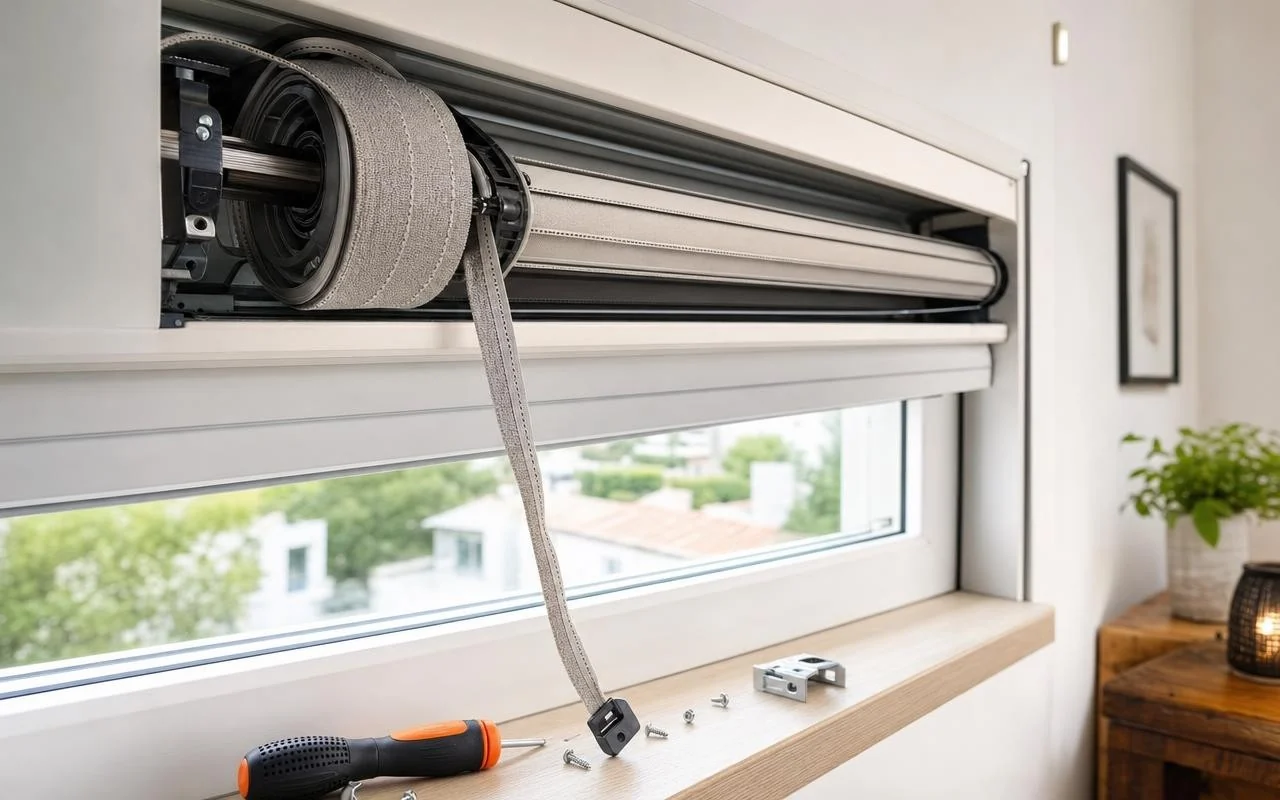
When the strap of a roller shutter snaps suddenly, often in the early morning or over a weekend, panic sets in quickly. The shutter gets stuck, the room goes dark, and you can already picture the emergency repair bill. The specialists in closures, however, temper expectations: “Replacing the roller shutter strap in five minutes is far easier than it seems,” provided the shutter is manual and accessible.
A handy neighbor sums up the situation in an online video: “The shutter cord broke? Don’t worry, we’ll fix it in a moment.” Professionals confirm the idea: if the housing is accessible and the equipment ready, changing the strap can take five minutes. In less favorable conditions, you’re looking at twenty to thirty minutes. Now, the right method remains to be found.
Diagnosing the Right Issue When Replacing the Roller Shutter Strap
Before grabbing the screwdriver, experts advise checking what’s really jamming the system. A frayed strap that eventually breaks, a slack strap that no longer lifts, or a recoil spring that is fatigued: the diagnosis guides the next steps. When the spring still works and only the band is damaged, a quick replacement in a few minutes remains feasible, especially on a recent manual roller shutter.
Next comes choosing the new roller shutter strap. Retailers remind that the width must match the old one: often 14 to 15 millimeters for small housings, or 22 millimeters for standard models. For the length, the simple rule is to measure the old strap or to take roughly two to two and a half times the height, staying within the capacity of the drum.
Replacing the Roller Shutter Strap Step by Step, Express Version
For this DIY repair, the tools remain modest: a screwdriver, scissors or a cutter, a stable step ladder, gloves if possible, a new strap, and, if needed, a new drum with its cap. The specialists describe nearly the same sequence. Once the hatch of the roller shutter housing is opened, lower the panel, detach its fasteners from the axis, then release the old strap on the drum side and on the wall-mounted reel side.
- Secure the end of the new strap onto the pulley of the shaft.
- Wind a few turns by hand, making sure not to twist it.
- Pass the strap through the guide and then into the new reel.
- Tension the spring by turning it, anchor the strap, and then screw the reel back.
Professionals emphasize two key practices: firmly hold the return spring during tensioning, and test the shutter step by step. First, raise the panel by several tens of centimeters, then lower it again, and gradually increase the travel. If the strap unwinds smoothly and folds completely back into the housing, the maneuver is a success and the shutter is ready for years of service.
Ressort de l’enrouleur, erreurs à éviter et quand appeler un pro
The whole challenge hinges on the tension of the spring. If it’s under-tensioned, the strap dangles and won’t fully retract. If it’s over-tensioned, the pulling becomes hard and the mechanism wears faster, or even breaks. Specialists recommend turning the drum in small increments, checking the force by hand, and above all never releasing the spring abruptly.
To protect themselves, craftsmen often cite the same tips: wear gloves, keep fingers away from the pulley, and get help if the shutter is wide or heavy. When the return spring seems fatigued, when the housing is masonry-fixed, or when the installation is motorized, professionals recommend bringing in a specialist. The cost remains higher, but safety and time saved weigh heavily.
Sources
- Maison & Travaux
“Planes and buses have them, but trains do not: here’s why trains don’t have seat belts”
