
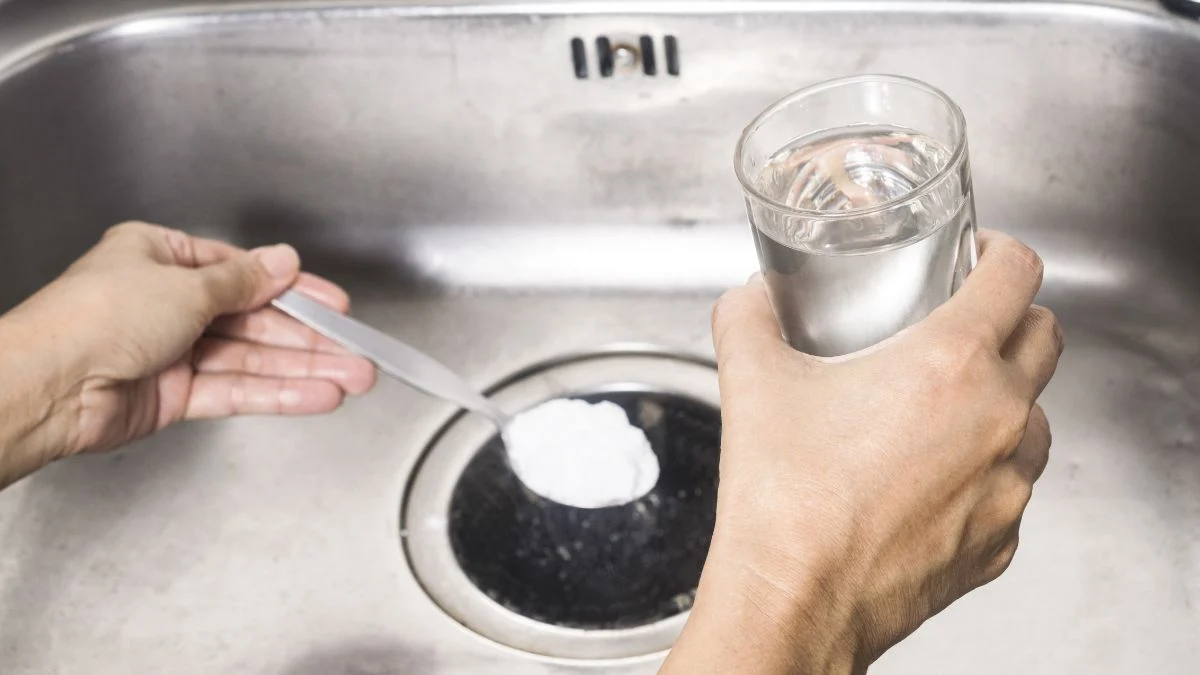
You have probably already heard about home tricks using vinegar and baking soda to clean certain surfaces around the house. But these two everyday products can also be used differently. As OK Diario reports, plumbing professionals recommend pouring them directly into the sink. But what is it really for?
A reaction that makes all the difference in the sink
When baking soda meets vinegar, a chemical reaction occurs immediately. Indeed, baking soda is an alkaline substance, meaning its pH is above 7. Vinegar, on the other hand, contains acetic acid, which gives it its distinctive taste and odor. Their contact triggers fizzing, notably the formation of carbon dioxide, which explains why the mixture starts foaming rapidly.
In the sink, this reaction can prove useful for dislodging certain small residues around the drain. The bubbles produced help to detach some of the dirt that has accumulated in the conduit. It can also be handy if unpleasant odors begin to emanate. By incorporating it into your cleaning routine, you easily limit the buildup of small deposits in the piping.
How to use vinegar and baking soda in your sink?
To try this method at home, begin by removing any visible debris around the drain. Then pour baking soda directly into the opening, followed by the vinegar. The mixture will quickly foam against the walls and inside the pipe. Leave it to act for a few minutes, giving the reaction time to work, then rinse with hot water. The goal isn’t to fill the entire plumbing, but to allow the mixture to act at the level of the drain.
You can perform this trick from time to time, when a bad odor appears or if the water starts to drain slowly. However, do not confuse maintenance with unclogging. Baking soda and vinegar don’t work miracles and don’t always suffice to clear a blockage, especially when a lot of grease, food scraps, or other debris have built up in the pipe. In that case, it’s better to turn to a more appropriate unclogging method, such as dismantling the trap or using a plunger.
A home hack to use with care
This simple little trick is easy to perform, but it requires some precautions. The most important one is to never mix vinegar with a chemical drain cleaner or any other household product. Depending on the substances in these products, their combination can trigger dangerous reactions.
And if you have already used a chemical product in your sink, avoid adding vinegar or any other substance directly afterward. You’ve understood that vinegar and baking soda can certainly have their place in the upkeep of your sink. Economical, easy to execute, and based on everyday items, this tip ticks all the boxes. So, tempted to give it a try?
