
More and more people are choosing to go under the knife to alter an aspect of their appearance, yet not everyone is aware of the risks hidden in these interventions. A face that is completely puffy, bruising around the eyes, or pain after a procedure can be part of the recovery process. However, there are symptoms that should never be ignored.
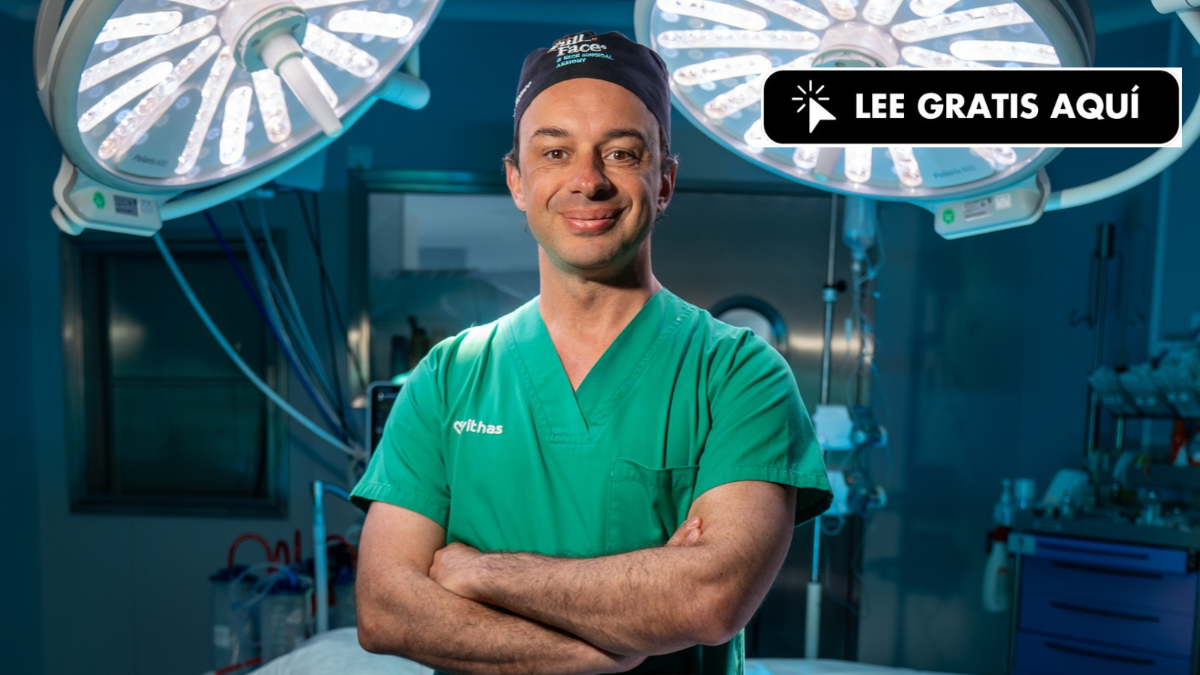
Plastic surgeon Marco Romeo explains how to tell a normal reaction from a complication, which mistakes can lead to a second operation, and what we should check before selecting a specialist.
Swollen face after cosmetic surgery: when to worry
Images of patients with their faces completely swollen after a hair transplant, a rhinoplasty, or a facelift can provoke worry. Yet swelling, bruising, and some temporary loss of sensation are part of the usual recovery process for many aesthetic procedures.
“Inflammation usually peaks between day two and day three, and most of it subsides within two or three weeks,” explains Marco Romeo, a specialist in Plastic, Aesthetic and Reconstructive Surgery. Nevertheless, the final result may take considerably longer to become evident.
In a rhinoplasty, for example, the tip of the nose may require as much as a year to become fully defined.
Hematomas during the early days are also common and typically fade in about 10 to 15 days, as well as moderate pain, tightness, and temporary changes in sensitivity.
One of the more notable cases is when patients arrive with the forehead and eyelids completely swollen after a hair transplant.
According to Romeo, during the procedure liquid containing local anesthetic is infiltrated into the scalp and, due to gravity, it can shift toward the forehead and eyes in the days following. Although the appearance can be startling, it is generally a transient reaction.
The rhinoplasty, facelift, blepharoplasty, liposuction, and abdominoplasty can also cause significant inflammation during the postoperative period.
But how can one tell when something has crossed the line from normal to abnormal? The key lies in the trend. If pain and swelling intensify instead of subsiding, it is sensible to consult the surgeon. A sudden flare-up of swelling accompanied by increasing tenderness could indicate a hematoma. A fever above 38 degrees Celsius, spreading redness, or pus discharge from a wound can be signs of infection.
There are other symptoms that require urgent attention, such as difficulty breathing, chest pain, palpitations, or swelling of a calf.
Changes in skin color, visual disturbances after facial surgery, and heavy bleeding must also be assessed immediately. “A good surgeon would rather take a hundred unnecessary calls than miss a complication diagnosed too late,” warns the specialist.
The mistake when choosing a plastic surgeon that can end in a second operation
Not all complications arise from a poor intervention, but choosing the right professional and health center is one of the factors that most influence patient safety.
Romeo reminds us that cosmetic surgery rests on four pillars: the patient’s health status, the surgeon’s training and experience, the conditions of the operating room, and a correct medical indication. No procedure carries zero risk, even when all protocols are observed.
Therefore, before booking a procedure, he recommends verifying that the practitioner holds a credential in Plastic, Aesthetic and Reconstructive Surgery and has tangible experience with the specific procedure to be carried out. It is also essential that the operation takes place in an authorized medical facility, with an anesthesiologist present and the necessary means to respond to any contingency.
There are certain situations that should raise suspicion: not meeting the surgeon until the day of the operation, receiving all information through a salesperson, finding time-limited discounts, or feeling pressured to book quickly.
Similarly, it is not a good sign if a professional promises guaranteed results, claims that a procedure carries no risks, or proposes operating without the necessary preoperative tests.
Added to these factors are potential postoperative complications such as hematomas, seromas—or fluid accumulations—, infections, and wound-healing problems. Tobacco, for instance, reduces the skin’s blood flow and increases the risk that a wound will reopen or that tissues will suffer. Hence, the specialist recommends quitting several weeks before and after the intervention.
In some cases, the consequences may force a return to the operating room. Rhinoplasty is one of the procedures where surgeons encounter patients who need a second intervention, especially when too much cartilage has been removed or overly aggressive techniques have been employed.
“Correcting a bad result is always harder than doing it right the first time,” cautions Romeo.
Cosmetic procedures: the risk of copying an influencer
Photographs of celebrities and influencers have become a common reference for some patients who seek to obtain a nose, lips, or cheekbones identical to those of another person. However, Dr. Romeo warns that results cannot be copied: they depend on bone structure, skin thickness, tissue composition, and the proportions of each face.
“A nose that flatters one person may look completely artificial on another,” he notes. That is why he advocates working from facial harmony rather than replicating features that have become popular on social media.
Unrealistic expectations can also lead to dissatisfaction. Moreover, trends change, while the consequences of a surgical intervention can be permanent. The specialist believes it is his duty to explain to the patient when a procedure is not suitable for their anatomy and even to refuse if necessary.
In this situation, the surgeon emphasizes that a good operation begins long before stepping into the operating room. He advises not rushing, asking about specific risks, understanding the technique that will be used, and knowing who will handle the follow-up care.
He also recommends maintaining a stable weight, quitting tobacco at least four weeks before, disclosing all medications and supplements being taken, and completing the indicated preoperative tests.
After the operation, resting, attending follow-up visits, and following medical instructions are just as important as the procedure itself.
“The postoperative period is half the result. Surgery is a team effort between the surgeon and the patient,” he concludes.
