
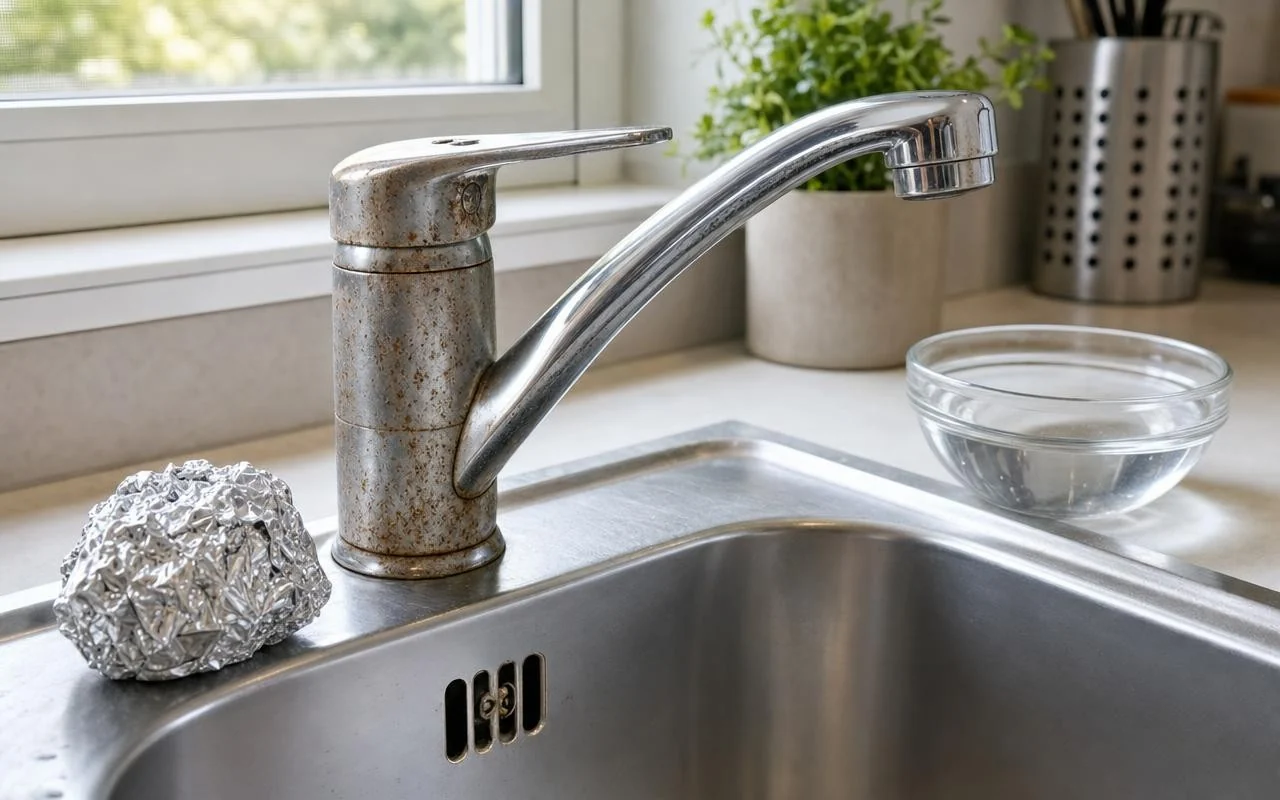
Orange stains at the base of the faucet, the favorite pan that starts to rust, the pot dulled despite scrubbing: many end up in the trash while the metal remains solid. Before buying a new faucet mixer or a cookware set, some cleaning experts invite you to open a very ordinary drawer. A simple sheet of aluminum foil can sometimes do more than a specialized product.
In recent months, aluminum has been everywhere in cleaning tips, from social networks to cooking sites. Marmiton even describes the foil ball tucked into the dishwasher as “a true anti-oxidation ally” that “acts like a genuine rust magnet,” to borrow their words. This is enough to make one want to try this cheap material directly on the faucets and stained pans, with a tightly framed method.
Removing rust with aluminum foil: why this trick works
The Spanish site Okdiario recalls that aluminum foil is softer than the steel of faucets and utensils. It acts like a kind of fine polishing that lifts oxidized deposits without wearing down the surface. The authors describe a combination of mechanical action and discreet chemical reaction, especially when the aluminum is damp. In contact with the rust, the friction helps the metal regain its shine very quickly.
In kitchens, this also concerns the base of a faucet, the handles of the fixtures, and the exterior bottom of metal pots and pans. The method targets mainly superficial stains and traces of corrosion related to stagnant moisture, not parts corroded deeply. As with the foil ball in the dishwasher, the real effect depends on the type of metal, the initial condition, and even the quality of the water.
How to use aluminum foil on a faucet step by step
To tackle the base of a faucet or a stained spout, the Spanish experts recommend first a simple cleaning with soap or dishwashing liquid to remove grease and dust. Then cut a piece of foil and crumple it into a medium-sized ball, not too tight. This shape provides a good grip and multiplies the small edges that will rub against the surface.
The ball is moistened with lukewarm water. For older stains, Okdiario suggests adding a few drops of white vinegar or a little baking soda to the area to be treated. Next comes the scrubbing: circular motions, firm but controlled pressure, only on the oxidized parts. The site describes stains that break away quickly, followed by rinsing with soapy water and careful drying with a microfiber cloth to prevent the rust from returning.
Pans and pots: when aluminum foil becomes the anti-rust ally
The same method is used for the exterior of pots and pans, where oxidation halos appear around the bottom or the handle. Aluminum foil, softer than steel, allows scraping these halos without scratching as much as a wire brush. It is enough to lightly moisten the ball, target the stained areas, then rinse and dry as soon as the metal looks clearer.
To limit unpleasant surprises, specialists recommend reserving this trick for sturdy metal surfaces and being cautious with decorative finishes. A small test in a scarcely visible corner is a good idea. Do not rub for minutes in the same spot if the stain does not budge, rinse and wipe immediately after the treatment, and accept that on a pan already deeply pitted the foil may lighten the area but will not rebuild the metal: these tips regularly recur among cleaning pros.
Sources
- Biba
“The French craze? Add a foil ball to their dishwasher… Here’s why!” - Marie France
“”I thought I had made the right choice””: my neighbor discovered why his heating cost him 400 € more
