
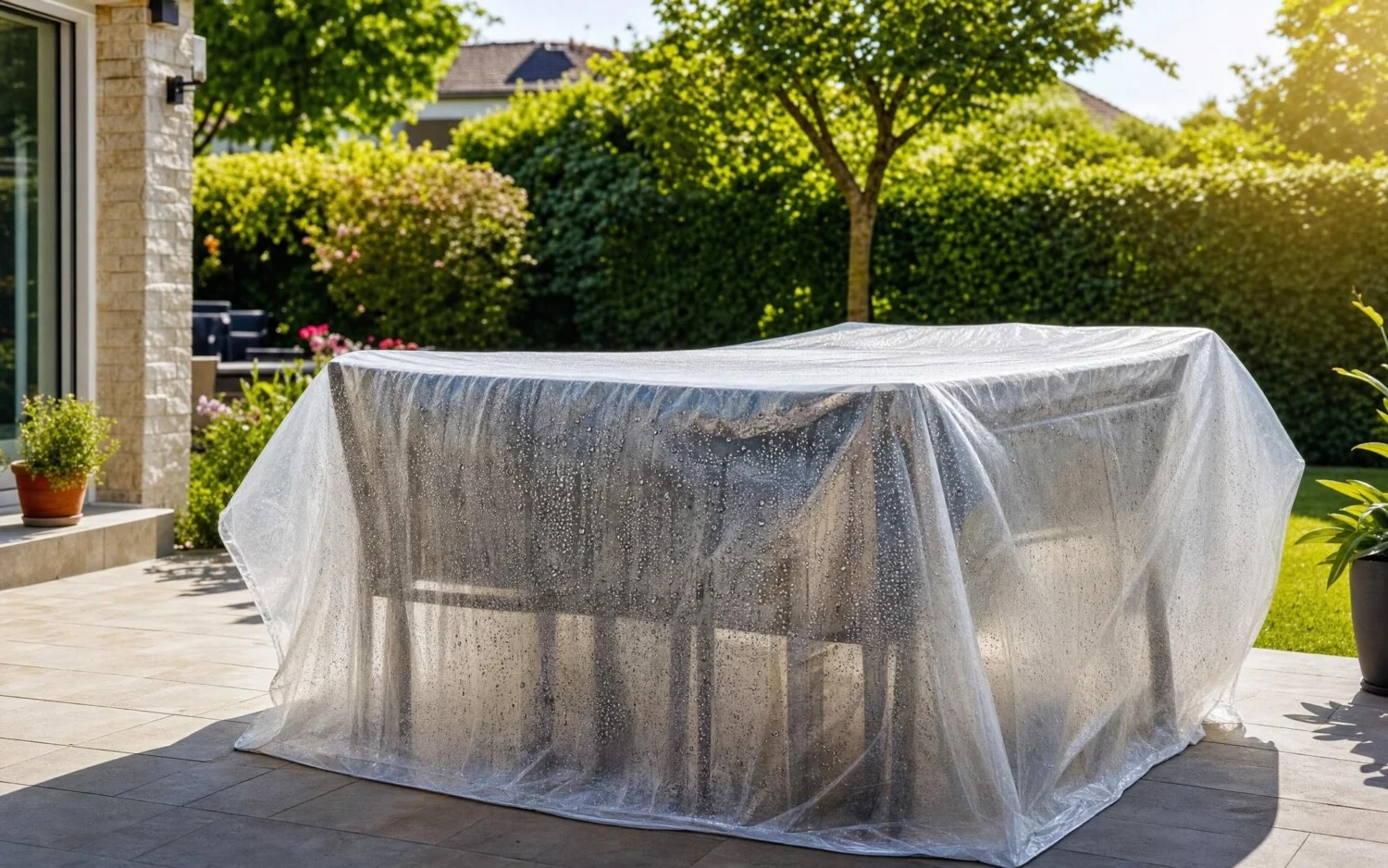
With the suitcase zipped up, the kids are buzzing with excitement, and on the terrace there is one last reassuring gesture: spread a large plastic tarp over the garden lounge set. By covering the table, chairs and sun loungers down to the ground, it feels as though you’re shielding them from the scorching rays, from dust, and from forecast storms. This reflex of total protection has become ingrained over the summers, almost automatic before every vacation departure. No one then imagines that this act could damage the furniture faster than the sun itself.
Yet, many homeowners are stunned upon returning. Three weeks earlier, everything shone under the tarp; upon returning, they discover wood darkened, metal pitted, cushions speckled with greenish stains and a musty odor. Far from protecting anything, the tight-fitting big tarp has turned the lounging area into a scrubbing puzzle. What happened beneath the cover, away from prying eyes, often surprises more than the heat wave itself.
Sous la bâche plastique hermétique, un effet serre qui étouffe le salon de jardin
An hermetic plastic tarp laid in midsummer creates what specialists describe as “a true miniature greenhouse.” The sun heats the fabric, the air rises in temperature but does not escape. The moisture contained in the wooden slats, the floor, or the metal tubes evaporates, then hits the plastic. Lacking ventilation, this vapor turns into droplets that bead on every surface. Water shows up everywhere, even though not a single drop of rain fell during the vacation.
In this quasi-tropical microclimate, condensation builds up day and night. Wooden structures “end up darkening or warping,” with tabletops buckling and armrests swelling. On forged iron, steel or aluminum, corrosion settles in silently, in the form of tiny pinpricks that widen over time. In only three weeks of absence, this humid trap can damage a garden lounge set more than months spent outdoors in the open air.
Bois, métal, coussins : les dégâts cachés sous une bâche de salon de jardin
The wood is the first to suffer. Under an airtight cover, the fibers swell, dry poorly and crack as heat recurs. Light tones turn grayish, or black in places. On woven resin or molded resin, the stagnant humidity leaves whitish stains and a dulled appearance. As for metal, it dislikes this forced bath: rust spots, peeling paint, chips that leave the substrate exposed.
Outdoor textiles pay a heavy price too. Cushions, chair pads, spare mattresses or small blankets soak up water, then become a perfect playground for fungi. Green halos appear, grayish stains, and a musty odor that embeds itself in the fibers. A simple wash does not always save them, especially when mold had time to develop quietly, with the tarp tightly wrapped around the furniture.
Breathable cover and good precautions before the summer holidays
To limit the damage, the first reflex is to tackle moisture. Specialist guides advise to “let the furniture dry completely in the air before any handling or covering.” So we avoid tarping wood that is still dewy or recently washed, and we always bring cushions, seat pads, mattresses and throws into a dry place.
The best option is to use a breathable cover, which stops rain while letting air through. Choose a fabric with ventilation rather than a transparent film clamped to the furniture. And if there is space, keeping the garden lounge under a canopy, a gazebo, or in a ventilated shelter is enough.
Sources
- Maison & Travaux
“This plastic tarp on your garden lounge can destroy it in three weeks, even without rain”
