
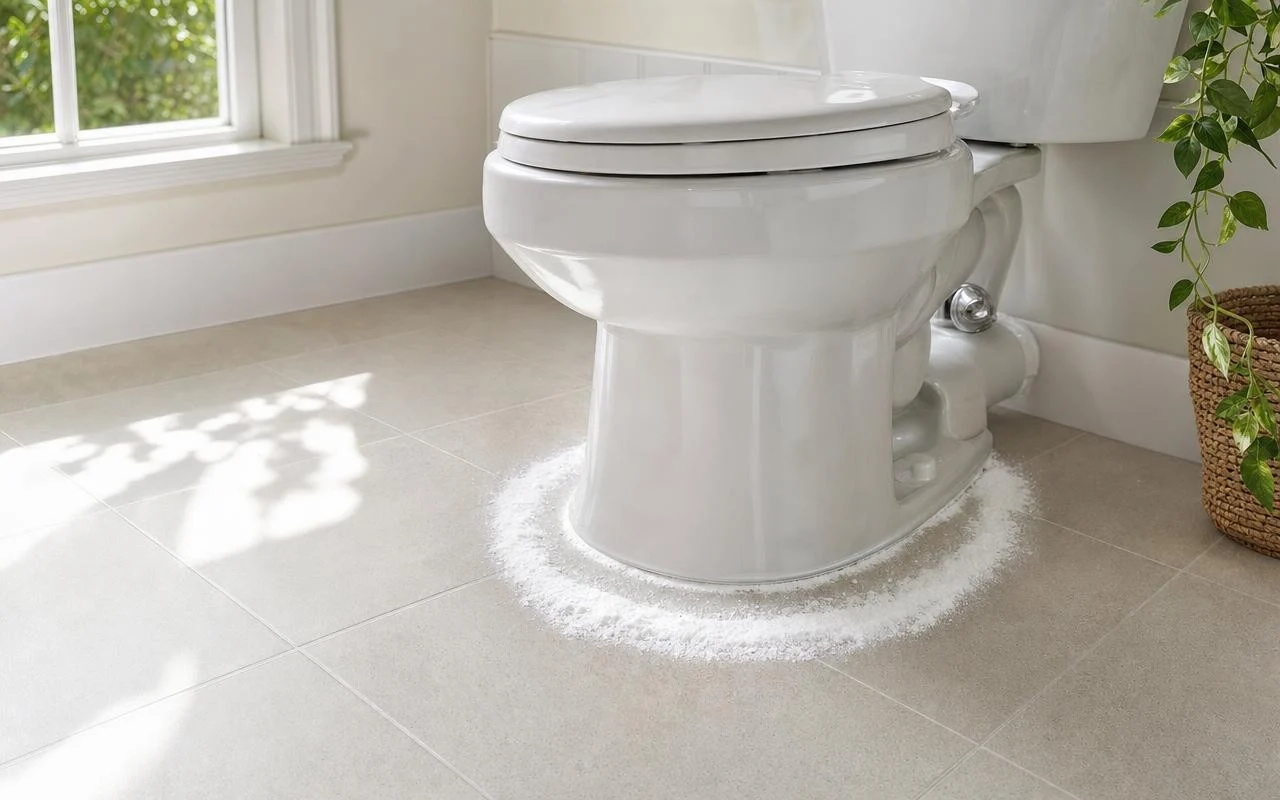
You scrub the toilet bowl, apply some disinfectant gel, everything looks clean, yet a urine odor persists as soon as you swing the bathroom door open. Many households face this situation, even with regular cleaning. The tip that circulates is to place baking soda at the base of the toilet before going to bed.
This white powder doesn’t act inside the bowl, but precisely where the problem hides most often: the junction between the toilet base and the floor, at the grout lines. Humidity, condensation and micro-splashes accumulate there in silence. It’s here that this simple ribbon of white powder makes all the difference.
Pourquoi le bicarbonate de soude au pied des toilettes vise la bonne zone
Around the base of the WC, the floor suffers a double assault. The tank is filled with cold water, around 10 to 12 °C, while the room is heated to about 20 °C: this temperature difference creates condensation that runs toward the joints. In addition, micro-splashes of urine and water occur with every use, seeping into the porous gaps of cement or tile.
Regularly mopping isn’t enough, because soapy water pushes organic residues even deeper into the grooves. As it dries poorly, this stagnant moisture becomes an ideal breeding ground for bacteria responsible for urine and ammonia odors. As long as this base-to-floor area remains damp and dirty, indoor scents only mask the problem.
Ce que fait vraiment le bicarbonate de soude au pied du WC la nuit
Sodium bicarbonate has a slightly alkaline pH, around 8.4. In plain terms, it neutralizes the acidity of uric acid derivatives embedded in the floor. Sprinkled dry, it acts like a mineral sponge: its hygroscopic nature allows it to absorb excess moisture in the joints, which slows microbial growth behind the odors.
Another advantage, this powder does not scratch glazed tile nor silicone joints. For homes with dogs or cats, it is advised to choose a food-grade bicarbonate, harmless in case of incidental contact. Nighttime is ideal, because a 6 to 8 hour application without stepping on it allows the product to work continuously, while leaving the room ventilated and clean by morning.
Mode d’emploi, fréquence et signaux d’alerte à ne pas ignorer
For the trick to work, the floor must be clean and especially very dry. The idea is not to pour baking soda on a puddle, but to treat joints that are slightly damp. The steps are simple:
- clean around the base perimeter, then thoroughly dry with a cloth ;
- sprinkle a fine crown of baking soda at the foot of the toilet ;
- let it sit all night, i.e., 6 to 8 hours, without rinsing ;
- in the morning, sweep or vacuum the powder before rubbing a dry cloth again.
The appearance of the powder upon waking provides valuable clues. If it remains fairly light, sometimes somewhat clumped in places, it has mainly absorbed the condensation and small splashes: odors should noticeably diminish. Conversely, if it has turned into a soggy paste in a specific area, or if a puddle persists, this may reveal a leak or a defective seal at the discharge pipe.
A simple test is to place a few sheets of toilet paper in the same spot to check whether moisture returns. In that case, a plumber should inspect and replace the seal if necessary. For regular maintenance, a weekly or biweekly application of bicarbonate is generally sufficient, in addition to standard cleaning and good ventilation. Some mix 3 tablespoons of powder with 15 to 20 drops of lavender essential oil to lightly fragrance the area, while being cautious if children or sensitive individuals use the room and avoiding combining this treatment with freshly used bleach.
