
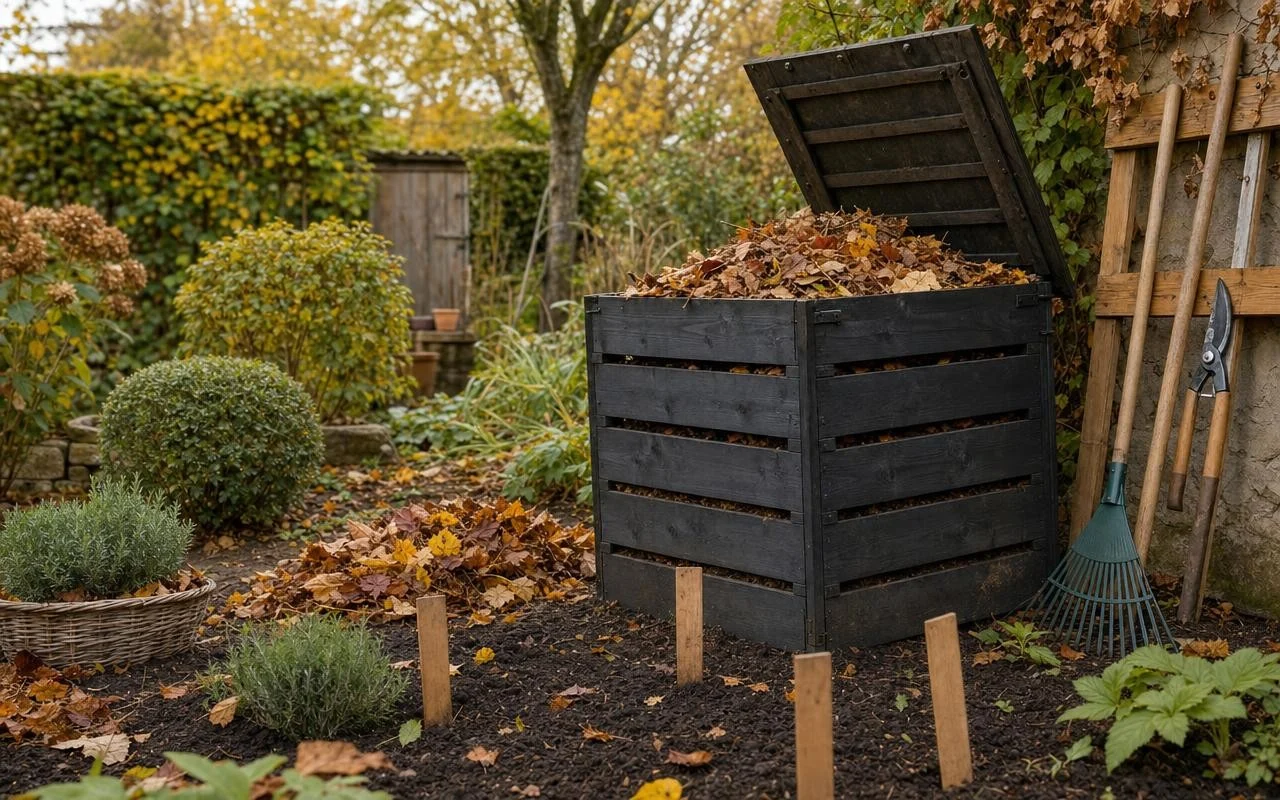
In autumn, many gardens resemble the ending of a film: faded flowers, drooping stems, tools abandoned beside the vegetable patch. We tell ourselves the season is over and that we’ll see it again in spring. In reality, it is now that a large part of the garden’s health for the coming year—and your budget—depends on what you do.
Behind the fallen leaves lie diseases ready to reemerge, weed seeds waiting to spread, and equipment that quietly deteriorates. AOL specialists summarize the challenge well by stating that “five or ten minutes here or there can be a very good investment for the garden of next year.” This idea changes everything.
Autumn Garden Maintenance: Choose Sorting Over a Complete Cleanup
The temptation is strong to shear everything back to a clean, tidy look. Yet this major cleanup can be costly. Researchers at the University of Minnesota remind us that diseased plant debris retains pathogens from year to year. Spotted tomatoes, cucurbits covered in powdery mildew, or blackened stems should go to the trash or be incinerated, not composted.
On the contrary, a significant portion of dry stems and healthy leaves can stay in place. They provide overwintering shelter for beneficial insects and protect the soil from heavy rains. Le Parisien Jardin emphasizes this sorting: removing everything creates a “desert garden,” more vulnerable to frost and erosion. The objective of autumn garden maintenance is to remove what spreads disease while preserving what naturally protects.
Cinq gestes d’entretien en automne qui évitent des frais au printemps
A well-targeted garden walk is enough to defuse several costly problems. Recommendations converge between AOL and French practical guides:
- Pull out clearly diseased plants and their fallen leaves.
- Remove weeds before they spread their seeds.
- Cover bare soil areas with compost or an appropriate organic mulch.
- Empty, check, and store hoses, spray guns, and small sprinklers.
- Clean tools, dry them, then disinfect blades and pruners if diseases are present.
A bed of healthy leaves, partially matured compost, or straw protects the soil from erosion and reduces the germination of new unwanted weeds. Jardiner Malin, for example, recommends a vegetal mulch of about 7 cm at the base of climbing plants in pots, which helps retain moisture into the following summer. For tools, remove soil, wash, dry well, then wipe the blades with a cloth dampened with alcohol to prevent rust and the spread of fungi.
Mulching and Winter Protection: The Right Timing for a Calm Garden
Applying mulch too early can produce the opposite effect of what is sought. The University of Minnesota recommends waiting until the soil begins to freeze before protecting perennials and spring bulbs, because “it’s better to wait for the soil to start freezing before installing mulch around many spring perennials and bulbs.” This delay prevents plants from restarting gradually under a cover that is too warm, only to freeze solid during a cold snap.
On a balcony or terrace, the actions are even more financially rewarding. Jardiner Malin advises planting climbers — for example, jasmine — between mid-September and mid-November: the soil is still warm, rains return, and the roots establish themselves all winter. A generous watering of about 10 liters at planting, good drainage at the bottom of the pot, and a 7 cm mulch set up a quicker spring restart, avoiding costly catch-up. As soon as night temperatures dip below -3 °C, wrap the pot in a fleece or press it against a wall to prevent losing the plant, long before recovering its price’s worth.
