
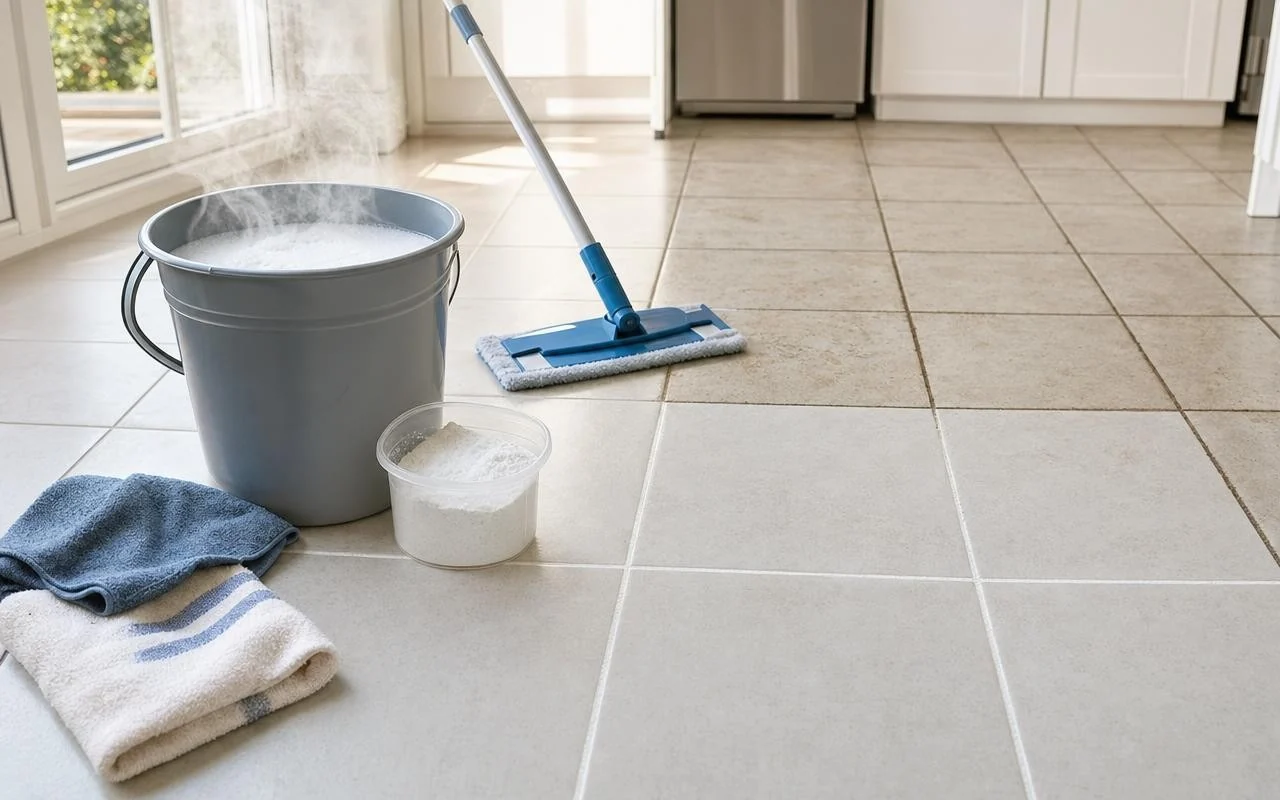
Floor impeccably clean, with tiles that look brilliant, yet something is off: the grout lines stay gray, yellowed, and in places almost black. Even when mopping or sweeping with a Swiffer-type broom, this dull weave catches the eye and gives the impression of a floor that’s never truly clean.
The reason is simple: ceramic grout sits slightly recessed and forms tiny channels that trap dirty water, dust, and residues from cleaning products. Surface cleaning merely glides over the tiles, without tackling these heavily soiled zones. A solution does exist, though, based on hot water and a very common powder product, capable of lifting stains and reviving the color of the grout. The difference comes down to a simple bucket of hot water.
Why a Swiffer Isn’t Enough for Floor Tile Grout
Cleaning guides explain that the small depressions between tiles have a real capacity to accumulate dirt, cooking grease, beverage splashes, or wash water. With a mop or a Swiffer, you improve the overall appearance somewhat, but mainly on the smooth surface of the tile. The grout itself receives only a film of dirty water with each pass, then dries without adequately dissolving the embedded stains.
The grout is also more delicate than the tile itself. They don’t tolerate certain harsh products well, notably chlorine bleach, which can discolor them. Specialist sites therefore recommend a specific product: a powdered oxygen-based whitening agent, milder, which releases active oxygen on contact with hot water to loosen grime. The key is to use it with the proper technique to truly clean the floor grout and restore a bright floor.
La solution eau chaude et percarbonate qui ravive les joints de carrelage
This oxygen-based whitening agent corresponds to sodium percarbonate, sold in bulk or under consumer brands. Unlike chlorine bleach, it does not contain chlorine and works by releasing oxygen that bubbles up the dirt. Product sheets advise always reading the instructions and performing a test on a discreet corner before treating the entire floor, especially on colored joints. Experts also note that this method works very well on ceramic tile or porcelain stoneware, but should be avoided on natural stone such as marble, travertine, or calcareous stones, which can mark when exposed to overly strong products, and instead favor a neutral-pH cleaner designed for those surfaces.
On a compatible floor, the protocol remains straightforward. Start by sweeping, vacuuming, or mopping to remove crumbs and dust. For the liquid solution, Anglo-Saxon tutorials cited by House Digest propose dissolving about 2 tablespoons of powder in 2 cups of warm water, then pouring or spraying this mixture directly onto the grout. Some French guides also indicate a mixture of one part percarbonate to ten parts of very hot water, starting at around 40–60 °C, which more strongly activates the active oxygen for heavily soiled joints.
Précautions et astuces pour garder les joints de carrelage au sol propres longtemps
Once the solution is applied, DIY sites recommend working in small zones. Let it act for about ten to fifteen minutes, or up to 30–60 minutes for the more diluted mixtures advised in French guides, giving the product time to lift the stains. Then scrub each grout line with a grout brush or an old toothbrush, then rinse thoroughly with clear water. User feedback notes that a slight white haze may remain on the floor after drying: these are simply powder residues, which disappear with a fresh rinse and careful microfiber drying.
Home-habitat advisory groups finally recommend protecting the work done. Once the grout is perfectly clean and dry, applying a grout sealer or waterproofing product about every six months helps limit stain and moisture penetration. The floor stays cleaner longer, and routine cleaning becomes much easier: a mop or Swiffer-type sweep then maintains the shine of the tiles, without allowing dull grout to reappear at the slightest neglect.
