
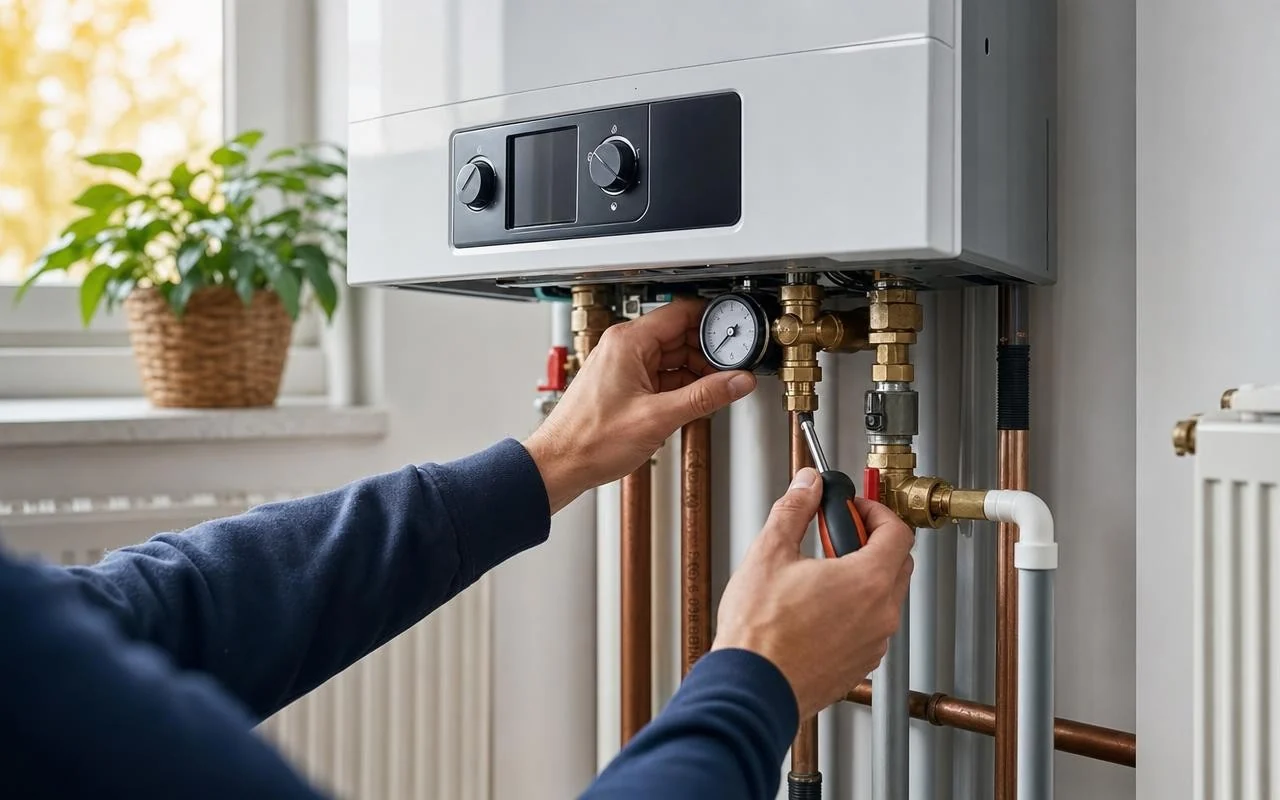
The arrival of the first cool mornings prompts the question of whether the boiler will fire up on the first try. Warm radiators, chilly patches in the living room, or a gurgling sound in the pipes often signal a problem that is surprisingly simple to fix… provided you tackle it before the depths of winter. “Be sure to follow these steps to guarantee optimal operation,” advise experts in air conditioning and plumbing.
Behind this guidance there are no major renovations or expensive equipment, but a sequence of quick checks: valves, boiler pressure, the circulation of warm air, and a possible radiator bleed. When followed correctly, these few actions curb breakdowns, improve comfort, and prevent bills from climbing without warning.
Before Turning On the Heating: The Experts’ Express Checks
Experts recommend starting by ensuring that all radiator valves are fully open and that there are no leaks on the pipes or beneath the boiler. A slight seepage, even minimal, can drop the pressure and strain the installation. Another very simple habit: clear the radiators of obstructions. Furniture, heavy curtains, or laundry laid on top block convection and give the impression of weak heating even when the boiler is functioning properly.
The thermostat also plays a key role. For a reliable reading, it must be kept away from radiators, from lamps, or from drafts produced by doors and windows. Experts remind us that a temperature of around 21 °C is enough for comfortable living if you are properly dressed; each additional degree increases consumption by about 7%. Thermostatic valves or a programmable thermostat can further reduce the bill by 8 to 13% depending on the installation.
Boiler Pressure and Radiator Bleeding: The Winning Duo
The next step is to check the pressure on the boiler’s gauge. For a domestic central heating system, most manuals specify a range of 1 to 1.5 bar when the system is off, though the exact value depends on the model. Too low a pressure prevents the circulator from delivering water correctly to the radiators, while too high a pressure can trigger safety devices. In multi-story buildings, Swiss authorities note there is about 1 bar for every 10 meters of height.
When the top of a radiator remains cold while the bottom heats up, or when hissing noises are heard, this commonly signals that the radiator needs bleeding. “Bleeding radiators is a fundamental task for the proper operation of a heating system, because the presence of air can affect efficiency and raise energy consumption,” explains Mario Rial Axpe, head of the technical department at CONAIF. It is a simple operation, but one that requires a few precautions.
How to Bleed Your Radiators Step by Step and Secure Your Installation
Professionals recommend working with the boiler off and the system cooled, starting with the lowest radiator and moving upward floor by floor. Here is the concise method:
- Turn off the heating and wait a few minutes.
- Prepare a bleed key (or a screwdriver), a container, and a cloth.
- Very slowly loosen the bleed valve at the top of the radiator: air escapes with a hiss.
- Keep the valve open “until water flows steadily; this is how you know the operation has been performed correctly. In this way, we ensure it expels the air it contains,” explains the CONAIF spokesperson.
- Close it again without forcing, wipe up the water, then check the pressure on the manometer and, if necessary, restore the system to 1–1.5 bar using the filling valve provided by the manufacturer.
Installers advise verifying the pressure after each radiator to prevent the boiler from going into safety mode mid-process. Once all the radiators have been bled, the heating can be switched back on: water should circulate evenly, with no cold zones at the top. If, despite everything, some radiators stay tepid or if the purge water comes out black and dirty, this may indicate a blockage that requires a full descaling (power flush) by a professional.
