
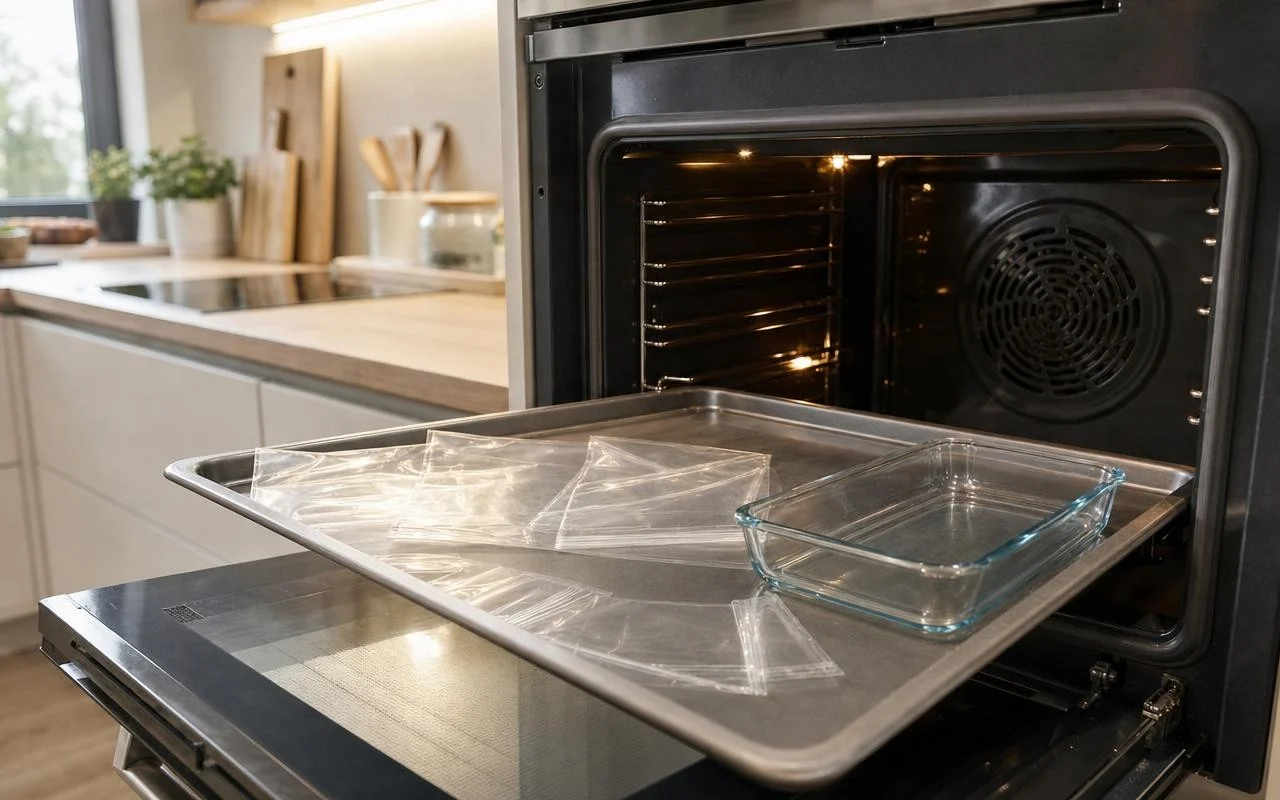
A whole chicken in a plastic bag, the meat staying juicy, and almost no dishes to wash… The image circulates everywhere on social networks and makes you want to try it with any bag you find in the kitchen. But not all plastics react to heat in the same way, far from it.
In France, plastic food packaging is subject to strict rules on materials in contact with food. Is using a plastic bag in the oven possible without danger, or are there invisible but real risks?
Plastic bag in the oven: what the rules on food-contact plastics say
European regulations require that any plastic intended for contact with food adhere to limits on “migration” to the foods. The DGCCRF recalls that the overall migration limit is set at 10 mg per square decimeter of contact surface, with a value of 60 mg per kilogram of food for products intended for infants and young children. Another important constraint: these tests are conducted under prescribed use conditions, precisely varying the temperature and contact duration.
The practical sheets from the DGCCRF therefore emphasize respecting the manufacturer’s instructions and summarize the rule in a single clear sentence: “Respect the usage conditions… Do not put in the oven a container not intended for this purpose.” In other words, a grocery bag, a standard freezer bag, or a frozen-food sachet has not been tested to withstand 180 or 200 °C, nor to limit migration at those temperatures. For these ordinary bags, the answer to the question “Can a plastic bag go in the oven?” is no.
Freezer bag, grocery bag, or cooking bag: telling them apart
In a kitchen, several types of bags coexist. Grocery bags or trash bags are not FCMs and do not fall under Regulation (EU) No 10/2011. Freezer bags, on the other hand, are indeed FCMs but designed for cold storage or, at best, for gentle reheating. Some utensil manufacturers, such as ZWILLING, state clearly that their plastic storage boxes and bags should never go in a traditional oven.
There are, however, oven cooking bags, often made of heat-resistant nylon, sold specifically for roasting meat or fish. Brands like Albal or others indicate a maximum temperature of around 200 °C (400 °F) and specify that these bags are FCMs tested for this use. As long as you stay within this range and follow the instructions, the bag is designed to limit both specific and overall migration under these conditions.
Using an oven cooking bag properly and choosing alternatives
For these dedicated cooking bags, safety relies on following a few simple precautions, often listed on the product packaging.
- Never exceed the maximum indicated temperature, usually 200 °C.
- Avoid any contact between the bag and the oven walls or heating elements.
- Leave space for the bag to puff up and, if required, pierce holes for steam.
- Do not use these bags in grill mode or under a direct flame.
Before placing a plastic bag in the oven, a few quick verifications are required. The “glass and fork” pictogram certifies suitability for contact with food, but it is not enough: there must also be an explicit mention of oven use and a temperature range. The conformity declaration, which professionals should be able to provide, includes these details. Health Canada notes that the risk of transferring substances from plastic to the food increases with temperature; it is therefore best to reserve the oven for containers designed for this heat. In the absence of a dedicated cooking bag, a glass or ceramic dish and a simple sheet of parchment paper offer safe alternatives to cook your recipes without any unpleasant surprises.
