
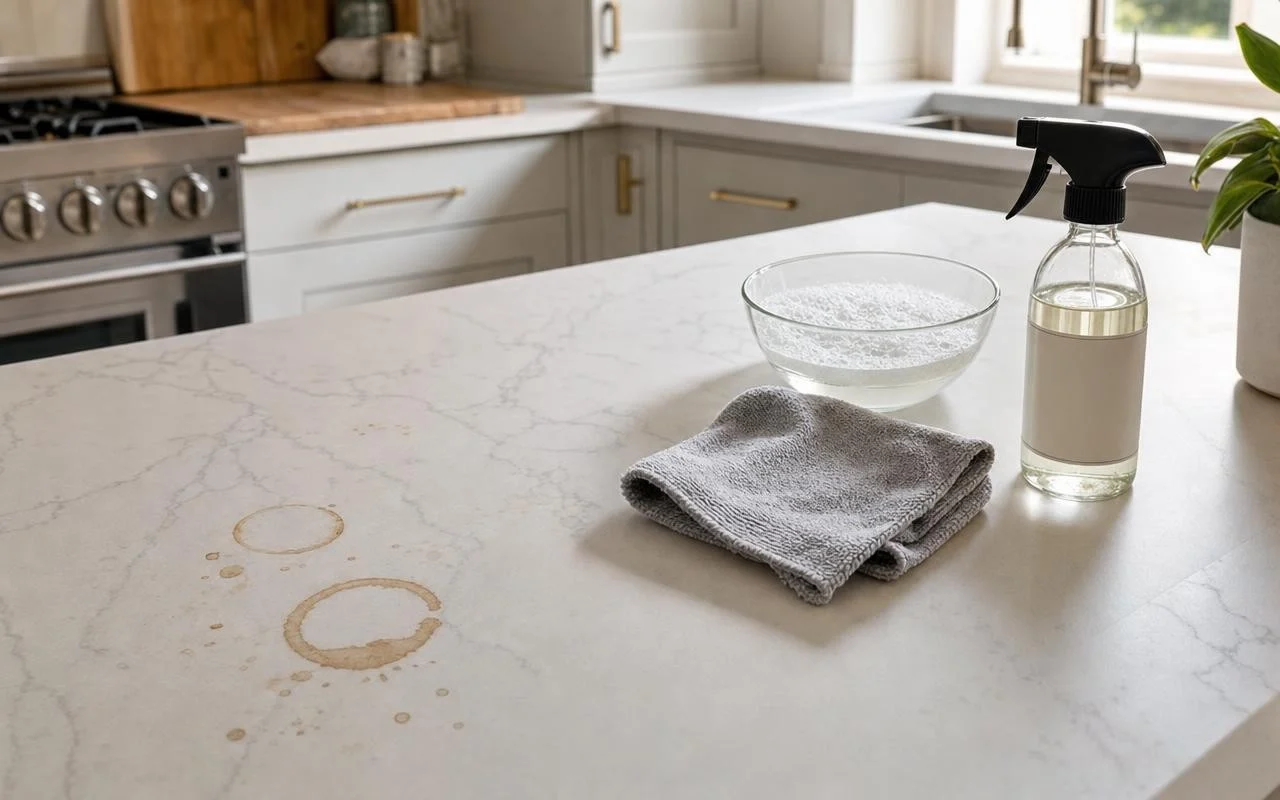
A forgotten coffee stain, a water ring that refuses to disappear, a tiny grease halo: even a quartz countertop eventually shows marks. Many homeowners hesitate to scrub, fearing scratches or dulling the surface, especially when it is highly polished. As a result, stains settle in and the kitchen gradually loses its shine.
Quartz for kitchen use remains highly resistant, but it is not indestructible. It is a reconstituted stone bound by resin, which certain products can attack. Better Homes & Gardens reminds us that “with rare exceptions, aggressive chemical agents, acids and abrasives can leave the stone stained or nicked.” To maintain an impeccable finish, it all starts with the right reflexes.
Removing stains on a quartz countertop: the risk-free basics
For 80 % of stains on a quartz countertop, the safest method remains soapy water. Place a drop of mild dish soap or a neutral-pH product on a damp microfiber cloth, then wipe the stain in small circles. Let it act for a few moments if needed, without scratching, then go over the stain with the cloth until it disappears.
Rinsing and drying make all the difference to prevent dulling the surface. Better Homes & Gardens notes that “soap residues can create a dull appearance on natural stone, so it is essential to rinse the quartz well after cleaning.” Use a second damp microfiber cloth to remove all suds, then a third completely dry cloth, in circular motions, to avoid water marks and preserve the shine.
Produits et gestes à éviter pour ne pas abîmer la finition du quartz
Most irreversible damage comes from overly harsh products or abrasive tools. Cleaning guides for quartz indicate that concentrated bleach, pure vinegar, abrasive powders or pastes, or hard brushes can discolor the resin or create micro-scratches. It is also best to avoid solvents such as white spirit, paint thinner, or turpentine, which attack the binder.
In practice, to preserve the finish, keep these products away from your countertop:
- Concentrated bleach and highly chlorinated cleaners, except for a special cream used occasionally and rinsed very quickly.
- Pure or highly acidic vinegar used routinely on quartz.
- Abrasive powders or pastes, steel wool, the green scrubbing pad side of sponges, hard brushes.
- Nail polish remover, paint strippers, powerful solvents containing acetone.
What to do depending on the type of stain on a quartz countertop?
For water marks and halos, prepare a gentle paste with baking soda and a little hydrogen peroxide, thick enough to cling to a cloth. Apply it to a damp microfiber cloth or to a non-scratching sponge, rub very gently in circular motions, then rinse thoroughly and dry. For coffee, tea or soda stains embedded, a simple baking soda paste with water, applied and rubbed gently, often works very well.
Grease stains are handled first with dishwashing liquid that degreases and a soft sponge. If the mark remains, dry the area and place a small mound of cornstarch or talc on the spot; let it sit for an hour or longer so the powder can absorb the oil, then sweep up and wipe away. For lipstick, ink, or nail polish, use a bit of household alcohol on a cloth, after testing on a small, inconspicuous area. For rust, start with a damp “Magic Eraser” sponge or a very mild baking soda paste; if you use a cleaner containing a touch of bleach, work on a small area for less than five minutes, then rinse and dry immediately. If the stain persists or the surface becomes dull or milky, it is best to stop and seek advice from the manufacturer or a professional.
