

Receiving a breast cancer diagnosis means much more than simply facing an illness. Alongside fear and uncertainty, difficult questions arise: how to tell the children, what will happen at work, or how to face the future.
These are concerns that are not always voiced aloud and that, at times, lead people to seek help when no one else is listening.
“Many times they call us privately at three in the morning. I don’t want my husband to find out, how do I tell my children, how do I do this,” explained María Dávila, Corporate Director of Partnerships and Economic Development at the Spanish Association Against Cancer (AECC), during the presentation of a new charitable initiative to support people affected by this disease.
Her words highlight a reality that often takes a back seat: the emotional impact of cancer and the need for psychological support throughout the process.
Because a diagnosis affects not only the person who receives it, but also their partner, their children, their parents, and their closest circle.
Breast Cancer Also Needs Psychological Support
When a person receives a cancer diagnosis, the concerns extend beyond medical treatment.
The uncertainty, the fear of what might happen, and questions about how to communicate the news to the family can become a heavy emotional burden to manage.
That is why psychological support is fundamental for both patients and their families.
Having professionals who help manage emotions, answer questions, and cope with the different stages of the disease can make a difference in the well-being of those going through this situation.
The Spanish Association Against Cancer offers this support free of charge, also through InfoCáncer, its 24/7 telephone service available 365 days a year.
The line allows patients and families to find guidance and support when they need it, even at times when sharing their concerns with their surroundings is difficult.
During the event, María Dávila highlighted that the collaboration with Solán de Cabras, now in its thirteenth year, has helped boost this type of psychological care. This assistance, she noted, should not be directed exclusively at the diagnosed individual, but also at those who live with the disease up close.
“No One Should Be Alone” Facing a Cancer Diagnosis
The importance of supporting patients is precisely the focus of Reflejo de un Compromiso, the initiative that the two organizations have presented in Madrid as part of the fight against breast cancer.
In this edition, the project uses flowers as a symbol of support, affection, and presence. The idea comes from a common situation: when a loved one receives such difficult news, we do not always know what to say.
However, a message, a hug, a conversation, or a small gesture can convey that the person is not alone.
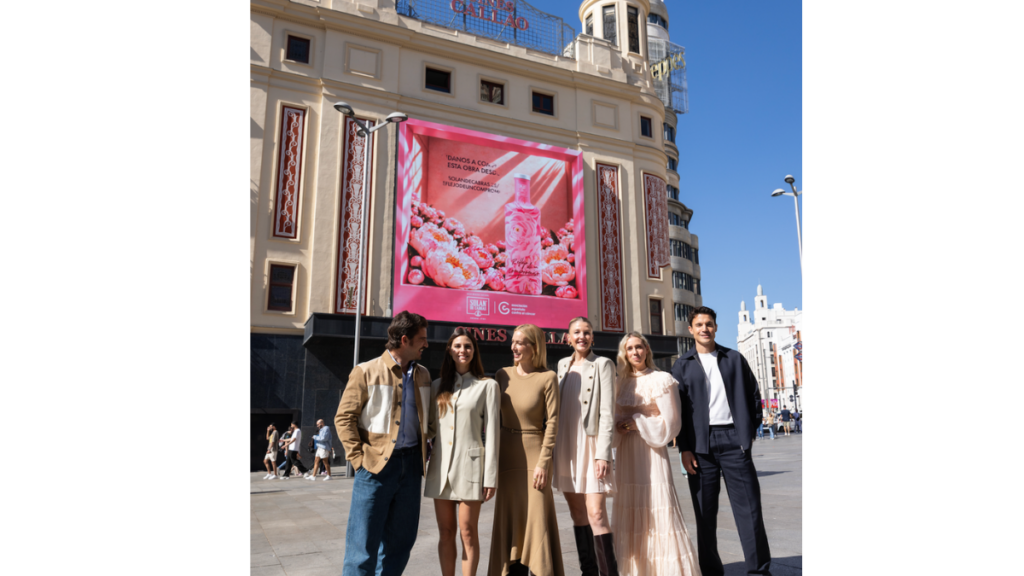
The artist Lulu Figueroa has translated this concept into a pink edition of Solán de Cabras’ bottle, adorned with floral motifs, and into a digital installation that will be displayed on the Callao City Lights screens from October 17 to 19.
The mural will grow as citizens contribute financially, symbolically turning into flowers.
The initiative seeks to represent how individual gestures can become a network of collective support for those undergoing the disease.
“Perhaps they cannot change what is happening, but they can be there, care, and listen,” Lulu Figueroa said when explaining the meaning of her creative proposal.
A Charitable Initiative to Support Patients and Families
The new edition of Reflejo de un Compromiso also features Amaia Salamanca, Kira Miró, Álex González, Maxi Iglesias, and Cris Dyaz, who have chosen to show their support for the cause.
In addition to the floral installation, the special one-liter glass bottle edition will be available in the brand’s online store and in selected outlets.
Proceeds from its sale will be entirely donated to the Spanish Association Against Cancer to contribute to its work of accompaniment and psychological support.
People interested will also be able to make contributions to the project to help build the solidarity mural at the Callao Cinemas during the dates planned for the initiative.
Beyond the action, the message shared by both organizations is clear: accompanying a person with cancer does not mean having all the answers nor always finding the right words.
Sometimes, it simply consists of listening, offering help, and staying by their side. A gesture that may seem small but takes on a special meaning when fear and uncertainty are part of daily life.
