
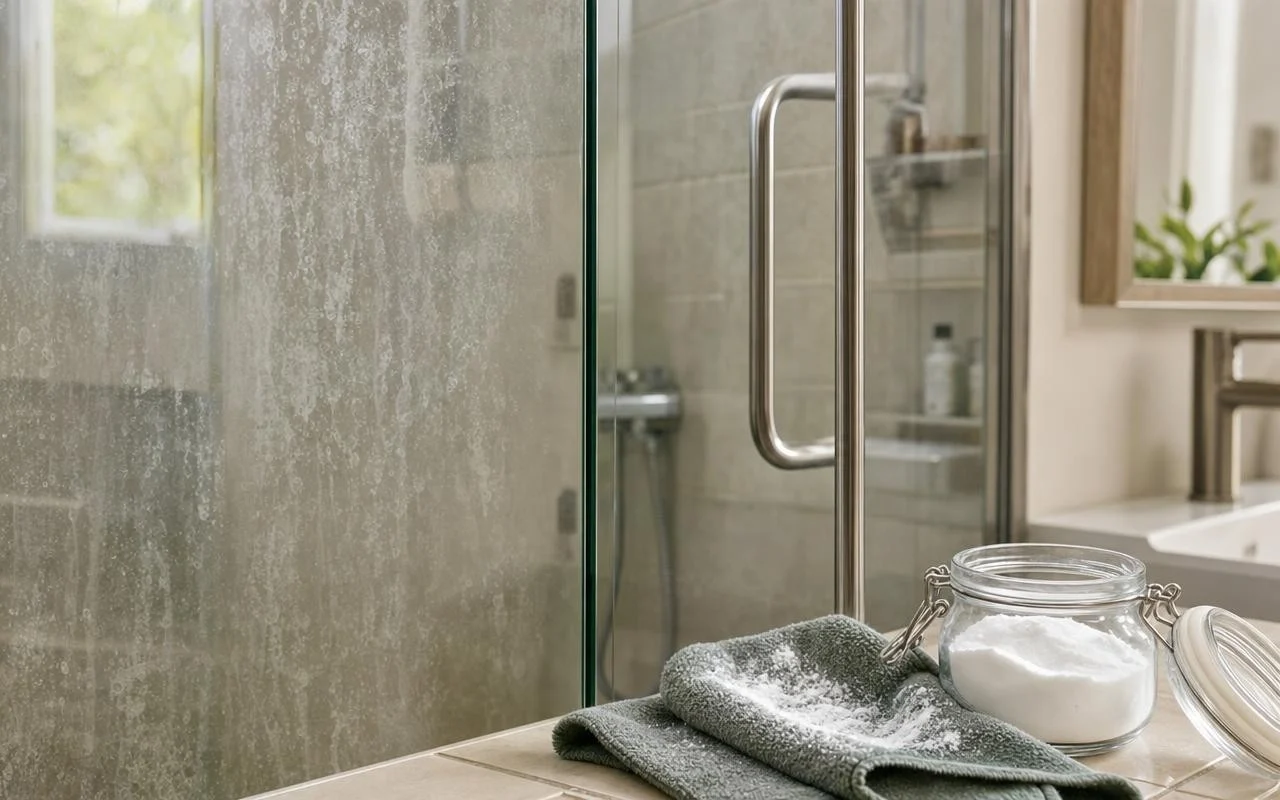
A white veil on the shower wall, tarnished fixtures, a grayish grout that sticks to the fingers… These soap traces quickly reappear in the bathroom just as in the kitchen. Even after a thorough cleaning, this dull deposit often remains on glass, metal, or plastic.
Technical sheets, notably from American university services, describe a very simple gesture: a damp cloth lightly charged with baking soda, followed by a good rinse and careful drying. This routine may seem basic, but it requires a clear understanding of what is being cleaned. Everything hinges on the nature of the deposit and the surfaces being treated.
Soap film or lime scale deposits: when to bring out baking soda?
The famous soap film forms when soap reacts with minerals in hard water. The result: a deposit that is both greasy and mineral, clinging to glass, mirrors, stainless steel, chrome, the acrylic of shower bases, or even the grout between tiles. Water alone removes it poorly, and standard products often slide off it.
Maintenance guides distinguish this film from lime-scale crusts. Household acids (white vinegar, citric acid) dissolve pure lime scale very well, while baking soda, slightly alkaline and a mild abrasive, acts mainly by scrubbing the soap residues. A simple clue: a rough, very hard, pure white deposit with a lime-scale tendency; a smoother, greasy or grayish film, more of a soapy film. Reserve baking soda for the latter case, and do not mix it with an acid in the same step.
The damp cloth + baking soda method to scrub soap traces
The University of Georgia Extension sheets indicate that a bit of baking soda on a damp cloth “cuts” through the soap film on many indoor and outdoor surfaces. The logic is simple: first rinse with clean water to remove the bulk of dirt, then target the remaining deposit. Dampen a microfiber cloth, wring it well so that it stops dripping, then sprinkle a fine layer of powder on the area to be treated.
The subsequent motion remains gentle: small circular movements, without pressing as if tackling a set-in stain. Baking soda acts like a very fine eraser on the soap film. Once the veil is lifted, rinse carefully with a sponge or a shower head until no grains remain. Technical documents emphasize the final step: drying with a dry cloth or a squeegee to prevent water from redepositing minerals and to avoid a white baking soda film from not being rinsed properly.
Compatible surfaces and mistakes to avoid with baking soda against the soap film
The same guides recommend this method on metals (aluminium, brass, copper, stainless steel, chrome), washable walls and ceilings (glass, mirrors, tile, painted wood or plastic-coated wood), acrylic, fiberglass, joints, but also exterior claddings in aluminium, vinyl, or painted wood, where soap quickly leaves a dull film. On these substrates, the combination of damp cloth + baking soda remains fairly gentle when you avoid aggressive rubbing.
- Glass and mirrors, including shower enclosures
- Stainless steel, chrome, fixtures and shower bars
- Wall tile and cement joints
- Acrylic, resin, fiberglass of basins and bathtubs
- Painted wood, laminate or washable plastic-coated surfaces
- Exterior painted coverings, aluminium or vinyl
Cleaning specialists, however, remind that on very polished surfaces, such as polished marble, some polished calcareous stones, or delicate waxed concretes, even a mild abrasive can end up dulling the appearance. Testing on a less visible area remains essential. Another caveat from the technical sheets: on wallpaper, alkaline products can attack the glue. It is better to limit baking soda, work with a barely damp cloth, dab rather than scrub, then dry immediately by pressing with a dry cloth. In all cases, avoid mixing vinegar and baking soda at the same moment, test on a discreet corner, ventilate the room, and keep powders out of reach of children.
