
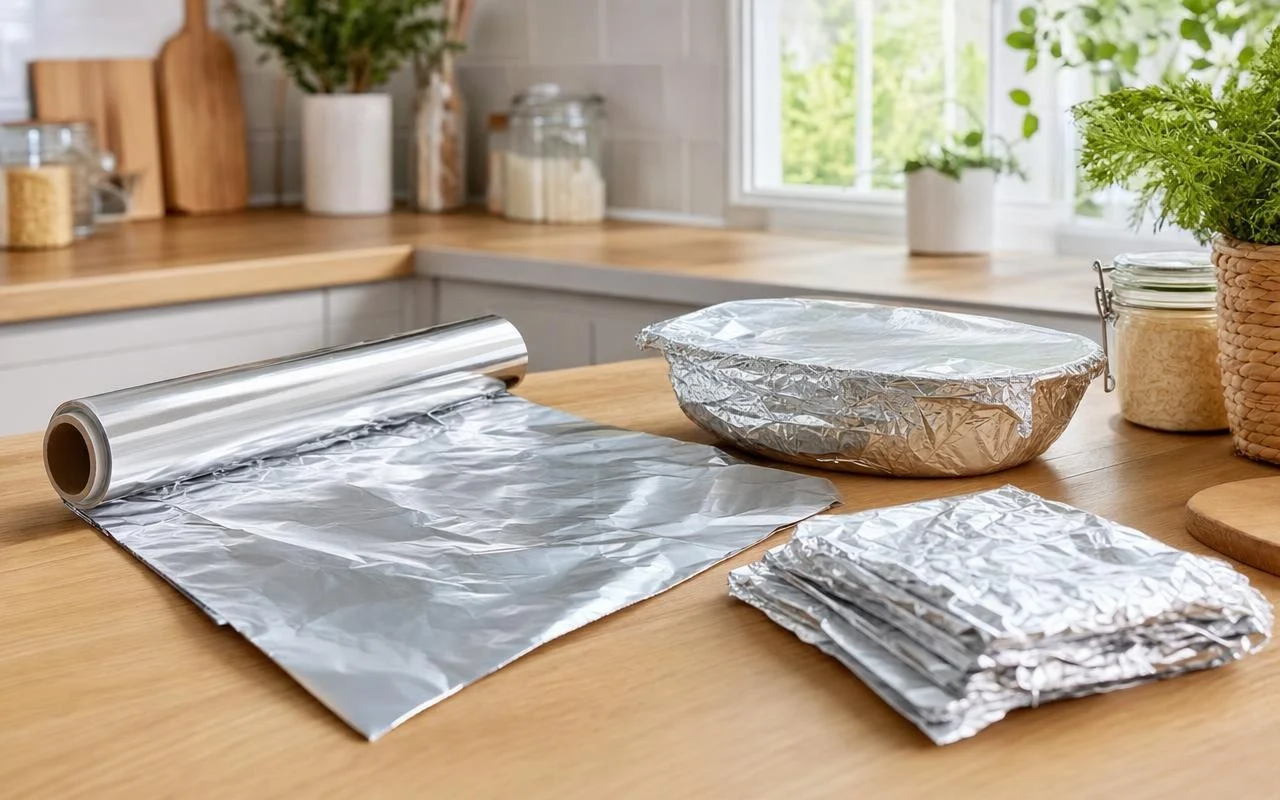
In many family kitchens, a sheet of aluminum foil is used once… and then tossed into the trash with a tinge of guilt. Between the desire to cut down on waste and the fear of microbes, the question keeps returning: is it reasonable to keep this sheet almost intact for a future use? The issue touches on the wallet, on comfort, and on food safety.
To answer the question, chefs and specialists interviewed by the American site Martha Stewart, in an article published on March 22, 2026, scrutinized our habits. Cook Dennis Littley, scientist Jessica Gavin, and infection-prevention nurse Shanina Knighton distinguish cases where reusing aluminum foil remains a straightforward matter of common sense, from others where the risks outweigh the apparent ecological benefit. The boundary isn’t always where one might expect.
Using Aluminum Foil Safely: The Experts’ Verdict
For Dennis Littley, “in most cases, aluminum foil can be reused without danger.” He emphasizes three key points: “how it was used, what it touched, and how it was cleaned before storage.” In other words, the starting situation matters more than the mere instinct to avoid waste.
The scientist Jessica Gavin takes a more cautious stance: to limit risks, she advises discarding the sheet after a single use, “unless it was used solely as a lid at room temperature and remains free of food residues.” Shanina Knighton also warns that, “without proper cleaning and maintenance, reusing aluminum foil can promote microbial contamination and foodborne illnesses.”
In Which Cases Is Reusing Aluminum Foil Reasonable
The experts agree on one reasonable scenario: when the sheet has simply covered foods that are dry or low in fat, non-acidic, at room temperature. Bread, roasted vegetables, cookies, and cakes without frosting or sauce fall into this category. As long as the foil remains visibly clean, free of stains, odorless, and without burned areas, a second use for the same type of foods does not pose any particular problem.
In this case, a simple wipe-down or a quick rinse with clear water is enough, provided you smooth the sheet out well and dry it completely before storing. Shanina Knighton recalls that residues from cleaning products or detergents can get trapped, especially if the foil is very crumpled or has deep folds. These traces can then end up on the foods and expose them to unwanted substances, which diminishes the appeal of an overly vigorous wash.
When It’s Better to Forego Reusing Aluminum Foil
As soon as the sheet is torn, punctured, heavily crumpled, or covered in melted cheese and sauces, the specialists are clear. Chef Rocco Carulli sums it up: “if the aluminum foil is crumpled to the point where it’s unrecognizable, covered with melted cheese, or looking like a battlefield of a kitchen, it’s better to throw it away.” Jessica Gavin adds that pronounced creases and micro-tears trap food particles and weaken the protective barrier.
Another case deemed impractical: any sheet that has touched raw meat, raw fish, or other highly perishable foods. For Rocco Carulli, “bacteria love this kind of environment.” The same warning applies to a sheet used with acidic foods like tomatoes, citrus, or vinegar-based dishes, which can attack the metal, or to a damp sheet kept for a long time, which invites mold. In all these situations, the experts recommend discarding it or, at best, repurposing it for household uses that do not involve direct contact with foods, or recycling it if it’s clean.
