
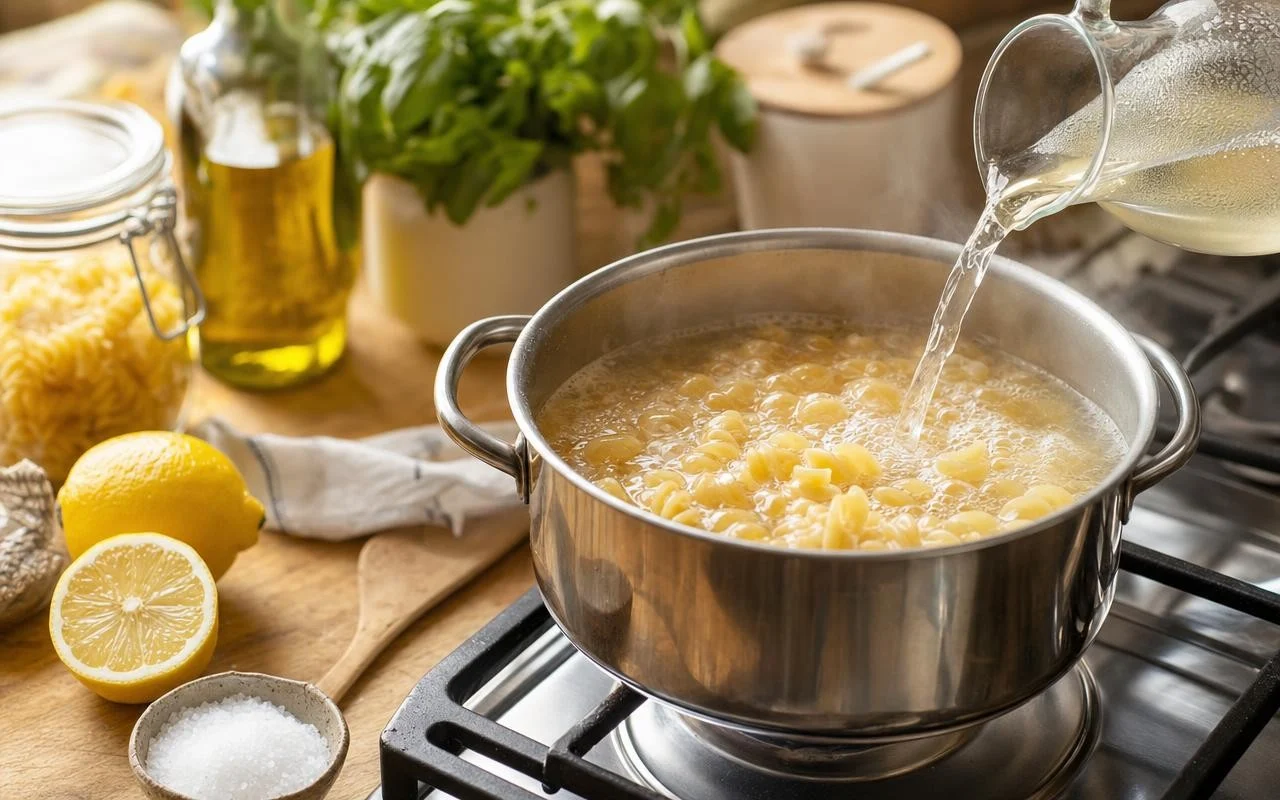
People often believe that cooking pasta is the simplest task in the kitchen. Then you end up with a compact mass that only comes off with the fork, despite a spoonful of oil added to the pot and a pinch of salt thrown in as a precaution. These habits are widespread, but they don’t tackle the real problem.
Italian cooks and grandmothers who have watched over their pots for decades have a very different reflex, far more discreet, that hinges on starch science. It complements a few basic cooking steps and is enough to obtain pasta that doesn’t stick, even without oil or excess salt. The question remains: which discreet ingredient really changes everything in the pot.
Why pasta sticks and why oil doesn’t fix it
When the pasta hits the boiling water, the starch it contains starts to migrate toward the surface and into the water. A thin film forms around each strand of spaghetti or macaroni. If the pieces stay pressed together too long, this starch layer acts like glue. This is precisely what a Spanish cooking article notes, reminding readers that the main culprit of sticking is this component released into the hot water.
Pouring oil into the pot changes almost nothing, because oil floats on the surface and doesn’t cover the pasta during cooking. Worse still, once drained, oiled pasta tends to hold onto sauce less well. Salt, on the other hand, mainly adds flavor. In some very salty recipes, Top Santé even notes that Italian cooks recommend tasting before adding more, since anchovies, capers, or olives already contribute a lot of salt. To affect sticking, you must manage the starch, not grease the water.
L’am grandma’s trick: a few drops of apple cider vinegar in the water
In family kitchens, another ingredient has long served as a Plan B: apple cider vinegar. The trick is to add a few drops of vinegar to the cooking water. The amount is truly modest, because the idea isn’t to perfume the pasta, but to take advantage of the acidity during cooking. The final taste remains neutral if you stick to a splash of vinegar in a large pot.
This grandmother’s tip aims to limit the starch film that makes the surface overly sticky. It works for spaghetti as well as for penne or macaroni. You pour the vinegar into the water once it’s really boiling, just before adding the pasta. This step doesn’t replace the rest of the method, but it gives a welcome boost when you want well-separated pasta without resorting to oil.
The complete method for pasta that doesn’t stick, from heat to draining
The foundation remains technical. Start with a large pot and plenty of water, as Doctissimo reminds when comparing cooking rice to pasta: cook in a generous volume, then pour off the cooking water. When the boil is really vigorous, add the pasta and stir immediately to separate the pieces. During the first minutes, it’s better to stir regularly, especially with long shapes, so that no lump forms at the bottom.
The time indicated on the package serves as a valuable reference. Pasta that is overcooked becomes soft, releases more starch, and sticks more. Targeting an al dente texture limits this phenomenon and also gives a better bite. As soon as the timer goes off, drain without delay. You can then use the Italians’ final weapon: “Never rinse the pasta! Keep a little cooking water to bind the sauce as in Italy,” advises Francesca, cited by a recipe site. This starchy water helps the sauce coat each piece well, keeping the pasta supple, glossy, and separate on the plate.
Sources
- Doctissimo
“Arsenic in Rice: The Cooking Trick Validated by the FDA to Remove Up to 60% of This Contaminant” - Top Santé
“The simplest pasta recipe: 4 ingredients, ready in 10 minutes (tip from an Italian)”
