
What, for many families, is simply a baby tooth that falls out can become a pivotal element for studying the brain. That is the idea behind Sagutxoa, a scientific project that starts from baby teeth donated by children with rare neurodegenerative diseases to obtain neurons and analyze them in the laboratory.
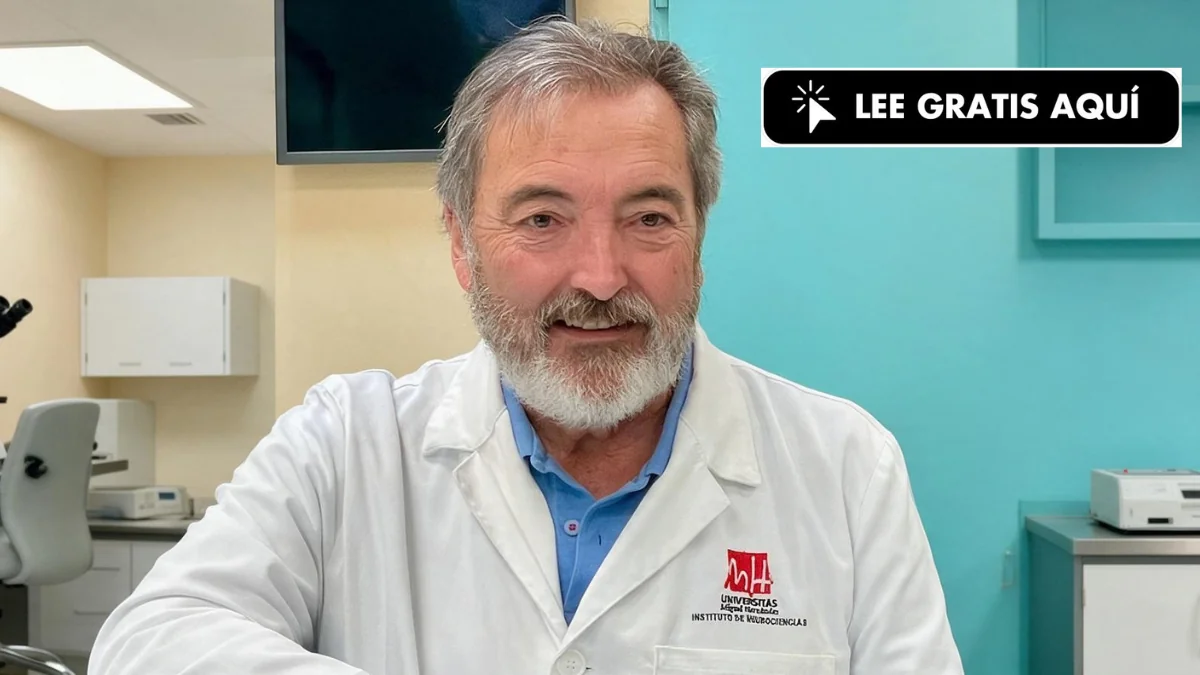
At the helm of the scientific team is Salvador Martínez, a professor at the Miguel Hernández University and a researcher at the UMH-CSIC Institute of Neuroscience, who works on a research that blends neuroscience, biotechnology, artificial intelligence and quantum computing.
The objective is to generate cellular models that allow studying diseases directly on human neurons and to obtain information that helps identify new therapeutic pathways.
The research is currently in a preliminary phase, focused on verifying the viability of the process and the potential of the neuronal models obtained from teeth.
The remarkable journey of a baby tooth to becoming neurons
The key lies in the dental pulp. Within it there are cells related to the neural crest that can give rise to neurons. According to Martínez, the team has verified that these cells can become neurons without the need to genetically modify their genome.
The process thus allows obtaining in the laboratory neuronal cells derived from a specific patient.
This opens an especially interesting possibility for research into rare diseases: instead of studying only animal models or generic cells, researchers can work with neurons that retain characteristics of the patient themselves.
“From a baby tooth we can obtain neurons to understand and treat brain diseases,” Martínez explained in an interview published by the Querer Foundation.
The methodology thus makes it possible to observe how these neurons behave, how they establish connections with one another, and what differences they present compared to cells obtained from people without the disease.
The team plans to perform various experimental tests to generate information about the alterations associated with each pathology.
And that is where one of the project’s great particularities appears: it is not merely about creating neurons, but about turning them into a model to study what happens in the brain.
What can a baby tooth reveal about a brain disease?
Once the neurons are obtained, researchers can study different cellular and molecular characteristics. Among them are aspects related to their electrical functioning, the proteins they produce, or the expression of certain genes.
In the case of Sagutxoa, the research contemplates comparing neurons derived from children affected by particular diseases with neurons from people who do not have those pathologies.
The aim is to detect differences that could help to better understand what happens in nerve cells.
The research begins with rare neurodegenerative and neurological diseases, including adrenoleukodystrophy and certain forms of congenital epilepsy, with the possibility of later expanding the study to other pathologies.
Additionally, these neurons allow laboratory testing and observing how they respond to different experimental conditions. In the future, this kind of model could contribute to studying potential treatments before moving on to other phases of research.
The great advantage is having a human system on which to directly observe certain disease-related alterations.
Artificial intelligence and quantum computing: the next step
But the project does not end in the laboratory. Each of the tests performed on the neurons can generate enormous amounts of information.
Here, technology comes into play.
The project proposes combining the data obtained from studying the neurons with artificial intelligence and quantum computing to try to find patterns that are not easily detectable by conventional methods.
The idea is to cross different types of information obtained from the cells and analyze it jointly. In this way, researchers hope to identify possible patterns related to diseases that could become new leads for research.
The Sagutxoa technology team is led by researchers specialized in artificial intelligence, quantum computing, and neurocomputing. The project contemplates using these tools to analyze large volumes of data generated during the experiments.
It is precisely this combination that makes Sagutxoa a particularly singular research effort: a baby tooth becomes the starting point for generating human neurons; those neurons produce data and that data can be analyzed with advanced technologies to search for new clues about brain diseases.
Although the approach opens up new possibilities, researchers emphasize that the project is still in an early phase. The immediate objective is to verify the entire process and determine what information these cellular models can truly provide.
The initiative is driven by The Walk On Project (WOP) Foundation and involves the UMH-CSIC Institute of Neuroscience and other technological collaborators. The first phase contemplates a budget of 120,000 euros and aims to lay the groundwork for continuing to investigate different neurodegenerative diseases.
The potential, therefore, lies in something seemingly everyday: a tooth that falls out during childhood may contain cells capable of turning into neurons and, with them, offer researchers a new way to study the human brain.
And that is precisely the grand objective of Salvador Martínez and his team: to transform something as small as a baby tooth into a tool that allows a better understanding of some of the most difficult neurological diseases to study and, in the long term, open new avenues to finding treatments.
