
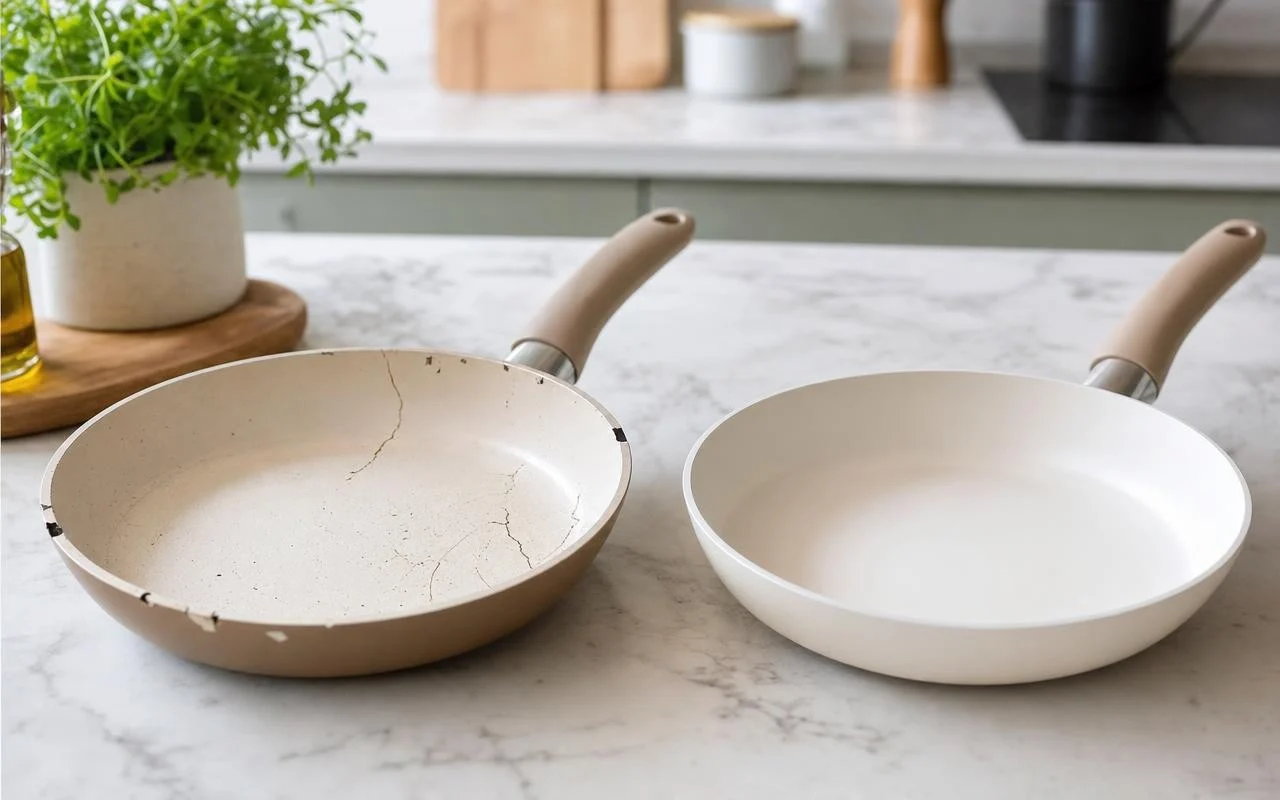
Your beautiful ceramic-coated pan looked flawless when you bought it, and a few months later the coating starts staining, scratching, and sometimes even chipping in places. The food sticks, tiny flakes appear at the rim, and you wonder: is this normal wear and tear, or a real safety issue on the plate? It’s hard to know if you can still cook in it without risk.
The ceramic coating offers a non-stick surface without PTFE, but it remains hard and brittle, somewhat like a porcelain plate. Exposed to shocks, to high temperatures, and to overly aggressive cleaning, it ends up cracking or peeling away. Behind these seemingly sudden defects lie always the same everyday habits. And they are often banal reflexes.
Pourquoi une poêle en céramique s’écaille ou se fissure
Most so‑called ceramic pans have a body made of aluminum or stainless steel coated with a very hard ceramic layer, silica-based. This coating handles moderate heat well, but it dislikes extreme temperatures or abrupt changes. At very high heat, especially if the pan is preheated empty, the temperature can quickly rise above 230°C. The underlying metal expands more than the ceramic layer, creating internal stresses. Over time, these stresses cause microcracks, loss of adhesion, and then chipping.
The infamous thermal shock also plays a major role: moving from a hot flame to cold water in the sink, or placing a hot pan on a frozen work surface, makes the metal expand violently while the ceramic remains rigid. The coating can then crack like a chipped mug. Falls to the floor, impacts on the edge of the sink, stacking without protection, and repeated use of metal utensils or abrasive sponges add deep scratches that become rupture points. Once the chip is gone, the weakened area expands quickly.
When a damaged ceramic pan really needs to be replaced
Before deciding, you should inspect the cooking surface while clean and under oblique light. A simple craze, those fine spiderweb microcracks signal a worn but still continuous coating: the pan sticks more, but the material isn’t breaking apart. A few superficial scratches or small chips on the exterior or rim, away from the area where you brown food, are generally tolerable. You can continue to use the pan for gentle cooking, with a little more fat.
The limit comes as soon as the chipping affects the area that contacts the food. If pieces are missing, if tiny enamel grains end up in the dish, or if you start to see bare metal at the bottom, the pan should be set aside. Ceramic fragments swallowed are considered inert in small amounts, but cooking on exposed uncoated aluminum, especially with acidic foods (tomato, lemon, wine, vinegar), can lead to metal migration into the food and impart a metallic taste. Specialists also estimate that these pans have an average lifespan of about two years, extending to up to five years with careful use.
Les bons gestes pour garder vos poêles en céramique intactes plus longtemps
To avoid cracks and chips, the first reflex is to lower the flame. These coatings are designed for medium heat, not for the most violent searing. Avoid preheating the pan empty; always add a little oil, butter, or liquid before heating to cushion the heat. For grilling a steak at very high heat, it’s better to pull out a thick stainless steel or cast‑iron pan. After cooking, let the pan cool for a few minutes on its side before washing, to limit repeated thermal shocks.
The second key is daily gentleness. Favor wooden or silicone spatulas and spoons, and keep knives, forks, and metal whisks out of this surface. The washing should be done by hand, with a soft sponge and standard dish soap, avoiding steel wool or abrasive powders; the dishwasher—with its strong detergents and high-pressure jets—wears the coating out faster. For storage, avoid stacking pans directly: a cloth, a thin trivet, or a felt disc between each pan minimizes impacts.
