
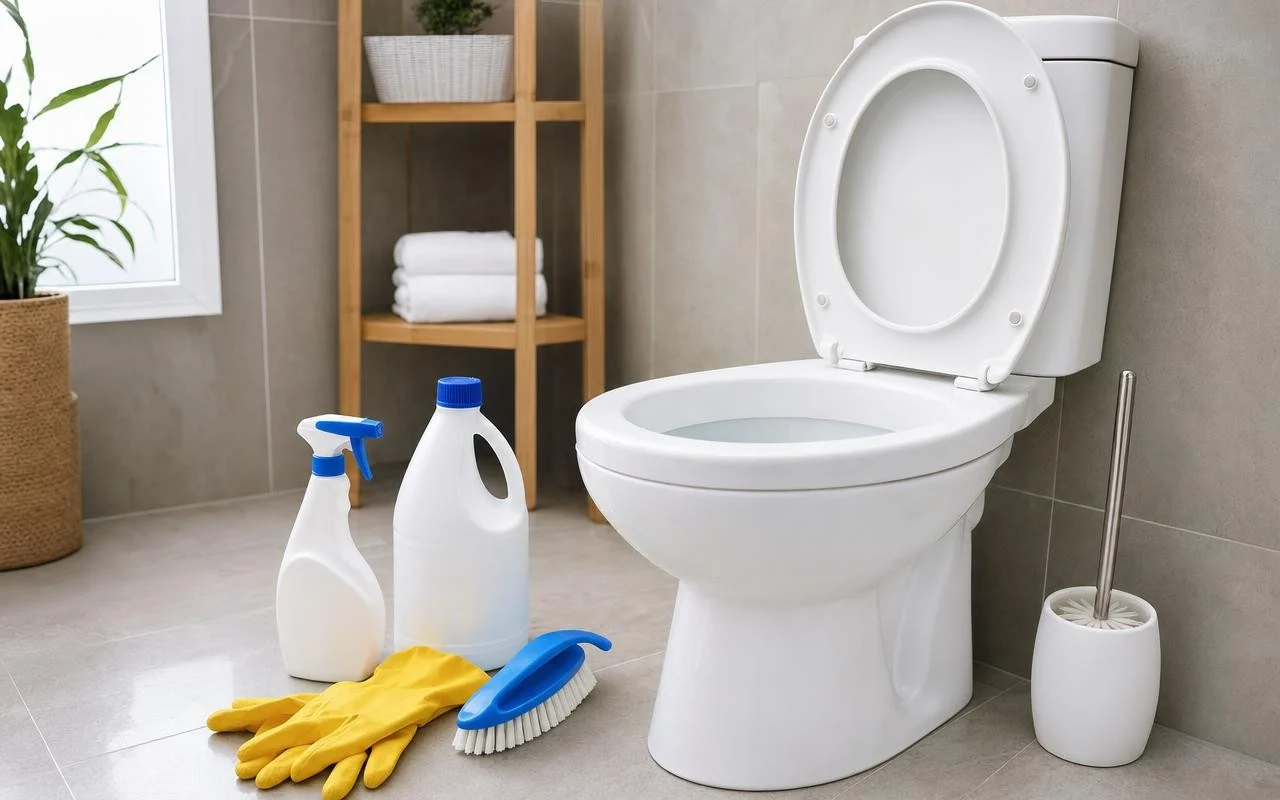
The toilet is one of the dirtiest spots in the home, yet many households handle it poorly: too many products, the wrong order of steps, bleach poured haphazardly into the bowl. The chemical engineer Diego Fernández, widely followed on social media, decided to restart from scratch by explaining step by step the correct scientific method. “I’ll show you what I’ve learned about the right way to clean the toilet bowl,” he announces.
His message is simple: aiming to disinfect at all costs is pointless if the surface stays dirty, and mixing products can even release toxic gases. Diego Fernández’s recommendations align with those of the Centers for Disease Control and Prevention (CDC) and the Environmental Protection Agency (EPA). And his five-step routine brings order back into the chores of cleaning the toilet.
Cleaning the toilet bowl properly: why you must first remove the dirt
For the engineer as for the CDC, cleaning and disinfecting are not the same thing. Cleaning, with water and a detergent or soap, removes most germs by eliminating organic matter and visible residues. Disinfecting comes only afterward, to further reduce remaining microbes. In other words, starting by pouring a disinfectant into a dirty bowl does not amount to a proper toilet cleaning.
Diego Fernández insists: dirt particles and mineral deposits can weaken the effectiveness of a disinfectant. The CDC therefore recommends always cleaning first, then applying a disinfectant only if necessary. In a home with no sick person, regular thorough cleaning of the bowl, the seat, and the flush is usually enough for a healthy toilet.
The five-step method of the chemical engineer for a truly clean bowl
In practice, the engineer sums up the correct way to clean the toilet bowl properly in five simple moves, in this exact order:
- Remove visible dirt (tissue, residues, deposits under the rim).
- Clean with a bathroom or toilet-specific product and a brush.
- Rinse away the cleaner remnants, for example by flushing.
- Apply a disinfectant, following the label’s instructions exactly.
- Respect the indicated contact time before scrubbing or flushing again.
This famous “contact time” is essential: if you wipe or flush too soon, the disinfectant has not had time to act fully. The CDC also reminds that at home, frequent cleaning is sufficient in most situations. Disinfecting the bowl and contact areas becomes truly useful when a household member is sick or particularly vulnerable to infections.
Chemical safety in toilets: mixtures to absolutely avoid
On the question of products, the article relaying Diego Fernández’s advice sums up one clear rule: “There is one rule you must never break: never mix cleaning products.” The warning mainly targets bleach, never to be combined with other cleaners or disinfectants. The CDC and EPA remind that these mixtures can release gases harmful to health.
A well-known example for chemical safety services: a mixture of bleach and an acidic product (certain descalants or vinegar) can produce chlorine gas, irritating to the eyes and airways. The EPA also advises properly ventilating the room during the use of household cleaners. Practically, it’s better to rinse the bowl thoroughly, flush several times, open a window or turn on the ventilation between products.
Adopting this reflex “one product at a time,” while respecting the order to clean then disinfect and the contact time, protects health while making products more effective. Once the method is ingrained, maintaining the bowl, the seat, the lid, and the flush button becomes mainly a matter of a well-tuned routine.
