
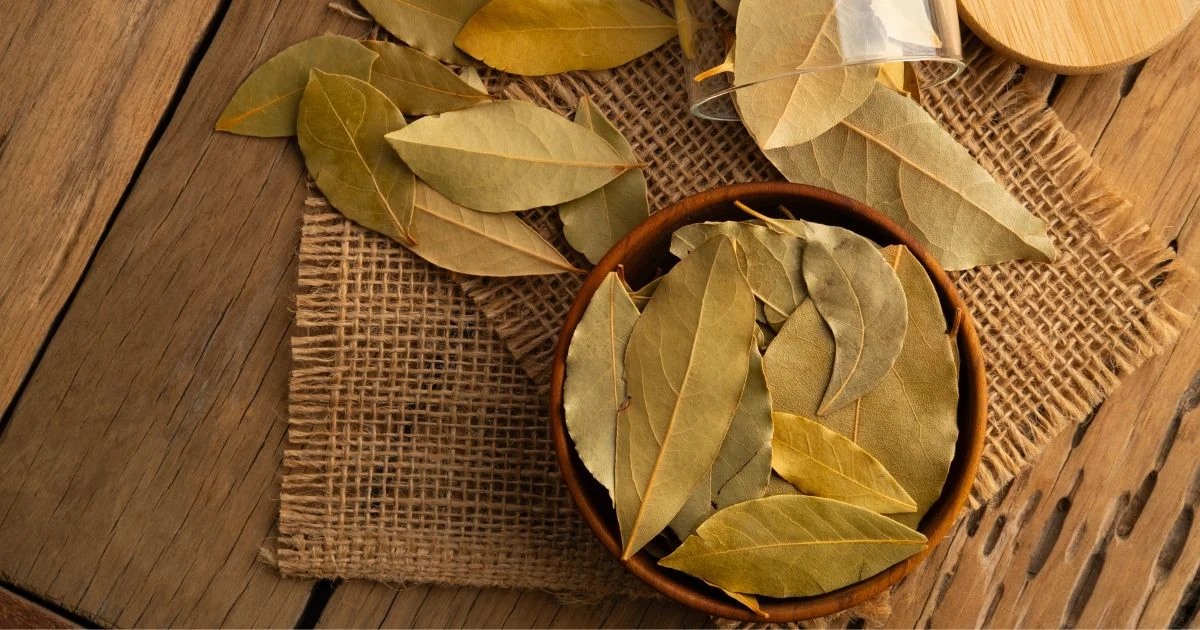
The bay laurel is not merely used to fragrance simmering dishes. For a long time, its leaves have also been employed in various domestic practices, whether to spread a pleasant scent, to keep certain insects at bay, or to prepare infusions. Another use, more surprising, involves pairing them with salted water. This preparation is notably used in some traditions to “purify” the interior of the home and to create an atmosphere deemed more calming. While this energetic aspect belongs primarily to beliefs and is not scientifically supported, the combination of salt and bay remains a simple trick that intrigues by the place it occupies in popular customs.
Laurel in salted water: a gesture that is mostly symbolic
The principle is particularly simple: a few bay leaves or small branches are dipped in a container containing salted water. In the traditional practice described, they can also be gathered with a thread or a black ribbon, then used to spray a few drops of the mixture into different rooms. The salt is then believed capable of absorbing the “negative energies”, while the bay laurel has been associated since Antiquity with protection and purification, reports the site Okdiario. It is not, however, a cleaning method in the sanitary sense, but rather a symbolic ritual to which some attribute effects on the ambiance of their dwelling.
While the energetic aspect belongs to the realm of beliefs, laurel nonetheless possesses real characteristics that partly explain its popularity in domestic settings. Its leaves emit a powerful aromatic scent when they are moistened, heated, or crushed. They also contain various aromatic compounds, among which eugenol. It is especially for their distinctive perfume that some people place bay leaves in the bathroom or use them in bathwater. With heat and steam, their fragrance spreads more easily, helping to create a pleasant atmosphere, even though the relaxing effects attributed to them remain largely connected to each individual’s perception.
In the bath, bay laurel reveals another one of its uses
Use of bay laurel in the bath has, in fact, become popular for this reason. A few leaves can be placed directly in hot water to release their aromatic compounds. They are traditionally believed to have soothing properties, and some users appreciate this scent in a routine devoted to relaxation. Bay laurel also contains antioxidants and various compounds studied for their biological properties. This does not mean that a bath containing a few leaves can treat irritation, a skin condition, or another health issue: the advantages observed in certain extracts or essential oils cannot automatically be transposed to this domestic use.
This Mediterranean plant is also known for its traditional uses well beyond the bathroom. Its leaves are commonly consumed as an infusion, often after a meal, and have long been used to aid digestion. Extracts and the essential oil of laurel have likewise been studied for their antimicrobial and antifungal properties. Here again, it is better to distinguish laboratory results from the effects of a simple leaf used at home. In the home, its main appeal remains its strong fragrance, which also explains why the laurel is sometimes placed in cupboards or near openings as a natural repellent against certain insects.
To purify the home, bay laurel is more a tradition than a science
Thus, salted water with bay laurel can find a place in a domestic routine, but without attributing to it powers that have not been demonstrated. Used to lightly perfume a room or as part of a personal ritual, the preparation is primarily interesting for its simplicity and low cost. However, it does not replace cleaning products when disinfection of a surface is required, nor a medical treatment when a skin issue or health problem arises. As for its ability to rid a home of supposed negative energies, it remains a symbolic practice and not a scientifically established phenomenon.
Ultimately, dipping a few bay leaves in salted water answers mainly to a tradition that links two common ingredients to the idea of purification. The gesture may appeal to those who appreciate this type of ritual, while others will simply find another way to enjoy the scent of this plant. Bay laurel indeed maintains a wide range of uses in the home, from cooking to infusions to aromatic preparations. The key is to distinguish its well-established properties from the benefits attributed by tradition: in salted water, its interest is primarily olfactory and symbolic.
