
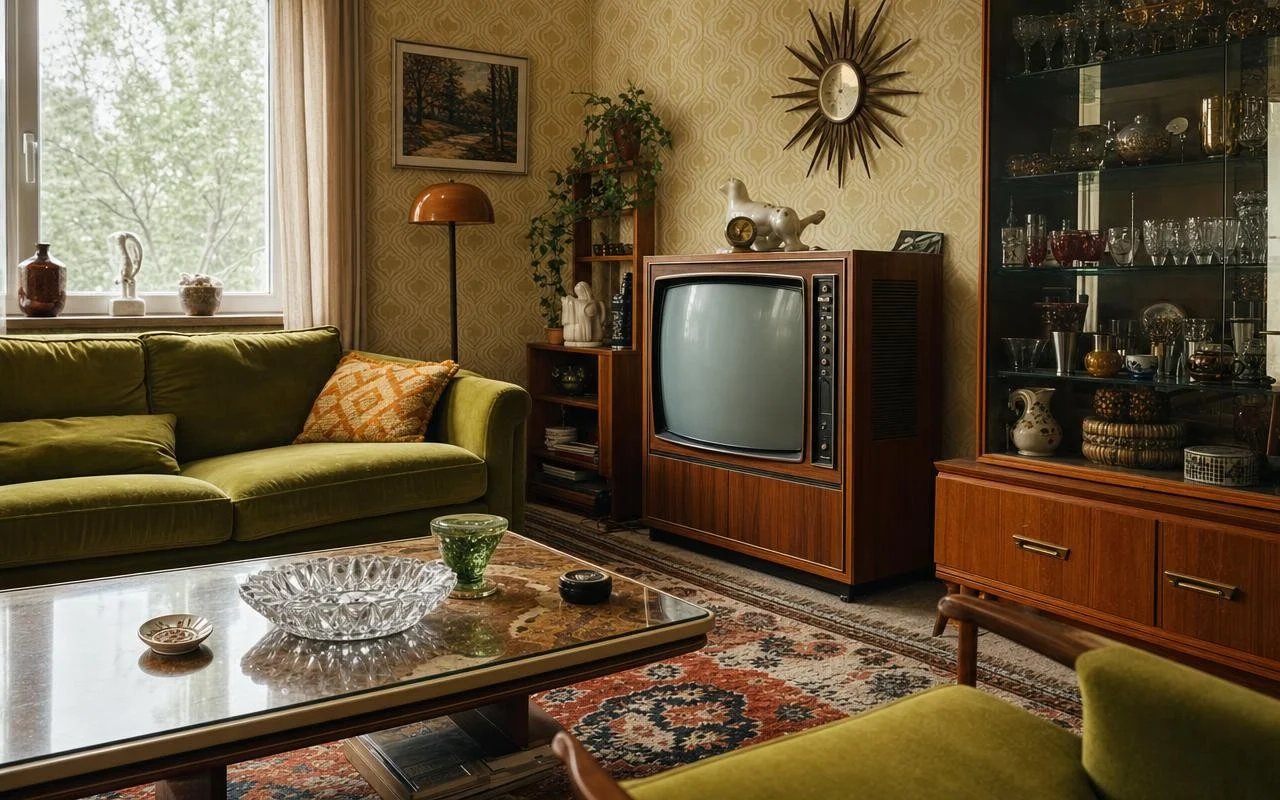
Harvest yellow tones, avocado green, burnt orange, plants everywhere, and a monumental television dominating one corner: just the memory of a 1970s living room is enough to summon an entire era. A ranking updated on September 6, 2026 also lists 21 objects that have become iconic in these living spaces, to the point that some of them had been completely forgotten.
Between macramé, bead curtains, and early audiovisual devices, the heart of the home changed quickly, caught between the end of the sixties and the thunderous arrival of the eighties. Neighbours were welcomed there, neighborhood meetings were organized there, all while tacit rules governed certain untouchable accessories. And some of these 70s living room objects softly resurfaced.
Colors, Materials and Small Rituals of 1970s Living Rooms
The color code was very pronounced: a trio of harvest yellow, avocado green and burnt orange dominated the walls, carpets, and sometimes even the sofas. This warm base blended with natural materials, such as wood or wicker, and an abundance of plants. Hanging macramé, beads separating the hallway from the living room, all contributed to creating this bohemian atmosphere that family photos hint at.
The room had to stay ready to welcome guests, from neighbors to the famous plastic-box party. The mistress of the house ensured the living room was immaculate, with play zones accessible and others reserved for adults. A crystal ashtray perched on the coffee table, coasters brought out only for guests, a bowl for keys near the entry door: these small, seemingly trivial objects embodied the domestic protocol of the era.
Iconic Furniture and Showcases of the 70s
In many interiors, the closed sideboard — sometimes a low Scandinavian sideboard — stretched along an entire wall and weighed down the perspective. Today, a typical 70s piece makes a comeback: the vintage display cabinet in teak, rosewood, light oak, or walnut, with glass doors outlined by slender frames, often perched on a compass foot. Born in those years, it housed Sunday china and crystal glasses and, in 2026, it becomes a centerpiece of the living room, with restored models estimated at roughly 600 to 1,500 euros, or even more than 2,000 euros for designer creations.
Its shelves now display artisanal ceramics, blown-glass vases, thrifted stemware, and art, culinary, or garden books. Around it, other cult pieces return to the foreground:
- Table en loupe : an icon of the 1970s, its striking-grain top becomes a coffee table in front of the sofa.
- Vintage trunk in wood and leather: patina, fittings, and possible travel stickers make it a chic coffee table or chest.
- Mushroom lamp : an icon of the 1960s with a rounded Space Age silhouette, it creates a bright focal point on a sideboard or near a reading corner.
- Closed buffet rustic or low Scandinavian: a grand classic that drew a long, massive line along the wall.
The vintage market continues to grow according to SNCAO-GA, and these pieces no longer stay long on display when they appear at flea markets.
When Technology Invaded the Living Rooms of the 70s
Another memory strikes: the TV console, a huge television cabinet that hardly ever moved. In many families, when a newer model arrived, the old one wasn’t disposed of; they simply placed the new television on top of the first. A result that today looks astonishing: two screens stacked, sometimes both lit at the same time, integrated as if it were just another piece of furniture in the living room décor.
Around this television duo, the same codes of objects returned: a crystal ashtray considered untouchable, coasters neatly aligned, plants staged as in a small gallery. When one of these elements is unearthed today, the details make the difference: bubbles trapped in blown glass, natural oxidation of the metal, irregularities in the varnish, or a discreet signature. Experts note that simple mirrors or antique glassware have risen from about 50 to over 300 euros depending on condition, and that a demijohn bought for 15 euros was valued at more than 120 euros after cleaning. It’s enough to look at these 21 classic objects differently when browsing a flea market.
Sources
- Maison & Travaux
“The seniors know it: this retro 70s furniture replaces the closed sideboard and reveals the chaos of your living room” - Modes & Travaux
“Flea markets 2026: if you find one of these 3 vintage objects, place it at the center of your living room—it’s worth gold”
