
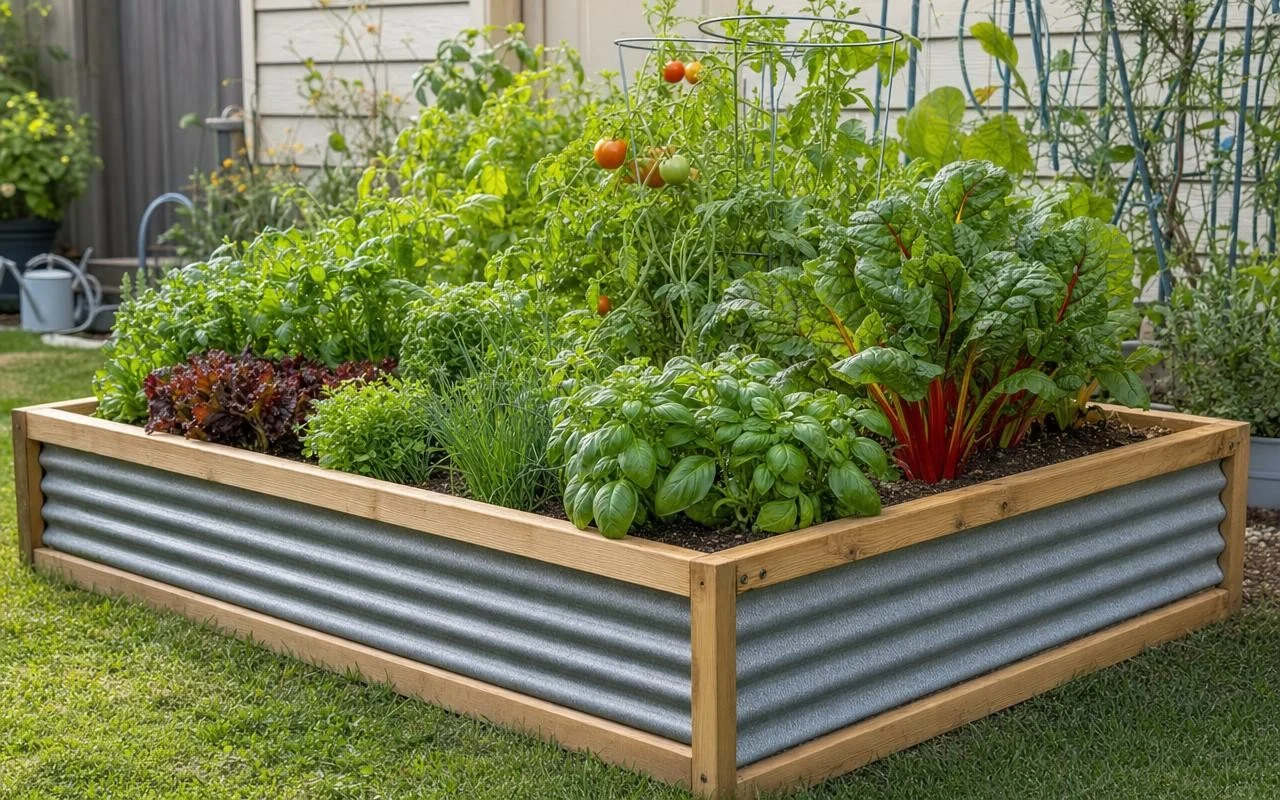
Wooden planters sold in garden centers promise a back-friendly garden, but the bill climbs quickly and the boards eventually rot. Many gardeners dream of a durable, comfortable, and affordable raised vegetable bed, without blowing their whole budget. Between pallet wood that swells and ready-made kits priced at hundreds of euros, one approach remains largely underestimated.
Ready-to-use beds typically cost between 30 and 420 €, while a homemade model can come in at under 30 €, even under 20 € by reusing materials. The aim: a raised square that is almost rot-proof, lasts for decades, stays healthy for vegetables, and can be built in an afternoon. This solution already exists on roofs and metal cladding.
Why a durable raised vegetable bed changes everything
A raised bed places the soil at a height of 80 to 90 cm, which eases the back and knees, including for seniors or people with reduced mobility. With a width around 1.20 m and 30 to 40 cm of substrate, you reach the center of the bed without stepping on the soil, which significantly boosts productivity. The soil is made to measure, even if the garden is clayey or polluted.
The choice of material determines the lifespan. An untreated pine hardly lasts more than five years, treated wood around three to five years, while naturally durable species such as Douglas fir, larch, or chestnut can last ten to fifteen years in contact with soil. Corten steel, by contrast, exceeds fifty years according to comparisons, and galvanized metal remains in good condition for more than 20 to 30 years, with no rot risk.
Galvanized corrugated sheet: the overlooked option for a DIY raised bed
This galvanized corrugated sheet, used for roofs and cladding, often ends up in the bin during renovations, while it offers a nearly rot-proof structure for a square bed. These steel or iron panels coated with zinc can be found at professional recycling centers, in resource centers, roofing removal sites, or simply with a neighbor replacing their shed. With a few screws and brackets, a bed can cost less than 20 €, sometimes just the price of the hardware. It remains essential to choose the right panels.
- No perforating rust or suspicious stains.
- Galvanization still visible, with no chipped paint or unknown coating.
- Sufficient thickness to resist bending under soil pressure.
- Clear provenance, away from old industrial sites or chemical drums.
For the structure, two options work well. You can screw the panels inside a thick wooden frame, for example using reclaimed boards or pallets marked HT and not MB, which avoids certain chemical treatments. You can also assemble only the metal with braces and some anti-deformation reinforcements, especially if the length exceeds 2 to 3 m. In all cases, protect the edges with a rubber profile or a split hose, and work with gloves.
Fill and use your metal raised bed
For lasagna-style filling, check drainage, then lay down 5 to 10 cm of gravel or branches, before stacking layers of brown and green materials. Finish with 20 to 30 cm of a well-watered mix of potting soil and compost.
This setup can reduce watering by up to 40%. With galvanized metal, limit acidic soils, ensure drainage and a thick mulch to prevent overheating and excess water.
Sources
- L’Ami Des Jardins
“Here are 19 DIY raised vegetable bed ideas for under €30 that you’ll regret not trying”
