
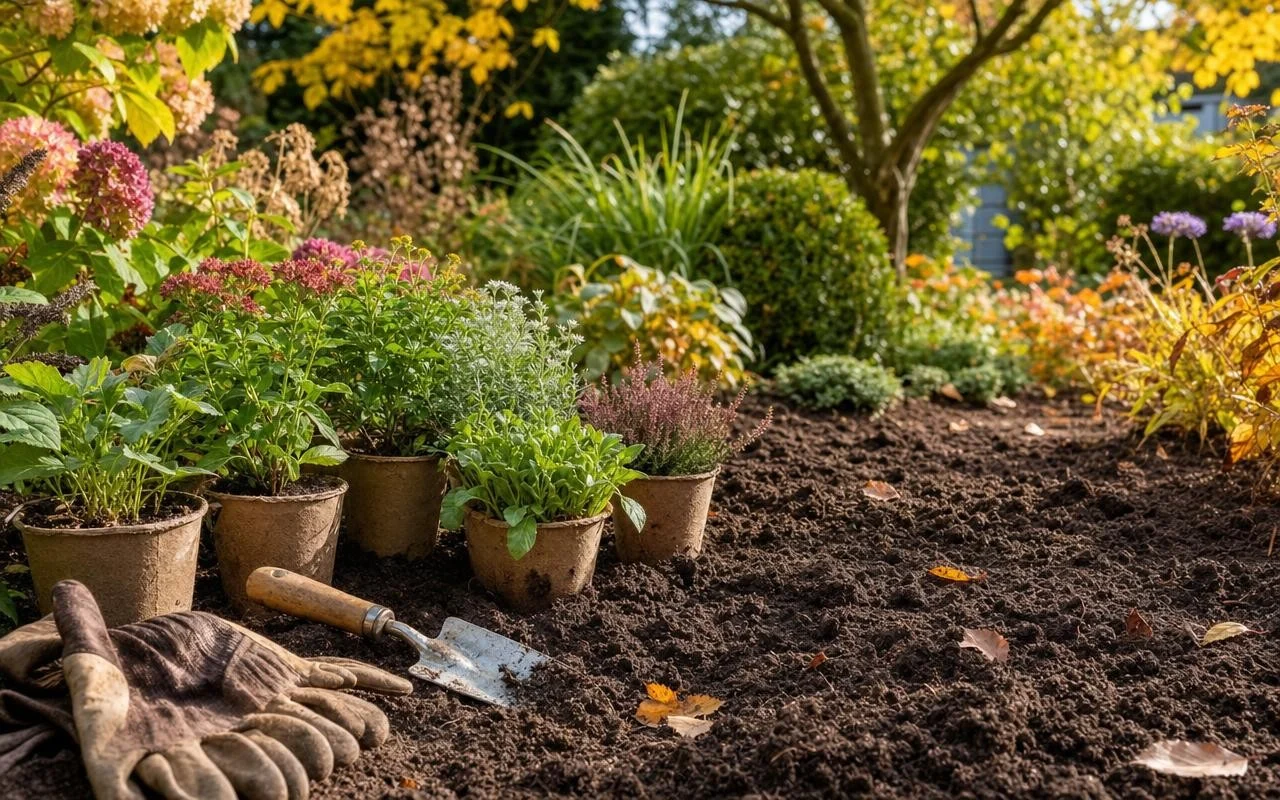
By the end of February, some gardens are already bursting with color while yours is just barely emerging from winter. This gap isn’t only about climate: it often stems from a few anticipatory plantings, carried out discreetly in the previous autumn. September, even as we’re still putting away the sun loungers, is one of the most strategic moments to prepare for this display. Especially if you opt for perennials to plant in September rather than waiting for the return of sunny days.
At this time of year, the soil stays warm, around 15 to 18 °C, while rainfall returns and supplies the moisture roots need. The specialists at Verdeur remind us that perennials installed at this moment develop their roots throughout autumn, well before winter dormancy. The result: in spring, the clumps re-emerge faster, stronger, and occupy space more effectively. The secret of a bed that seems to start “earlier than the others” really lies there.
Why planting perennials in September changes everything for spring
A perennial planted in March must manage both rooting and flowering, which often wears it out. In September, it benefits from several weeks during which only the roots are active, in soil that is still warm but already moistened, as described by Verdeur and Grandma’s Tips. A longer rooting phase before winter strengthens the vigor of the plants in spring and improves their tolerance to late frosts. The clumps also take root more deeply, which reduces damage during successive freeze-thaw cycles.
Landscape designer Caroline Ervin, interviewed by The Spruce, advises planting perennials no later than the early autumn, giving them at least a month before the first frosts to establish their roots. She sums up the value of this planting approach by saying: “Planting perennials that bloom late in summer and in autumn not only adds flowers for that year, but extends the garden’s beauty for the following years,” explains the gardening expert Caroline Ervin. The principle also applies to late-winter and spring perennials: once in place, they reliably return each year.
Bien préparer le sol pour réussir vos vivaces à planter en septembre
Mon Jardin Ma Maison stresses a key point: well-drained soil. In heavy or clay soils, water stagnates easily in winter and can cause root rot, a problem already observed for bulbs planted too early in hot, waterlogged soil. It is better to loosen the ground deeply, mix in mature compost, and, if needed, a little sand or gravel to facilitate water drainage. A good watering at planting then ensures the root ball makes solid contact with the soil.
A light mulch, recommended by both Mon Jardin Ma Maison and Verdeur, stabilizes moisture and protects young roots from the first frosts. In regions with very mild climates, Astuces de Grand-Mère suggests waiting until mid-September, or even early October, if the surface soil remains hot. In more continental or high-altitude climates, aiming for the beginning of the month helps ensure adequate rooting before early frosts. In all cases, the rule cited by Caroline Ervin remains valid: allow at least a month before the first durable frosts.
The 6 perennials to plant in September for a vibrant spring bloom
Selections from Mon Jardin Ma Maison and the Journal des Femmes converge on six species that particularly benefit from this planting window. They cover shade as well as sun, borders as well as rock gardens, and promise a spring bloom that is often visible as early as late winter.
- Primrose (Primula): a very hardy perennial, it can start as early as February according to Mon Jardin Ma Maison, forming colorful carpets perfect for massifs, borders, or window boxes.
- Benoîte (Geum): it forms light clumps bearing, in April and May, numerous small flowers above the foliage, ideal for giving texture to a bed.
- Pulmonaire (Pulmonaria): its bloom from March to May and its spotted foliage make it valuable for brightening shaded areas and the base of shrubs.
- Épimédium (Epimedium): an excellent ground cover for half-shade or shade, it offers fine spring flowers and a decorative leaf carpet that hides bare soil.
- Hellébore fétide (Helleborus foetidus): one of the earliest, sometimes flowering as early as January, with evergreen foliage providing structure for light-shaded borders.
- Pulsatille (Pulsatilla vulgaris): perfect for rock gardens and well-drained sunny soils, it wakes up at the start of spring with large flowers followed by fluffy seed heads.
For an even livelier bed, Astuces de Grand-Mère suggests pairing these perennials with tulip bulbs planted a bit deeper, or with hardy geraniums and heucheras that will take over visually later in the season. By avoiding heavy soils, excess water, and planting too late, every garden can adapt this method to its climate and achieve, by the end of winter, a colorful display that doesn’t fade until early summer.
