
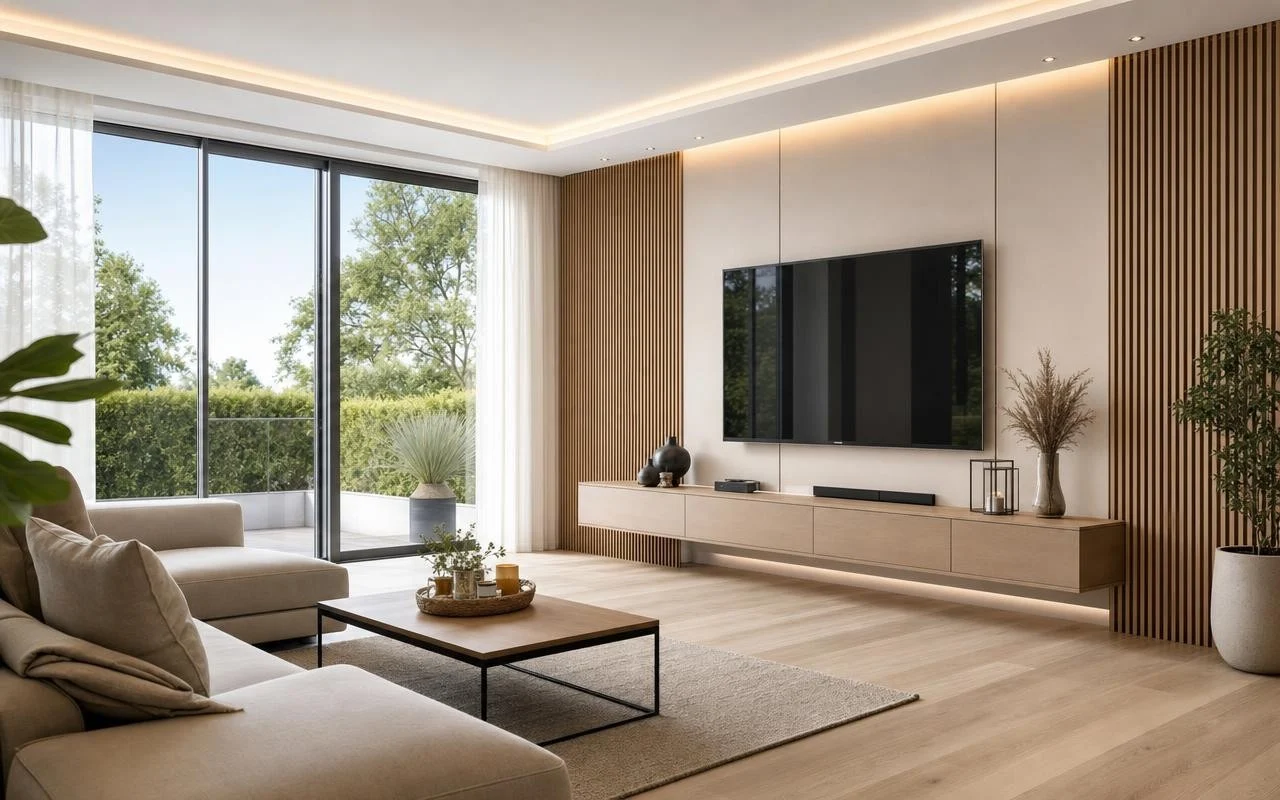
In many living rooms, the scene is still the same: a large floor-standing TV cabinet, deep and filled with objects, blocking the view and dividing the space in two. Yet daily life has changed, square meters are precious, and this way of mounting the television no longer fits as well as it used to.
Design experts note that these fixed, bulky, low structures quickly disrupt the flow of movement, especially in a small living room or a studio. Another approach, emerging from the latest decorating projects, takes over: wall-mounted TV, floating TV unit, and a coordinated wall panel. Everything happens just a few centimeters above the floor.
Why the traditional TV cabinet overloads the living room
Older low, deep, and very wide pieces form a dark band along the wall. In a compact space, this visual mass immediately weighs down the room. Ergonomic studies of living spaces remind us that a piece of furniture that is disproportionate to the ceiling height compresses perspective and makes the living room feel narrower than it truly is.
Articles focused on small living rooms highlight the same issue: as soon as the depth exceeds what is strictly necessary for the equipment, movement becomes cramped. Objects such as game consoles, internet boxes, and stacks of magazines pile up on the surface, cables descend toward the outlets, and the eye no longer knows where to rest. The TV cabinet then becomes the visual saturation point of the space.
The new trend: suspended TV cabinet, floating unit, and wall panel
To lighten all that, decorators now favor the floating TV unit. It is attached to the wall, does not touch the floor, and is often narrower than a traditional model. This small shift frees the baseboard, allows the eye to pass through, and makes the living room feel deeper, especially when the unit features minimalist lines in light tones or natural wood. This configuration is becoming standard in 2026 living room projects, particularly where every square meter counts.
Experts in small spaces describe a winning trio: television mounted directly on the wall or on a TV wall panel, a floating unit with closed storage for devices, and a few wall shelves for books or decorative objects. Taken together, they form a true TV wall that gives structure to the room without filling it, hides cables with integrated cable pass-throughs, and greatly reduces the need for floor-standing furniture.
How to adopt the suspended TV unit without overloading the wall
The success of this setup hinges on careful planning. Start by choosing a relatively open wall, ideally facing the sofa, then set the height: planning guides recommend centering the screen at about 100 to 110 cm from the floor for comfortable viewing. The floating unit is then placed lower, typically between 40 and 60 cm from the floor, while respecting the proportions of the room.
- Limit the depth of the unit to what is necessary for the equipment.
- Favor smooth-front panels and closed storage to hide everyday clutter.
- Add only a few floating shelves, always leaving some empty spaces.
- Choose light colors and indirect LED lighting under the unit.
Before picking up the drill, a quick check can prevent many regrets. Verify the wall type to select the right fixings, locate outlets and the path of cables, and plan to route cables behind the panel or through a conduit painted to match the wall. Anticipate storage needs to avoid recreating the clutter of an old low cabinet.
