
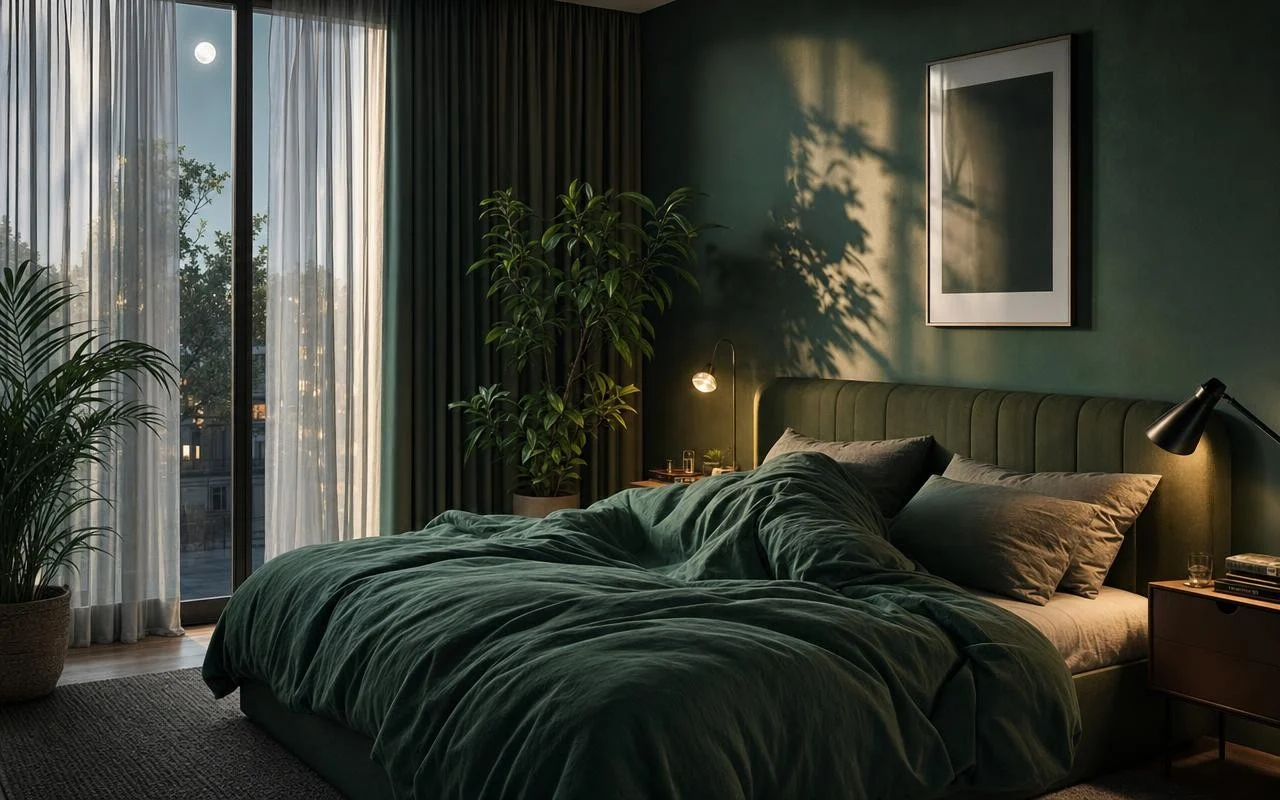
Can a simple paint color truly affect how well we sleep? In the bedroom, a sanctuary where we hope to disconnect from daily life, every detail matters, from the mattress to the walls. Some hues are reputed to soften the mind, others to awaken the senses. Among them, a very chic shade, seen everywhere in decorating magazines, intrigues as much as it worries: it has long been accused of promoting restless nights.
This suspicion doesn’t come from nowhere. It is the blending of an inheritance of old beliefs, theatre lore and more recent explanations about how colors stimulate the brain. The result: this color deemed elegant has become associated with nightmares, insomnia and dreams that are too present. The question remains to understand where this bad reputation comes from and how to use it in the bedroom nonetheless.
Why green in the bedroom carries a reputation for restless nights
In Western culture, green hasn’t always been the soft color associated with nature. Michel Pastoureau recalls that in the 16th century, green pigments degraded quickly, changed hue or turned brown. This instability fed the idea of an unpredictable color, far from the reassuring image sought in a bedroom.
The theatre reinforced this reputation. A popular tradition says that Molière died on February 17, 1673, while performing The Imaginary Invalid, dressed in green, and that this color would bring misfortune on stage. This story is debated, some documents mentioning a maroon costume instead. Nevertheless, the idea of a dangerous green took hold, to the point that some feared nights filled with tension and heavy dreams.
Green, brain and sleep: what we really know
We know that the visual environment influences falling asleep. Saturated tones send wakeful signals to the brain similar to those of daylight. A bright, fluorescent green can keep a high level of alertness and slightly disrupt the circadian rhythm, regulated by melatonin, the sleep hormone, making it harder to drift off.
Another rarely discussed point: the weight of beliefs. If we mentally associate green in the bedroom with misfortune, stress or disputes, this idea can sometimes undermine the moment of going to bed. A very dark wall, poorly lit, can heighten this sense of oppression. Conversely, a softer green soothes, as it recalls foliage and outdoor landscapes, especially when the room benefits from generous natural light.
How to adopt green in a bedroom without harming sleep
To enjoy the chic side of green in the bedroom without risking an overdose, the key lies in choosing the right shade and the right amount. In decorating advice, the same idea recurs: favor desaturated greens, such as sage green, almond green, or sea-green, which are much calmer than apple or neon tones. Le Journal de la Maison also recommends using dark tones sparingly, as they reduce space and weigh down the atmosphere.
To further secure the sleep-friendly vibe, it’s better to limit green to accent walls and pair it with natural materials. The soft combinations suggested by Le Journal de la Maison often rely on pastel tones and warm neutrals:
- Sage green, ecru linen and light wood for a bright bedroom.
- Grayish olive green, ivory, and walnut for a more enveloping atmosphere.
- Sea-green, off-white and pastel blue for a very restful spirit.
You can also reserve green for cushions, bedding, an armchair or plants, which makes it easy to rebalance if the room starts to feel too stimulating.
Sources
- JLM
“We thought it elegant, but this color in the bedroom has for centuries been associated with nightmares and restless nights.”
