
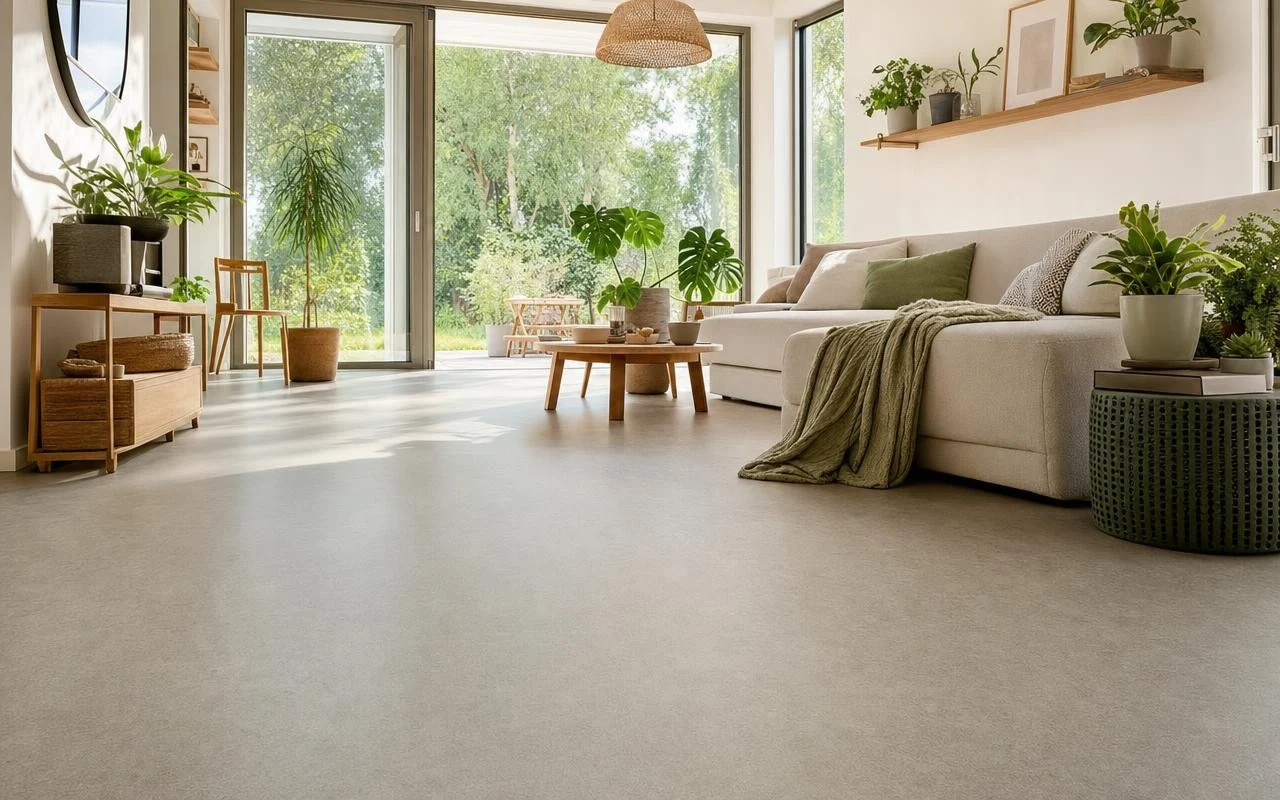
For a long time, the tile dominated almost every floor in the home, from the kitchen to the living room. It was sturdy, easy to clean, and seemed unbeatable. Yet decorating tastes shifted: interiors warmed up, more natural materials gained ground, and an old 1960s floor is making a very noticeable comeback.
We’ve all run into it at one point or another—in a school, a hospital corridor, or the kitchen of a family home. It looked outdated, too closely associated with public buildings. Today it’s resurfacing in design magazines and among specialty retailers, propelled by its natural composition, its new color palette, and its durability. The question remains: what should we call it?
This 60s flooring that is gradually dethroning tile
Behind this renewed success lies a floor made from very simple ingredients: oxidized linseed oil, pine resin, wood flour, cork powder, chalk, and jute cloth that acts as a backing. This mixture creates a dense, warm material underfoot, which was developed in the 19th century. It was patented by the British inventor Frederick Walton in the 1860s to meet the needs of heavily trafficked buildings.
This covering is the natural linoleum, often nicknamed “real lino.” It has nothing to do with the cheap plastic rolls sold in supermarkets, which are actually floors made of PVC. Natural linoleum relies on about 97% natural-origin raw materials according to some manufacturers, with no chlorine or phthalates. This is what sets it clearly apart from vinyl coverings, even though, visually, the confusion is common.
Why natural linoleum is returning to every room
If natural linoleum is appealing again, it’s not only for its retro look. This floor was originally used in hospitals, schools, or government offices for a simple reason: it stands up very well to heavy foot traffic and possesses naturally antibacterial properties. Some manufacturers claim a lifespan of more than 25 years, sometimes 30 or 50 years when well maintained. A selling point for households tired of replacing their floor every ten years.
Another key advantage lies in its versatility around the home. Living room, dining room, bedrooms, study, entrance, or hallways: it adapts to most dry rooms, offered in colors ranging from sand to sage green, not to mention brighter shades. To keep things straight, here are a few simple guidelines:
- Recommended rooms: living room, bedrooms, study, entrance, hallways, closed stairwell.
- Rooms to watch: kitchen, only if ventilation is good and water splashes are limited.
- Rooms not advised: bathroom, shower, or very damp laundry rooms, where standing water can damage the material.
How to install and maintain natural linoleum at home
In terms of installation, modern linoleum is available in large rolls, but also in tiles and planks, which are easier to handle for a renovation. It remains stiffer than a PVC floor, which requires a very smooth substrate: an old, flat tile surface, leveling if joints are marked, or a clean slab. Some manufacturers approve laying it over tile in dry rooms, excluding kitchens and bathrooms. For large spaces or complex rooms, many homeowners prefer to call in a professional.
On a daily basis, maintenance is one of the pleasant surprises of this floor. A sweep or vacuum is enough to remove dust, followed by a well-wrung mop with lukewarm water and a small amount of black soap or dish soap to leave the floor impeccably clean. Localized stains usually lift with a damp sponge; for grease or paint marks, a few drops of turpentine can help. However, bleach and ammonia should be avoided, as they can damage the surface. Some manufacturers also recommend applying a protective wax or resin every few years to extend the life of this vintage-inspired finish that today enjoys a prominent place in homes.
Sources
- JLM
“The tiling is over: this 60s-era flooring is returning to every room in the house (and it withstands it all)”
