
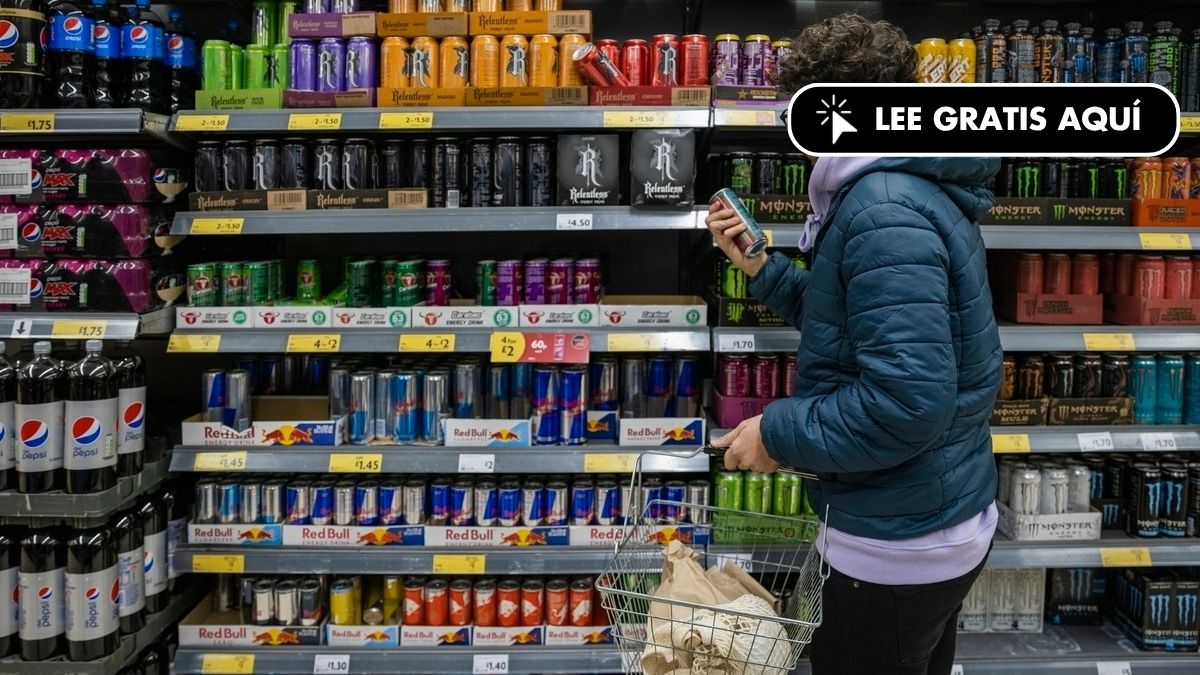
The General Council of Nursing (CGE) has called for a ban on the sale and consumption of energy drinks by minors across Spain, in line with measures already being rolled out in certain territories such as Galicia and the Balearic Islands; as well as to improve information campaigns so that the public understands the health risks they pose.
“From the nursing profession, we view this government measure positively, though we must be rigorous: there is evidence about the risks of these drinks, but there is still little direct evidence that banning their sale by itself reduces consumption or improves adolescents’ health in the long term,” explains Florentino Pérez Raya, president of the CGE.
Thus, he highlights the importance of launching mass awareness campaigns and continuing research into the risks of these products to be able to develop public health policies that protect this population.
“A half-liter can may contain around 160 milligrams of caffeine, an amount that, for a 50-kilogram adolescent, slightly exceeds the daily reference level established by the European Food Safety Authority,” notes Héctor Nafría, a nurse responsible for the Unit of Scientific Culture and Innovation (UCC+I) at the CGE, who recalls that these measures should not arise from the idea of “scaring or criminalizing young people,” but from the principle of “protecting them.”
For her part, Marilourdes de Torres, coordinator of the scientific committee of the Association of Nurses in Nutrition and Dietetics (AdENyD), emphasizes the importance of changing the name of these drinks to stop confusing them with the so-called “refreshing beverages.”
«They are stimulant beverages»
“In reality, they are stimulant beverages, due to their high concentration of caffeine, sugars, taurine and other ingredients. They should begin to be called that to understand their impact on health,” she says. From the association they defend the importance of adjusting the regulation to specific parameters of the ingredients in these beverages.
The proposal put forward by the Ministry of Consumption is to prohibit the sale of all energy drinks to people under 16 years of age, and that this prohibition would be extended to those under 18 in the case of drinks that contain more than 32 milligrams of caffeine per 100 milliliters.
De Torres proposes that the measure be a prohibition for those under 18 at the moment when the drinks accumulate 15 milligrams per 100 milliliters. And, in addition, that the packaging of these drinks never exceeds 250 milliliters. “Yes, the amount is controlled, but it is a half-liter drink; it doesn’t make sense,” she notes.
She adds the need to ban their sale in vending machines, place them in stores alongside alcoholic beverages rather than next to so-called “soft drinks,” and ensure that the packaging carries visible warnings that consumption is not recommended for minors and pregnant women.
