
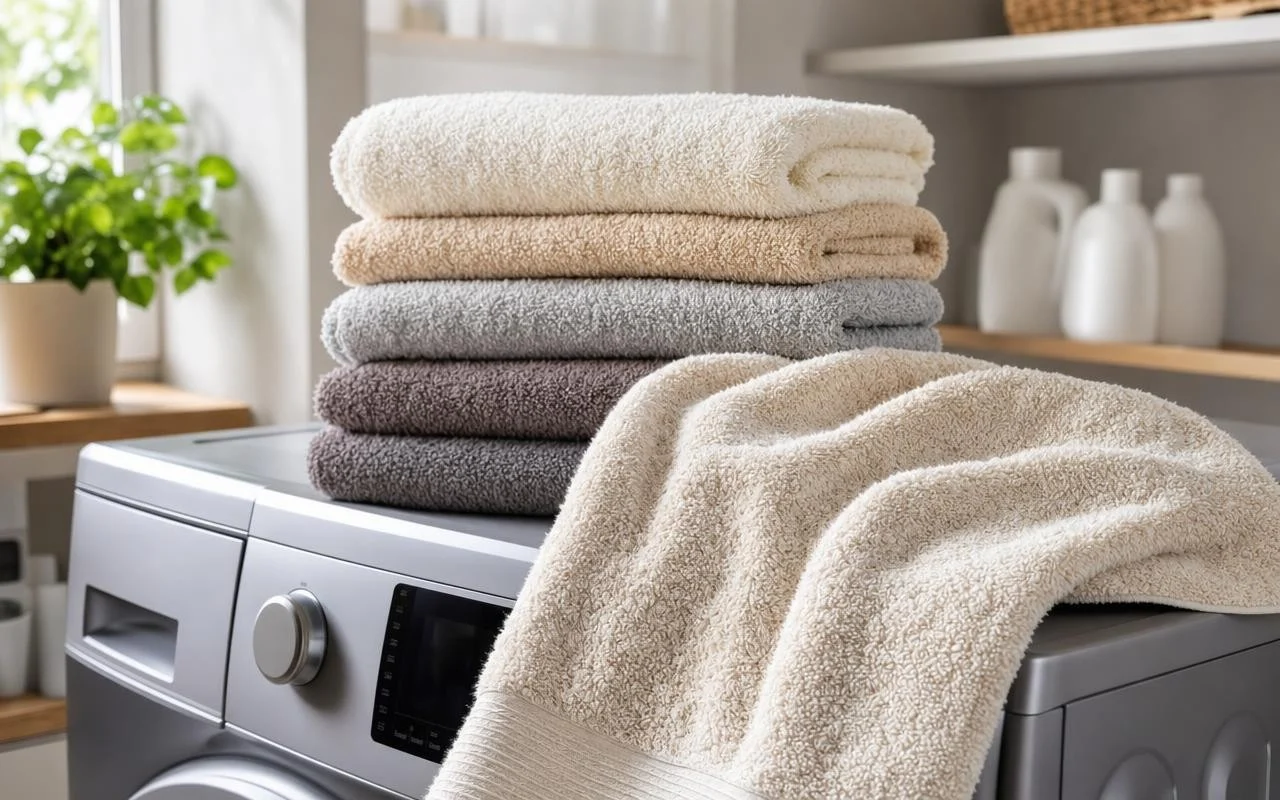
I used to fold towels fresh out of the tumble dryer, still hot, perfectly dry to the touch. Each time, the same habit: I brought them to my nose, convinced I would finally detect that clean scent. And each time, the same disappointment, that faint smell of dampness, of a bathroom that isn’t well ventilated. I changed detergents, added white vinegar, reran cycles, without managing to make it disappear.
This scene resonates with many bathrooms: towels that look flawless on the surface, but a nose telling a different story. Especially with thick bath towels, which take longer to dry than T-shirts. We blame the machine, then the dryer, we think it’s a ventilation issue in the closet. For me, it took years to realize that the real culprit hid at the heart of the fibers.
Why towels that are perfectly dry still carry a musty odor
Laundry experts refer to a biofilm to describe what gradually forms in our towels. It’s a thin, invisible film made up of detergent residues, bacteria, and small organic particles trapped within the cotton loops. After repeated washes at lukewarm temperatures of 30 or 40 °C, this layer thickens. It acts like a odor-absorbing sponge, trapping residual moisture and releasing it as the towel warms up.
When you use too much product, some of the detergent doesn’t fully dissolve and doesn’t rinse away. It leaves a slightly sticky film in the sponge-like fibers, which holds onto water and impurities. The added fragrance may seem pleasant at first, but it mixes with the “wet” odor and turns. The towel absorbs less well, feels almost slimy, and you get the sense that it’s never truly clean, even when it’s very dry.
Quick test and the right wash to banish the musty smell
To check whether the problem comes from this biofilm, here’s a quick test. Take a freshly washed and dried towel, dampen a corner under a faucet, and smell it immediately. If you detect that musty scent of damp laundry, reminiscent of textiles left at the bottom of a hamper, the diagnosis is clear: the fibers are encrusted. If, on the other hand, the towel simply smells clean or neutral, the issue was probably a drying time that was a bit too short.
To reset towels to zero, specialists recommend a wash at 60 °C as soon as the label allows. This temperature dislodges what clings to the fibers—sweat, dead skin cells, micro-grime, and stubborn odors—where a cycle at 30 or 40 °C often leaves traces. You can add baking soda into the drum to help dissolve the deposits. For the most entrenched cases, a preliminary soak with washing soda crystals for about thirty minutes remains very effective.
The proper washing and drying routine for towels that stay truly fresh
To prevent the problem from returning, it’s best to adjust a few daily habits:
- Let damp laundry pile up in the hamper for too long before washing
- Almost always run low-temperature cycles for thick towels
- Overdose the detergent or pour it haphazardly into the dispenser
- Add fabric softener, which coats the fibers and traps moisture
- Forget towels damp in the drum or folding them before they’re completely dry
- Neglect regular cleaning of the drum and seals of the washing machine
After each wash, a higher spin, the extra rinse option, and immediate drying, without stacking towels, are often enough to keep the laundry truly fresh. Hang in a well-ventilated room or use a well-maintained tumble dryer, then wait until the towels are 100% dry before storing them in a healthy cabinet, paired with a hotter wash from time to time, which helps bid farewell to that damp odor that spoils the post-shower moment.
Sources
- Marie France
“I Used to Add More All the Time”: The Detergent Mistake That Explains Your Towels’ Odor
