
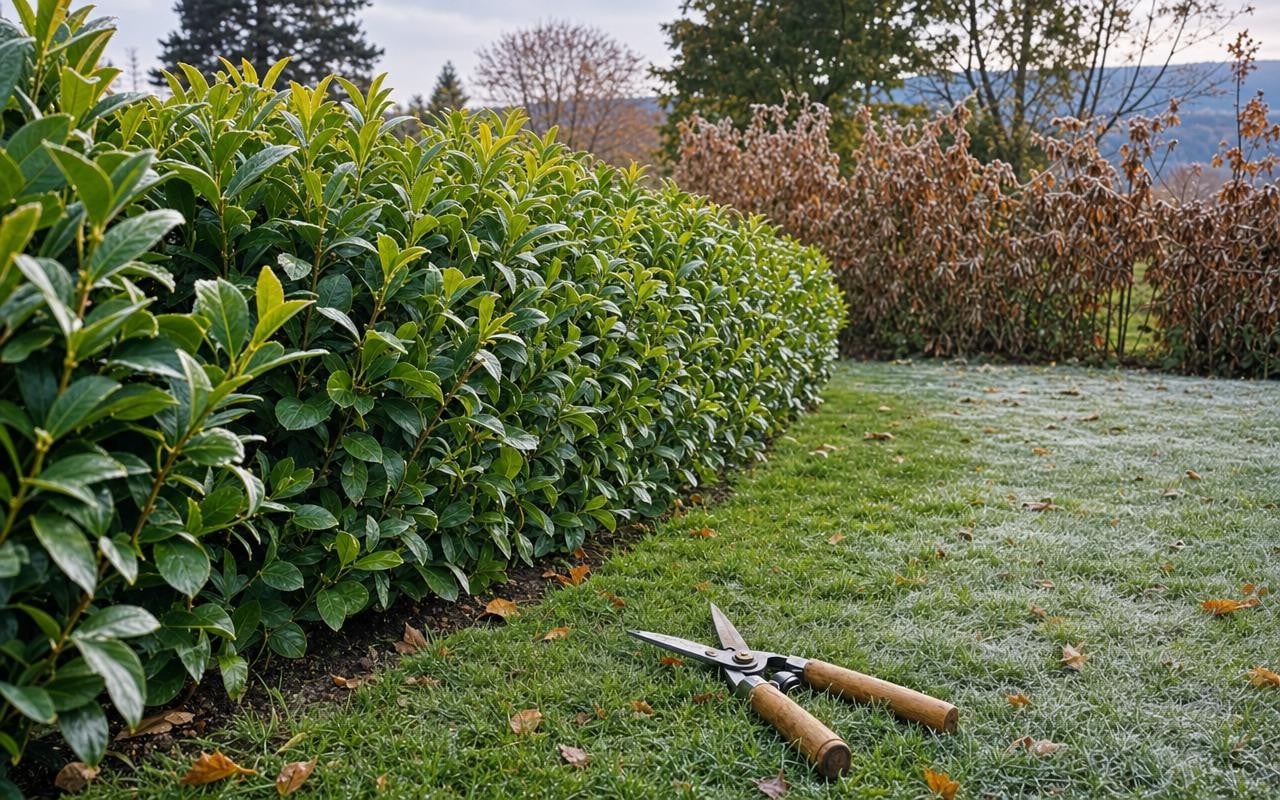
At the end of August, with the hedge trimmer in hand, I aimed to “tidy things up” before the return to routine. A neatly trimmed laurel hedge, clipped privet shrubs, and a lighter, more open flower bed. For a few days, the garden looked perfect. Then the first frost arrived, barely noticeable in the early morning, and the green tips began to brown before I understood why.
Many gardeners share the same misadventure. People think they are doing the right thing by pruning shrubs in late August, just before autumn, when, in fact, this period marks a turning point for the garden’s survival against the cold. The Journal des Seniors recalls that “the end of summer is the pivotal period to strengthen plant resistance.” At the first frost, some discover that the timing has been poorly chosen.
Why a late-August prune weakens your shrubs against frosts
Pruning always stimulates growth. When you prune too late, shrubs push out very tender, sap-filled shoots that do not have enough time to harden before the first frosts arrive. Journal des Seniors insists: pruning hedges “before the end of August” gives the new shoots time to strengthen, whereas a later prune yields new growth that is unable to resist the cold.
Another problem is the pruning wounds. Massicots warns that pruning during a frost-prone period “can seriously weaken” plants: exposed tissues necrose and become entry points for diseases. If cuts are fresh when a cold snap hits, the healing process slows, especially on evergreen shrubs such as laurel, privet, or hornbeam, which keep their leaves all winter.
The right window to prune hedges and shrubs before the cold
According to Journal des Seniors, the ideal window is at the end of summer, when the soil remains warm but the air begins to cool. Plants then benefit from several weeks to establish their roots and reinforce their tissues before winter. Once mid-September passes, the momentum wanes: the soil cools faster, reserves become less adequate, and any strong pruning becomes risky.
A nuance matters a lot. A light shaping prune at the end of August is generally acceptable, while a severe prune that markedly shortens branches stimulates very tender regrowth. Also keep wildlife in mind: a French government site notes that hedges should not be pruned before August 15 to protect birds. The safest period to maintain hedges is often between mid and late August.
Qué faire si vous avez déjà taillé avant une gelée
If frost has occurred after a recent pruning, the priority is to avoid worsening the stress. Massicots advises that once the plants have frozen, you should wait “until the end of frosts” to recut truly. One can simply remove yellowed or blackened leaves, as well as small branches that are clearly dead, without cutting back deeply to avoid triggering new fragile growth in mid-winter.
Protecting what can be protected remains very useful. Journal des Seniors notes that a mulch layer of 5 to 8 centimeters around the base of the shrubs limits the frost’s impact on the roots. It can be complemented by a winter veil over young or exposed subjects. In practice, the rescue plan looks like this:
- Observe the damage without rushing to grab the pruner
- Remove only yellowed/blackened leaves and obviously dead flowers or twigs
- Install a thick mulch at the base of the shrubs
- Protect young plants with a veil if needed
- Wait for the end of frosts to perform a proper revival pruning
