
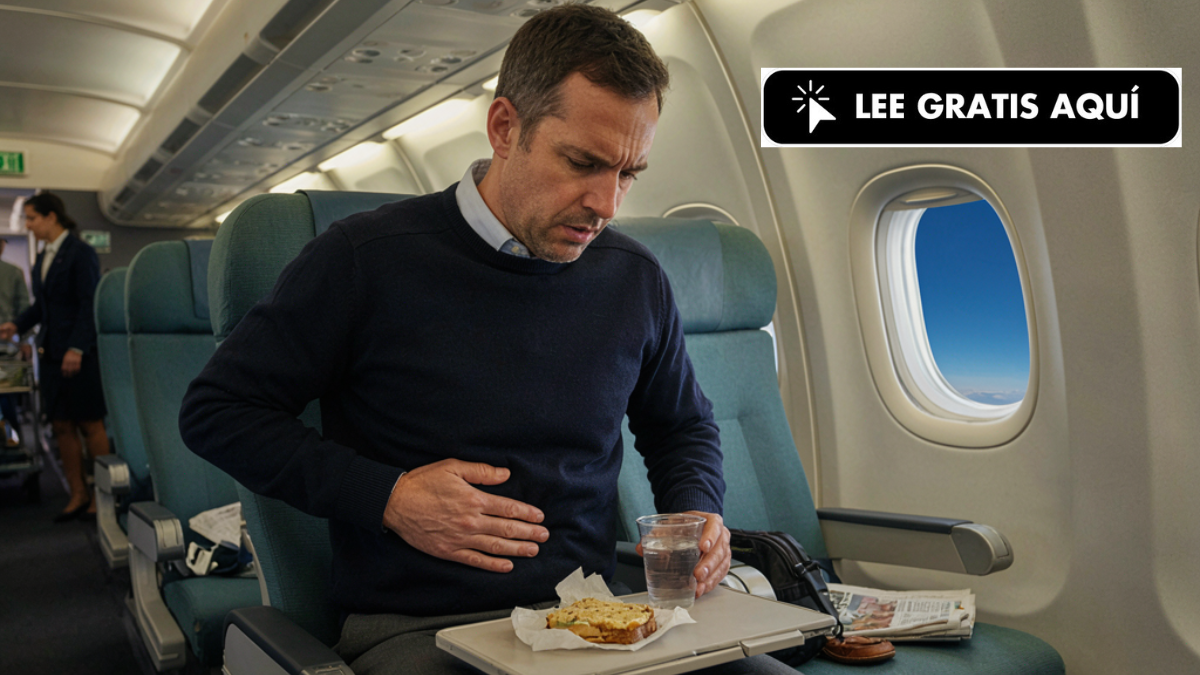
There is something I find particularly curious about traveling: you can spend weeks counting down to vacation, packing with all the excitement, and just a few hours after boarding the plane, feel as if your stomach has declared war.
Bloating, gas, constipation, heavy digestion…
And the worst part is that very often you haven’t even eaten anything especially unusual.
So what’s going on?
The explanation has far less to do with having “eaten poorly” and much more with the fact that your gut doesn’t understand vacations. Shifting schedules, poorer sleep, drinking less water, hours spent seated, and the stress of airports and travel can disrupt your bowel habits. The NIDDK explicitly includes travel and changes in routine among the circumstances that can promote constipation.
The Four Culprits That Can Upend Your Gut During Travel
The first one is probably the most obvious: the food.
When we travel, we eat breakfast earlier than usual, meals come at odd times, we snack between legs of the journey, and we more readily reach for fast or prepared foods. Moreover, it’s common to consume less fiber than usual.
The second issue is hydration. Between packing, going through security, awaiting boarding, and arriving at the destination, it’s surprisingly easy to go several hours without drinking enough water.
And when there’s a lack of fluids and, in addition, less physical activity, bowel transit can slow down. In fact, the usual recommendations to prevent or relieve constipation call for enough fiber, adequate fluids, and regular physical activity.
The third factor is
A long flight means sitting for extended periods. And if after the plane you have a taxi, a train, a car, and several hours of sightseeing… your gut can stay out of its routine for most of the day.
But there is a fourth culprit that we often overlook: stress.
Getting to the departure gate on time, locating the terminal, not missing a connection, waiting for baggage, finding your bearings in an unfamiliar airport…
Your head knows you’re on vacation.
Your guts, not necessarily.
The Plane Has Something to Do With It: That’s Why You Can Bloat Even Without Eating Much
Perhaps this part is the most surprising.
During a flight, cabin pressure is lower than at ground level. That change can favor the expansion of gases already present in the digestive tract. There is even medical literature describing an increase in gas-related discomfort during air travel.
And it isn’t the only peculiarity of the airplane.
Research on the cabin environment has linked factors such as pressure and simulated altitude with changes in gastric emptying and digestive symptoms under certain conditions.
Now add to the equation several hours of sitting, a hurried meal, and perhaps a carbonated drink.
The result is fairly easy to imagine: a belly that swells more and more while you watch the clock, wishing the plane would land.
So, for long stretches of travel, a few simple gestures can help:
- Drink water regularly.
- Stand up and walk whenever possible.
- Move your ankles and legs while you’re seated.
- Avoid overeating before or during the flight.
- Limit carbonated beverages if they tend to give you gas.
- Avoid clothes that are too tight around the abdomen.
There’s no need to turn the flight into a workout session. Moving a little is better than staying completely still for hours.
The Trick to Get Your Belly Back to Normal When You Arrive
Here’s the mistake many of us make: we arrive at the destination and assume the gut should function exactly as it does at home.
But we’ve just shifted schedules, meals, sleep, activity, and, in some cases, even time zones.
So one of the best strategies is to re-create a routine as soon as possible.
Try to reestablish reasonably regular meal times, stay well hydrated, and gradually return to a diet rich in fiber. If you increase fiber, it’s important to accompany it with enough fluids.
And there’s a surprisingly simple remedy that sometimes seems almost obvious: walking.
A stroll after breakfast or at the start of the day can help you reacquire physical activity and routine. In addition, exposing yourself to natural morning light can be especially helpful when you’ve shifted time zones, because it helps synchronize your body clock.
And What If You Return Home Still Constipated?
A few days of gut disruption can occur after changing the routine, but it isn’t wise to attribute every symptom to the trip.
If constipation persists or is accompanied by blood in the stools, persistent abdominal pain, vomiting, fever, the inability to pass gas, or involuntary weight loss, it’s important to consult a healthcare professional.
In the end, travel may teach us something curious about our own bodies.
We think vacations are simply about changing location. But for the body, it means changing when we eat, when we sleep, how far we walk, how much we drink, and what time we receive light.
And the gut notices all of those changes.
So next time you land with a bloated belly, don’t automatically assume you’ve eaten too much.
Perhaps your gut is simply trying to figure out which country it’s in.
