
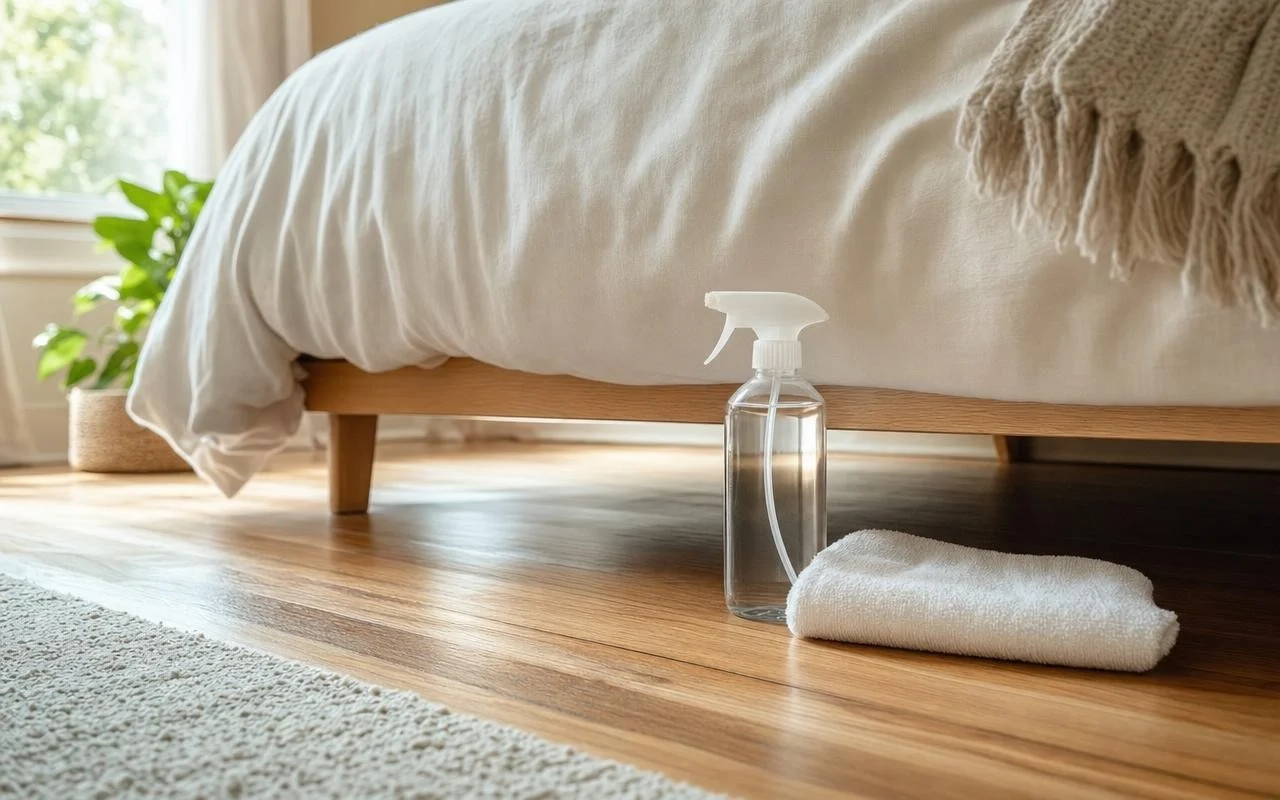
A bottle of white vinegar, a simple spray bottle, and… the underside of your bed. The home hack circulates everywhere: spraying vinegar under the bed would repel insects, eliminate bad odors, and make the room healthier. This gesture seems almost too easy to be truly useful.
Yet the area beneath the bed remains one of the most neglected corners of the home, where dust, pet hair, moisture, and allergens accumulate. Specialized media outlets and allergy associations remind us that regular maintenance of this zone, possibly with a solution of vinegar water, can improve respiratory comfort. The real question: what does a simple spray of vinegar under the bed actually change?
Why spraying white vinegar under the bed can help the bedroom
White vinegar contains acetic acid, responsible for its sharp scent. Household experts cited by A24 and Infobae explain that this acidity helps neutralize certain molecules responsible for musty or damp odors. Under the bed, where air circulation is poor, this little olfactory refresh can make a difference, especially if the room lacks ventilation.
Another commonly highlighted benefit is its repellent effect on small pests. The acidic scent disrupts dust mites, ants, and even some mosquitoes, which tend to avoid the treated area. Websites like La Opinión note, however, that this is not an insecticide, but a mild way to make the environment less inviting for these unwelcome guests. In addition, the APPA association recommends airing the room for at least 10 minutes and regularly vacuuming with a HEPA filter to really limit allergens.
Spraying vinegar under the bed: how to use it and the ideal frequency
The Latin American articles that popularize this trick converge on a simple recipe: mix equal parts white vinegar and water. A so-called cleaning vinegar is often advised to avoid colorants. The 50/50 mixture is poured into a spray bottle, and some suggest adding a bit more water for sensitive noses, as the odor is noticeable at the time of application.
Before spraying vinegar under the bed, it’s advisable to dust thoroughly. Household experts then recommend targeting the floor, corners, baseboards, and the legs of the bed without soaking. The solution is typically applied 1 to 2 times per week, depending on dust, the presence of pets, or the humidity of the room. With a window open, the vinegar smell dissipates within a few minutes, leaving a fairly clear sensation of cleanliness.
Precautions with vinegar under the bed: dust mites, bleach and delicate surfaces
Several public health organizations, including the Environmental Protection Agency, remind that vinegar is not registered as a universal disinfectant against all viruses or bacteria. In other words, it cleans and deodorizes, but it does not replace a disinfectant product approved for high-risk situations. For bed bugs, for example, specialists still recommend a dedicated protocol or professional intervention, as vinegar is not considered a sufficient solution.
Care must also be taken on the chemical front. The Centers for Disease Control and Prevention emphasize that bleach should never be mixed with an acidic product like vinegar, as this can release irritating gases. It is therefore better to use vinegar alone, in a well-ventilated room, and keep the spray bottle out of reach of children. For materials, a discreet test is advisable on floors, untreated wood, or calcareous stone, which are more sensitive to acids. Finally, it is recommended to keep pets and delicate textiles away during spraying so that this small maintenance ritual remains effective and serene.
