
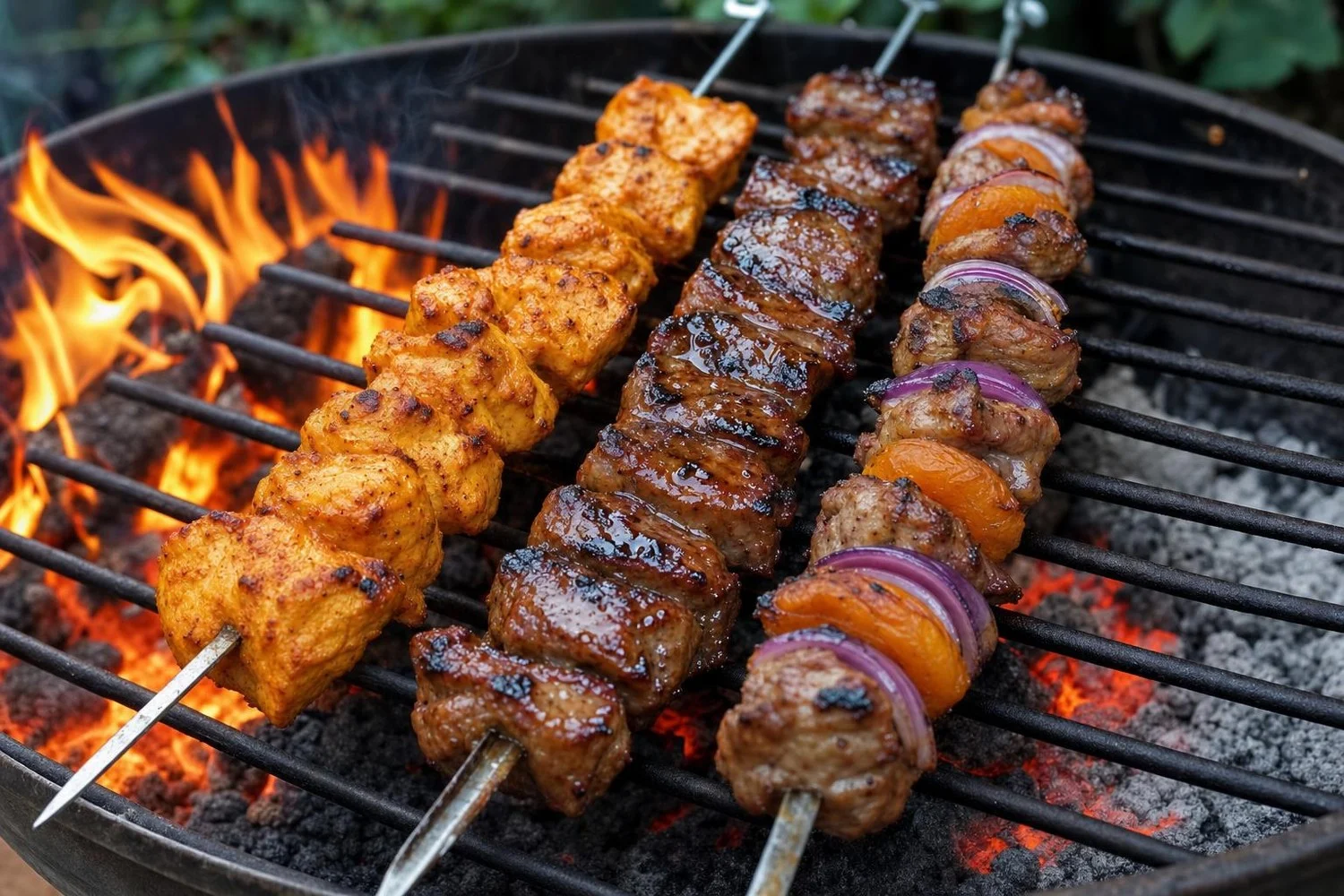
Skewers sticking to the grill, meat drying out after just three bites: everyone has already faced this little barbecue misstep. When July evenings stretch on, we dream of nicely browned, fragrant pieces that stay juicy all the way to the tip of the skewer. If your skewers dry out, the issue isn’t solely the cooking, but also what you do beforehand.
Good news: by choosing the right cuts and coating them in marinades for barbecue skewers that act as a shield, you can change everything. Yogurt, honey, orange juice and spices form a protective layer that keeps the juices inside. Three very simple combinations achieve this. The difference starts before you even light the embers.
Why these marinades for barbecue skewers keep the meat juicy
The principle is simple: select pieces with a little natural fat and let them soak up a marinade that protects the meat on the grill. Chicken thigh, pork shoulder, shoulder or lamb leg hold up much better to the heat than a lean chicken breast. The liquids envelop the fibers, limit dryness, while the spices, garlic and citrus perfuse the heart of each cube.
Another detail that changes everything: cut the meat into cubes of about 3 cm for even cooking, then respect the marinating time. Chicken rests between 2 and 12 hours in its yogurt sauce, pork between 1 and 4 hours in its honey-soy-ginger mix, lamb between 2 and 8 hours with orange juice, cumin, coriander, red onion and dried apricots. Each bite is then full of flavor and ready for the heat.
The 3 shield marinades that change your barbecue skewers
In practice, these three marinades for skewers cover the essentials of barbecue cravings:
• Chicken yogurt–lemon–turmeric: yogurt, lemon zest and juice, garlic, turmeric, paprika, olive oil, salt and pepper coat very tender thigh pieces.
• Pork honey–soy–ginger: soy sauce, honey, freshly grated ginger, a splash of vinegar and a neutral oil create a salty-sweet glaze that caramelizes.
• Lamb cumin–apricot–red onion: orange juice, olive oil, cumin, ground coriander, salt, dried apricots and red onion give a spicy-fruity note.
To organize your preparation, start by soaking wooden skewers for 20 minutes in water, then cut the meats and vegetables into regular pieces. Mix each marinade in a bowl, add the corresponding meat, toss to coat well, cover and refrigerate for the indicated time. Just before cooking, thread onto the skewers, alternating meat and filling without packing them, so that heat can circulate and each skewer browns without burning.
Cooking, resting times and tips for skewers that stay juicy
On the grill, apply a two-zone cooking approach by gathering the coals on one side to create high heat, with the other side left cooler. Always begin by searing the skewers 1 to 2 minutes per side on the hot zone, just long enough to color the surface. Finish cooking on the cooler zone, turning them often, then let them rest for 3 minutes off the heat: the meat finishes cooking gently, the exterior stays golden while the inside preserves its juices.
Each recipe then carries its own signature: the yogurt-chicken takes on a warm, slightly orange hue, melting thanks to the fat from the thigh; the honey-soy pork becomes shiny and caramelized, provided the meat has been well drained before placing it on the grill; the lamb with orange juice, cumin, red onion and dried apricots offers a spicy-fruity almost confit contrast. All that remains is to decide whether the evening’s vibe will be tandoori, glazed in a street-food style, or cumin-apricot to surprise your guests.
