
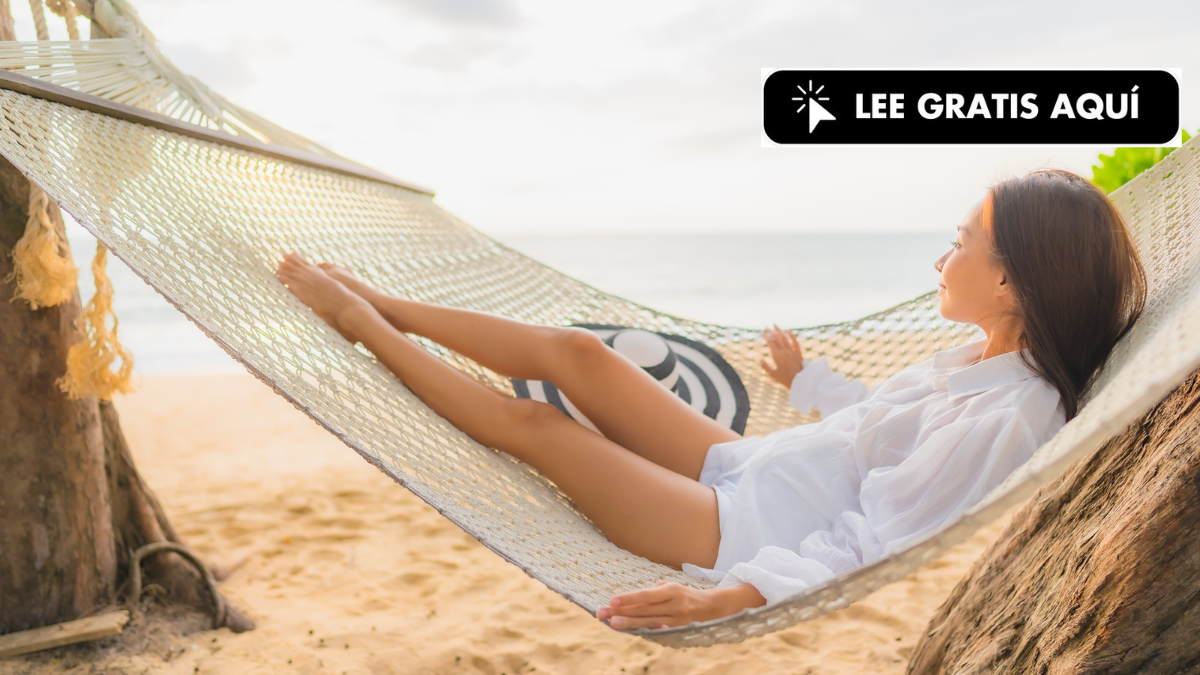
There is a moment of the day when the sofa turns into a trap.
You’ve just eaten, the body begins to relax, and suddenly the eyelids feel heavy. It could be a Sunday after a family meal, a summer afternoon beneath a parasol, or even a rainy day when the only reasonable idea seems to be closing your eyes for a while.
In Spain we call it the siesta.
For years it has been associated with laziness, with interminable meals and with that stereotype of the Spaniard who dozes off after eating. But perhaps there is another way to look at it: as a small pause that our body uses to regain strength.
And here comes the curious part: you don’t need to sleep for hours to notice its effects.
In fact, a siesta that lasts too long can achieve exactly the opposite of what we are seeking.
The Spanish tradition that was born long before the sofa
The word siesta comes from Latin hora sexta, the sixth hour of the day for the Romans. At that time, hours were calculated from sunrise, and that sixth hour roughly coincided with the central part of the day.
The heat had a lot to do with it.
In Mediterranean regions, stopping activity during the hottest hours was a logical way to protect oneself from the sun and recover energy before continuing with the day. Over time, that pause became deeply embedded in the customs of Spain and other Southern European countries.
The tradition was also linked to the old Spanish work schedules. The split workday left a long pause for lunch before returning to work in the afternoon, and, at certain points in history, that rest even served to move between jobs or to regain strength.
Today the situation is very different.
Air conditioning, urban timetables, and the pace of modern life have reduced the real siesta. In large cities, those pause hours are typically spent eating, running errands, resting, or simply disconnecting.
But the habit has not disappeared.
And neither has that feeling that appears after eating and seems to tell us one very clear thing: pause for a moment.
The brain can thank those 20 minutes more than you imagine
Here is where the siesta stops being a mere tradition and begins to look especially interesting.
Throughout the day, the brain receives information, processes stimuli, and establishes new connections between neurons. That activity is essential for learning and memory, but it also generates fatigue.
Sleeping allows the brain to reorganize part of that activity.
That’s why a brief siesta can produce that familiar sensation of starting afresh: it reduces fatigue, the mind seems clearer, and it becomes easier to regain concentration.
It isn’t magic. It’s rest.
Moreover, the pause can promote relaxation and reduce the sense of accumulated stress. After a morning of intensity, those minutes with closed eyes can make the difference between facing the afternoon completely exhausted or reclaiming some energy.
But there is one condition.
The perfect nap is not the longest
This is probably the detail that most interests anyone who wants to turn the siesta into a true reset button.
Between 20 and 30 minutes is usually enough to rest without entering the deeper stages of sleep.
If we go over, we may wake up in the middle of a deeper sleep cycle. And there appears that familiar sensation: waking up even more groggy than before.
It’s the so-called sleep inertia.
Rather than feeling refreshed, we can wake up disoriented, sleepy, and with the sense that we need another nap to recover from the first.
There’s also another problem: sleeping too long or too late can make it harder to fall asleep at night.
That’s why the formula is simple: a short siesta, preferably early in the afternoon, and not turning it into a second night.
The real reason we might stop feeling guilty about napping after lunch
There is something especially curious about the siesta: in a society obsessed with making the most of every minute, sleep seems almost like a waste of time.
But perhaps it is precisely the opposite.
A brief pause can help us regain energy to keep going. It is the same logic behind any rest: stop for a few minutes so that you can return with greater capacity.
That is why the siesta has survived timetable changes, rural exodus, big cities, and an ever faster pace of life.
We no longer need to hide from the blazing sun as centuries ago.
We have air conditioning.
We no longer necessarily need two hours to return to work.
We have different schedules.
And yet, we still need to rest.
Perhaps that is why the siesta still carries a ritual air. A Sunday afternoon post-meal, the sofa, a half-drawn shade, and that moment when the day’s noise fades away.
You don’t need to sleep for three hours.
You don’t need to feel guilty.
Sometimes, 20 minutes can be enough to give the brain exactly what it was asking for.
That said, naps aren’t suitable for everyone. Those who have sleep problems or other conditions that could be affected by daytime sleep should assess their suitability with a health professional.
For everyone else, the next time that irresistible drowsiness after a meal appears, maybe there’s a better option than fighting it.
Set an alarm. Close your eyes. And enjoy one of the few pleasures that we still don’t have to justify.
