
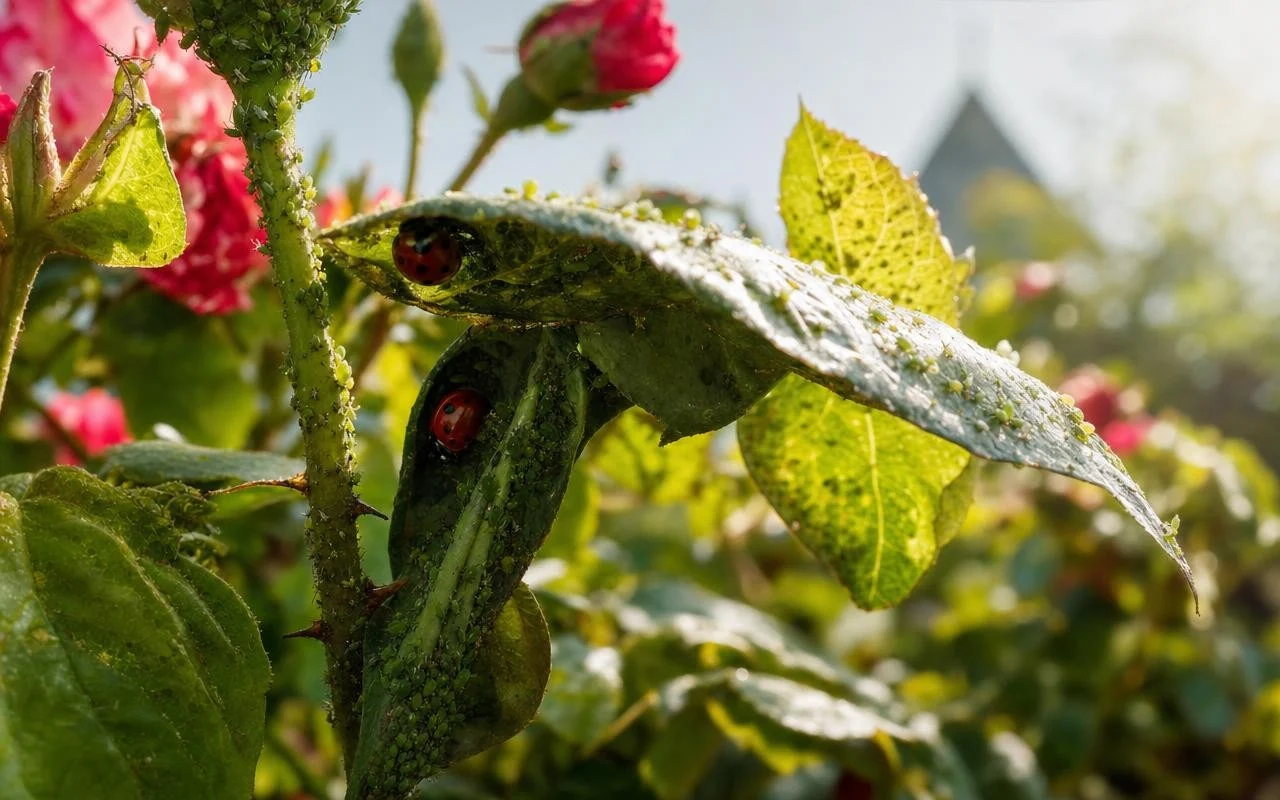
The rosebush was covered in aphids, and the sachet of ladybugs had been waiting for two days on the work surface. Taking advantage of a bright early-afternoon sun, you opened the box, gently placed the little red beetles on the stems, closed the garden gate, telling yourself the problem would be solved. The following morning, not a single ladybug remained, and the same aphid army persisted.
This scene is far from exceptional: thousands of gardeners experience the same failure, often after faithfully following the instructions on the packaging. People blame the product’s quality or the presence of birds, while the real cause lies in the biology of ladybugs themselves and in the timing of the release. That’s where everything can flip without people noticing.
Heat and Light: why releasing ladybugs in the afternoon fails
In bright sunshine, adult ladybugs such as Adalia bipunctata or Coccinella septempunctata trigger a flight reflex tied to their thermosensitivity. When the air warms up and the light is strong, their flight muscles engage, they take off, and they fly off to seek cooler, more sheltered areas, sometimes several meters away. On a roasting rosebush, releasing ladybugs in the early afternoon is effectively telling them to go away.
Another key point: without enough aphids, adult ladybugs quickly explore other plants. A preventive release on a rosebush that is still healthy will cause them to disappear almost immediately. To keep them, intervene when the aphid colony on the rose, often Macrosiphum rosae, is well established, but choose the time slot opposite to the midday sun: at dusk or very early in the morning, when their flying activity slows down. Slightly humidifying the foliage with a spray bottle also helps them settle and creates a microclimate close to their natural habitat.
Instructions: how to successfully release ladybugs on an aphid-infested rose
For an effective release, a small routine is better than improvisation. The idea is simple: keep the ladybugs on site for the first night, giving them time to locate the aphid colony. On the chosen evening, in mild and not-too-windy weather, follow these steps:
- Lightly spray the foliage to offer fresh leaves.
- Open the sachet at the base of the rosebush, then place small groups of ladybugs on several infested stems.
- Avoid strong lights nearby and check in the early morning that several ladybugs are still present.
There are still saboteurs that can derail this protocol. The ants, drawn by the honeydew produced by the aphids, defend the colony and harass ladybugs and larvae; a band of glue around the base of the rosebush blocks their passage. A recent treatment with black soap or with nettle tea also leaves residues that can be toxic for two to three weeks. And an sachet left in the heat will kill a portion of the insects: keep it cool and use it within 24 to 48 hours.
Adults or larvae: those that really stay on the rose
In the garden, the true allies are often the larvae of ladybugs. Black and orange, elongated, they may look like pests, yet they have no wings and stay on the plant where they’re placed. Gardening guides note that a larva can devour up to 200 aphids per day and between 200 and 600 over several weeks. Some associations cite a broader range of 20 to 100 aphids per day, whereas the adult consumes around fifty.
Adults, being mobile, fly away more easily; their value lies in the eggs they lay on the aphid colonies. By combining releases of larvae with a few adults, then providing refuges—dead leaves and nectar-rich flowers such as yarrow—we promote a durable presence of ladybugs in the garden.
