
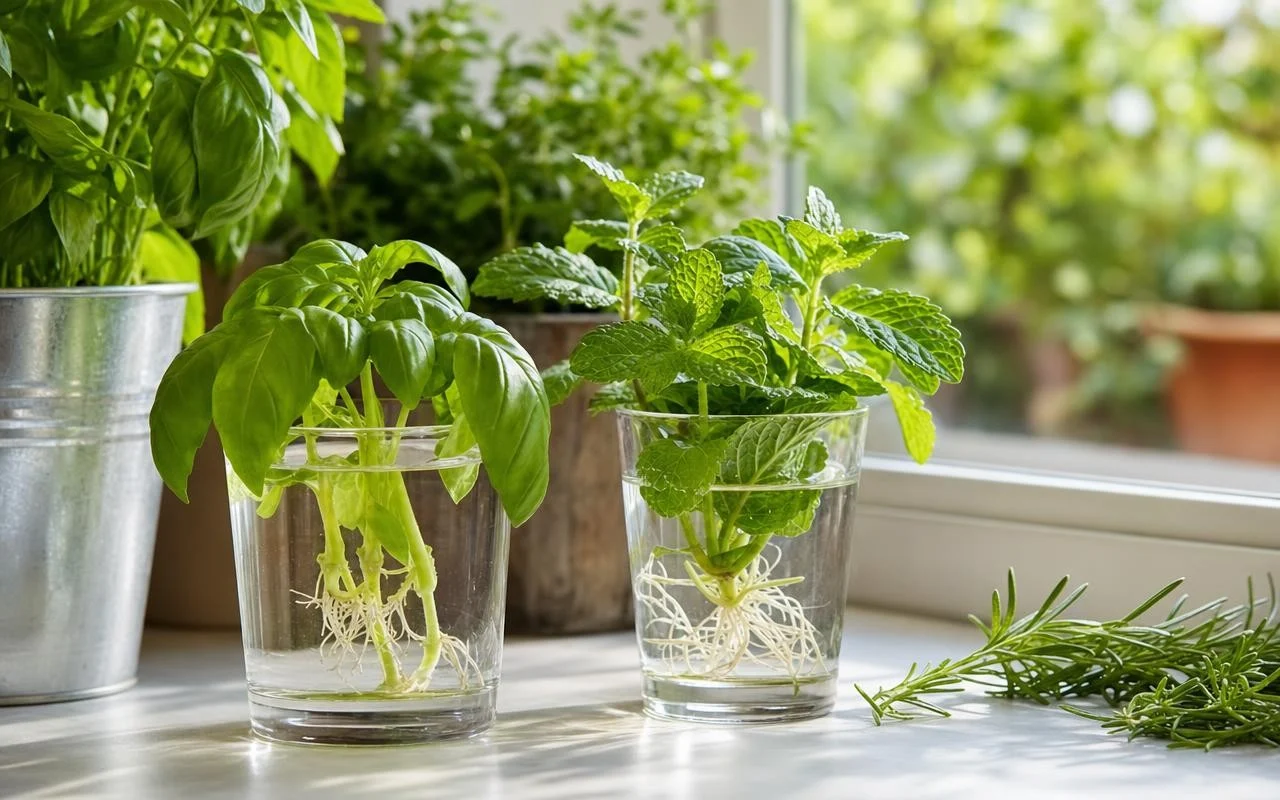
When trimming a pot of basil or a clump of mint, most gardeners throw the surplus stems into compost or the trash. It’s a pity, because these “green scraps” often stay much more vibrant than one might think. In many kitchens, a simple glass of water beside the sink could already mark the starting point for a mini herb garden.
For a few years now, nurserymen and specialty sites have been reminding us that a portion of aromatic herbs propagates very well by stem cuttings. A recurring question then arises: can these stems pruned during cooking or pot maintenance truly yield fresh, vigorous plants for free, or is it just another Internet tip? The answer often surprises those who try the experiment.
Herbs: which trimmed stems really produce new plants?
Experts confirm that yes, many common herbs re-sprout quite nicely from simple healthy stem segments. This is the case for basil, mint, oregano, lemon balm, sage, thyme, and rosemary. These plants naturally tend to form roots along their stems, which explains why a cutting placed in water or a light potting mix takes root so readily.
However, not all herbs play along. Parsley, cilantro (coriander), and dill have a strong taproot: a cut stem rarely re-sprouts well; these species do much better by sowing. Chives, which grow in clumps, multiply mainly through division of the clump.
- Herbs easy to propagate by stem cuttings: basil, mint, oregano, lemon balm, sage, thyme, rosemary.
- Herbs best propagated by sowing or division: parsley, cilantro, dill, chives.
How to choose the right herb stems for cuttings?
To turn a trim into successful cuttings, the moment of selection is everything. The best stems are about 10 to 15 cm long, remain pliable to the touch, and bear no flowers. A stem that is already flowering directs its energy toward seed production, not root formation. Therefore, experts advise cutting from the upper, young, and vividly green part of the plant.
The cut should be clean, made with a clean pruning shear, right below a leaf node, where the new roots will emerge most easily. Then remove all leaves on the lower half of the stem, because those left in water rot very quickly. It is important to keep a few leaves on the top so that the cutting can continue to photosynthesize during root formation.
Stem cuttings: water or potting soil, key steps and pitfalls to avoid
Many gardeners begin in a glass of water. Place the bare portion of the stem in a jar, submerging at least one node, then position everything in bright but indirect light. For basil and mint, fine white roots appear in about a week if you change the water every two to three days. Wait until they reach about 2.5 to 5 cm before transplanting.
Some herbs like rosemary, sage, or thyme respond better directly in soil. Plant them in a light, well-drained mix kept moist, never soggy, because excess water deprives the roots of oxygen and promotes fungi. A transparent plastic bag placed over the pot creates a mini greenhouse that limits evaporation. As summarized in an AOL article, “choosing healthy cuttings, adapting the rooting method to each herb, and providing regular care can turn simple trimmings into productive plants.”
Sources
- Maison & Travaux
“Before throwing away your plant burnt by the sun and heat, try this nursery test recommended by pros”
