
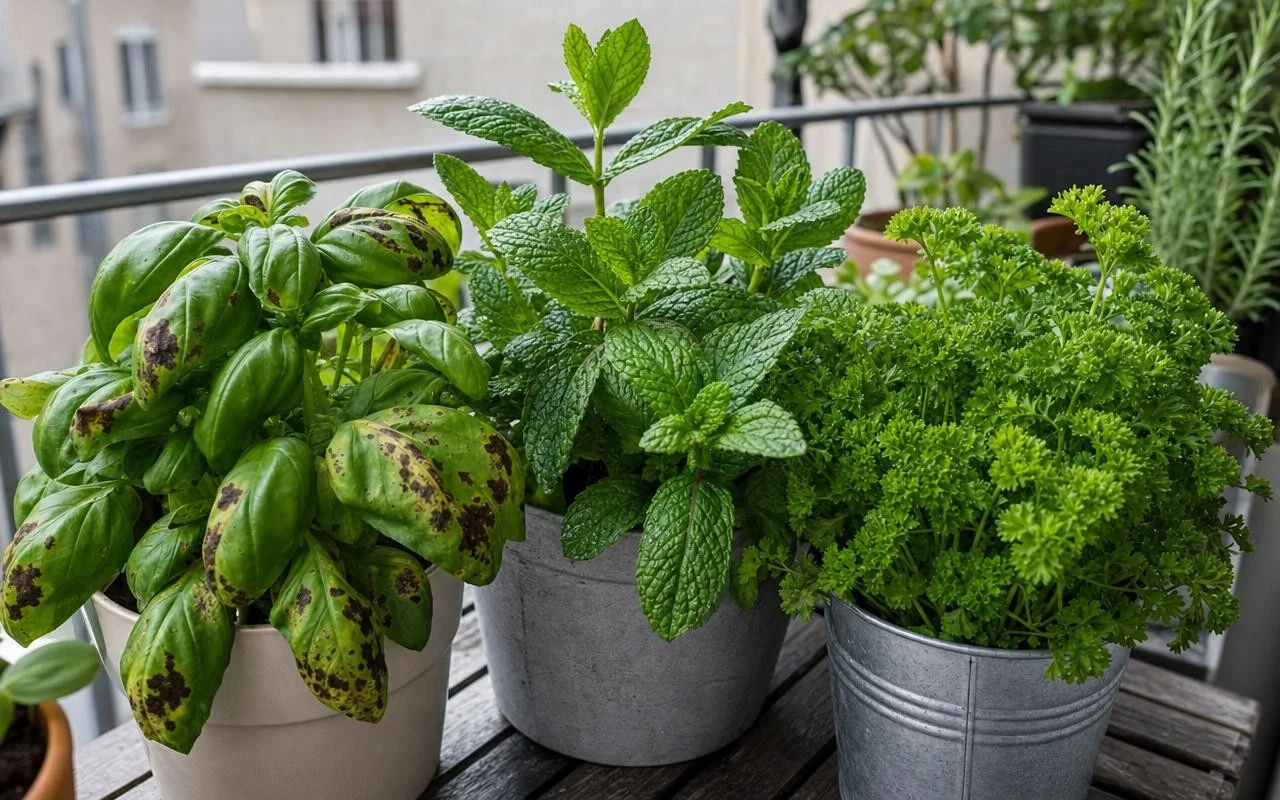
The basil leaves looked bright green last weekend; today you notice brown spots creeping onto the mint and parsley as well. It’s enough to doubt every bit of care you’ve given to your herb patch. Whether you grow them in pots on a balcony or as a bed in the ground, this symptom often appears while the rest of the plant seems healthy.
Generally, these brown spots on culinary herbs reveal stress: too much or too little water, too strong sun, a cold snap, unsuitable soil, tiny pests, or a leaf disease. Experts advise thinking like an investigator, reading what the leaves are telling you. With a few simple questions, you can usually backtrack to the dominant cause, often far more ordinary than you might imagine.
Express diagnosis of brown spots on culinary herbs
When you want to understand what’s happening, the first reflex is to touch the leaf. Dry, brown, rigid patches with a fraying edge suggest a water deficit combined with heat or wind. Conversely, brown or blackish areas, soft to the touch, paired with soil that remains soggy for several days, point toward overwatering and oxygen-starved roots—a common situation in pots without proper drainage holes.
Another key clue: the shape of the spots. On basil, angular brown marks that trace the leaf veins often indicate a bacterial spot. When the spots are more circular, sometimes edged in yellow, it’s more likely a fungal disease. If the underside of the leaf bears a gray or purplish fuzz, especially in humid weather, experts refer to basil mildew.
Watering mistakes, sun or cold: the most frequent causes
Herbs like basil, thyme, or oregano do not appreciate roots that are constantly in water. Overwatering stands among the primary causes of brown spots: oxygen-starved roots eventually cause leaves to fall. To avoid this, it’s best to check with your finger that the top 2–3 cm of soil are dry before watering again, and always ensure drainage holes, never leaving a tray full of moisture in place.
The reverse scenario also exists. In a small pot under full sun, the soil can dry out in a day and trigger brown, brittle leaf edges, especially on basil and parsley. A light mulch around plants in the ground helps limit this evaporation, without the organic matter sticking to the stems. Cold nights pose another problem, especially for basil: after a cold spell, the leaves brown, sometimes blacken, and become soft.
Soil, pests and diseases: when brown spots raise concerns
An ill-suited soil can also explain persistent spots despite well-managed watering. Very clayey soil holds water, sandy soil drains it away too quickly; in both cases, the roots suffer and the leaves brown in patches. Gardeners also notice irregular brown scorch marks in case of fertilizer excess or salt buildup in a pot watered with very hard water. The solution is to thoroughly rinse the substrate, or even repot into a lighter mix enriched with compost.
Pests remain a frequent cause of spots. Aphids, mites, or leafhoppers pierce the leaves and leave a scattering of tiny pale dots that eventually brown. Regularly inspecting the underside of the foliage helps detect these intruders early, then dislodge them with a vigorous spray of water or a mild insecticidal soap. Fungal diseases like damp leaves and crowded clumps; the University of Maryland recommends watering at the base, removing affected leaves, and aerating the plants. Often, a few adjustments are enough for the herb garden to regain healthy, fragrant foliage.
Sources
- Mon Jardin Ma Maison
“In April, these 4 tasks essential to do in the garden” - Maison & Travaux
“Before your spring sowings: these 10 tasks in the garden to prevent weeds and boost your future strawberries”
