
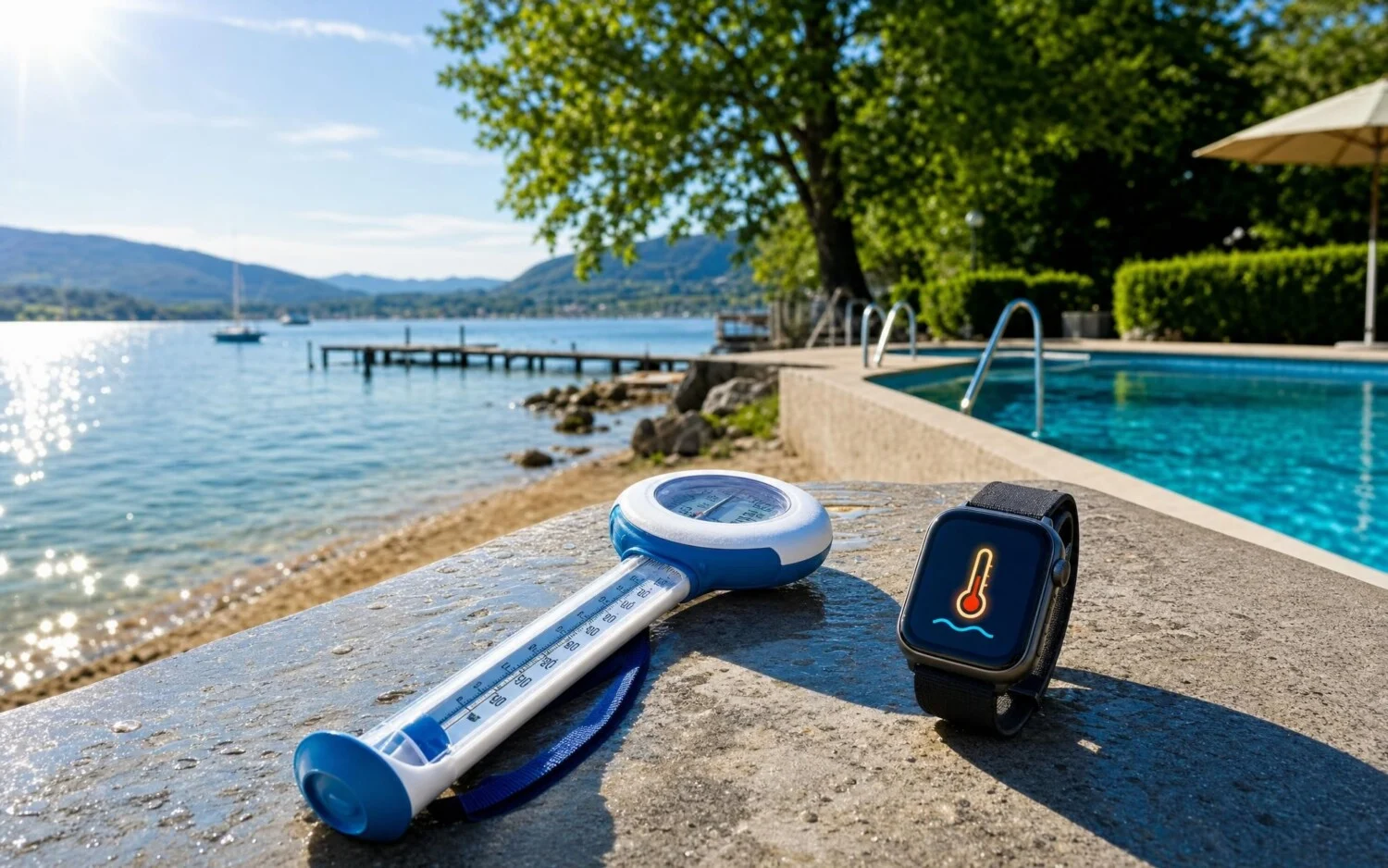
On the beach or at the edge of a pool, it often begins with that small gasp as you dip your foot into the water. At temperatures below 23 °C, even the Mediterranean can feel icy; at 30 °C, a pool quickly resembles a tepid bath and you come out feeling groggy. Between these extremes lies a key parameter: the ideal water temperature for swimming is not the same whether you are in the sea, a lake, or a pool.
Experts remind that “the human body loses heat 25 times faster in water than in air.” With age, heart conditions or intense exertion, summer swimming can shift from enjoyment to discomfort. A single degree on the thermometer can make the difference.
Ideal temperature in the sea, lake or pool: the right ranges
In natural settings, water rarely stays very warm. In France, the sea barely exceeds 26 °C; the ideal temperature for swimming there sits around 23–26 °C, sometimes a brisk entry, but an equilibrium reached within a few minutes. Below 20 °C, energy expenditure rises and fatigue sets in faster, especially for children and vulnerable individuals, warn the SNSM lifeguards.
In a lake, the air can feel heavy while the water remains at 18 °C: a gap conducive to cold shock. Health Canada warns that sudden immersion in water at 15 °C or less can be deadly, not because of immediate hypothermia, but because the person gasps and loses control of their breathing.
Éviter hydrocution et choc thermique : comment entrer dans l’eau
Between the scorching air on the sand and the cool water, the risk mainly comes from the abrupt change. The SNSM describes hydrocution as a cold shock that triggers discomfort, loss of consciousness, or even cardiac arrest. The American NOAA agency speaks of a “cold shock response”: the swimmer suddenly opens their mouth, inhales water, hyperventilates, and can drown within a few seconds.
To limit these reactions, lifeguards recommend entering the water gradually, especially in the sea and lake. The Marie France magazine recalls a simple habit before water at 18 °C or cooler: allow the body three full minutes to adapt, instead of plunging in from the towel.
- Wet the neck, face and wrists for 30 seconds.
- Enter in stages up to the shoulders, while breathing calmly.
- Exit promptly if tremors or discomfort last more than two minutes.
Adapter la température de l’eau aux enfants, seniors et nageurs sportifs
Tolerance to cold water varies for everyone. According to Marie France, “an infant should come out after thirty minutes, even when the water is around 31 °C,” because they cool down very quickly. Toddlers feel comfortable around 30–32 °C, while a six-year-old child can endure water at 27 °C for an hour without difficulty. Seniors, on the other hand, prefer around 28–29 °C, which spares joints and circulation.
Regarding exertion, the ideal temperature for swimming and chaining laps drops by a notch. Marie France says that 25–28 °C is enough to prevent muscular overheating and shortness of breath, in line with the World Aquatics rules (formerly FINA) which require 25–28 °C for competition. At 30 °C, ventilatory efficiency decreases; below 25 °C, the body burns more calories to maintain itself, hence the sense of cold after a few laps. In good weather, aiming for a pool between 26 and 28 °C thus offers a good balance between performance and comfort.
Sources
- Marie France
“Sea, pool, lake… Here are the ideal temperatures to respect for a safe swim and to avoid drowning this summer”
