
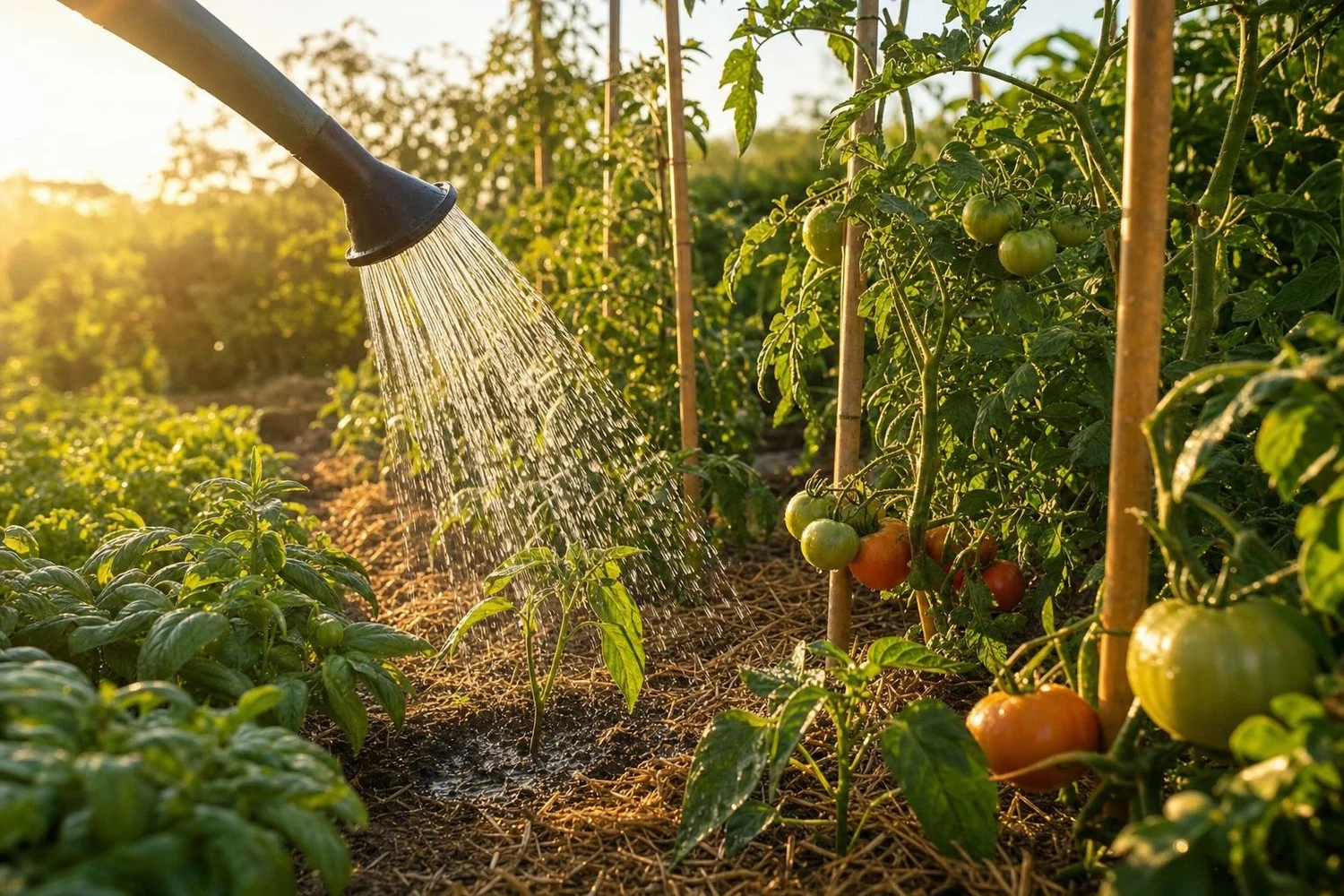
When the thermometer climbs above 30°C, the thought of mowing at 3 p.m. can scare off even the most eager gardeners. Yet the garden never presses a pause: tomatoes ripening, lettuces wilting, pots drying before your eyes. The secret to keeping control without risking your safety isn’t at noon, but at dawn.
Between 5 a.m. and 9 a.m., the air stays cool, the sun still skims the roofs, and the soil retains the night’s moisture. Horticultural extension services, such as those at Oregon State University or the University of Minnesota, recommend this window to limit evaporation and reduce diseases. Seven well-chosen gardening chores are enough then to keep an outdoor space in good shape without sacrificing breakfast.
Why pre-breakfast gardening chores thrive in hot weather
The first reason lies in the morning watering. Watering early allows time for the water to penetrate to about 15 cm deep, instead of evaporating on the surface. The foliage dries quickly, which limits fungi. And you can better identify which plants truly need water by checking the soil with your finger rather than relying on a few wilted leaves.
Working early also protects the body. Extension services remind us that the peak heat often arrives between 2 p.m. and 4 p.m., with a heat index rising once temperatures reach 32 °C. At these levels, the risk of heat stroke, dehydration, and discomfort increases rapidly. By concentrating physical tasks at dawn, the effort stays reasonable, even during a heatwave.
7 gardening chores to finish before breakfast when it’s very hot
The goal isn’t to redo the entire garden before coffee, but to target what matters during the heat. In about twenty minutes, these seven actions protect your beds, your vegetable patch, and your potted trees for the rest of the day.
- Water deeply at the base of the plants, slowly, until the soil is moistened to a depth of 10 to 15 cm.
- Harvest vegetables, fruits, and herbs while they are still fresh for better flavor and longer shelf life.
- Do a quick weeding of young weeds, easier to pull when the soil is moist.
- Top up the mulch where bare soil appears, 5 to 7 cm thick, leaving a gap around the stems.
- Inspect the undersides of leaves and the stems for aphids, slugs, or suspicious spots.
- Tie up or retighten the supports for tomatoes, climbing beans, and other tall plants, and check the stakes.
- Finish with a calm tour of the garden to observe, note urgent needs, and plan the next steps.
Following the same order each time, this ritual becomes automatic. You can even divide the areas by day: the vegetable garden on Monday, the beds on Tuesday, the balcony on Wednesday. The essential thing is to address what suffers quickly from heat, such as containers and young plantings, before letting the sun take full force.
What to avoid in the garden during heat, even early in the morning
State university extension specialists advise against heavy pruning, transplanting, or adding fertilizer during a heat wave. These operations add stress to plants that are already stressed. It’s better to wait for cooler temperatures to repot, divide, or prune a shrub, and to focus energy on watering and soil protection.
Keep an eye on water quantities as well. A vegetable plot of about 10 m² normally requires around 2.5 cm of water per week, but horticultural extensions note that in strong heat needs can rise to 30 or 35 liters per day. Watering little but often leaves the deep soil dry; a thorough soak spaced out, complemented by effective mulching, is preferable.
