
When autumn arrives, we close the windows, switch the heating back on, and the home becomes cozier. In the bathroom, this shift in rhythm traps water vapor: mirrors fog up, walls stay damp longer, towels dry poorly. In some corners, a grayish veil seems to settle. And sometimes, if you look closely, that veil actually moves.
This veil isn’t always just dust: it can be countless mold mites that feed on microscopic mold stains on the joints and tiles. These tiny creatures, such as the Tyrophagus putrescentiae species, love the warm, humid mornings typical of early autumn. The good news is that there is a very simple trick, based on baking soda, which costs under €3 and works in as little as 15 minutes. The key step is prepared in the kitchen.
Mold mites in the bathroom: how to spot them
To understand what you’re dealing with, you first need to recognize them. A mold mite measures less than 0.5 millimeters, barely transparent—almost invisible to the naked eye when viewed individually. Yet, when the colony settles on a damp joint, it forms a gray or beige, slightly powdery film that seems to ripple. Seeing this living carpet is a clear signal that the room stays overly humid, especially around the shower or bath.
For bathroom expert Colm Lalor, from the Nuie brand, the message is plain: “If you spot mold mites, address the problem at its source to be sure you don’t accidentally create a cozy microclimate where they can thrive,” he explains. In other words, these tiny creatures only develop where there is enough water for mold to grow. Finding them on ceramic joints, silicone sealant, or around the siphon indicates that there is persistent condensation, infiltration, or a light leak behind it.
Baking soda: the 15-minute trick for under €3
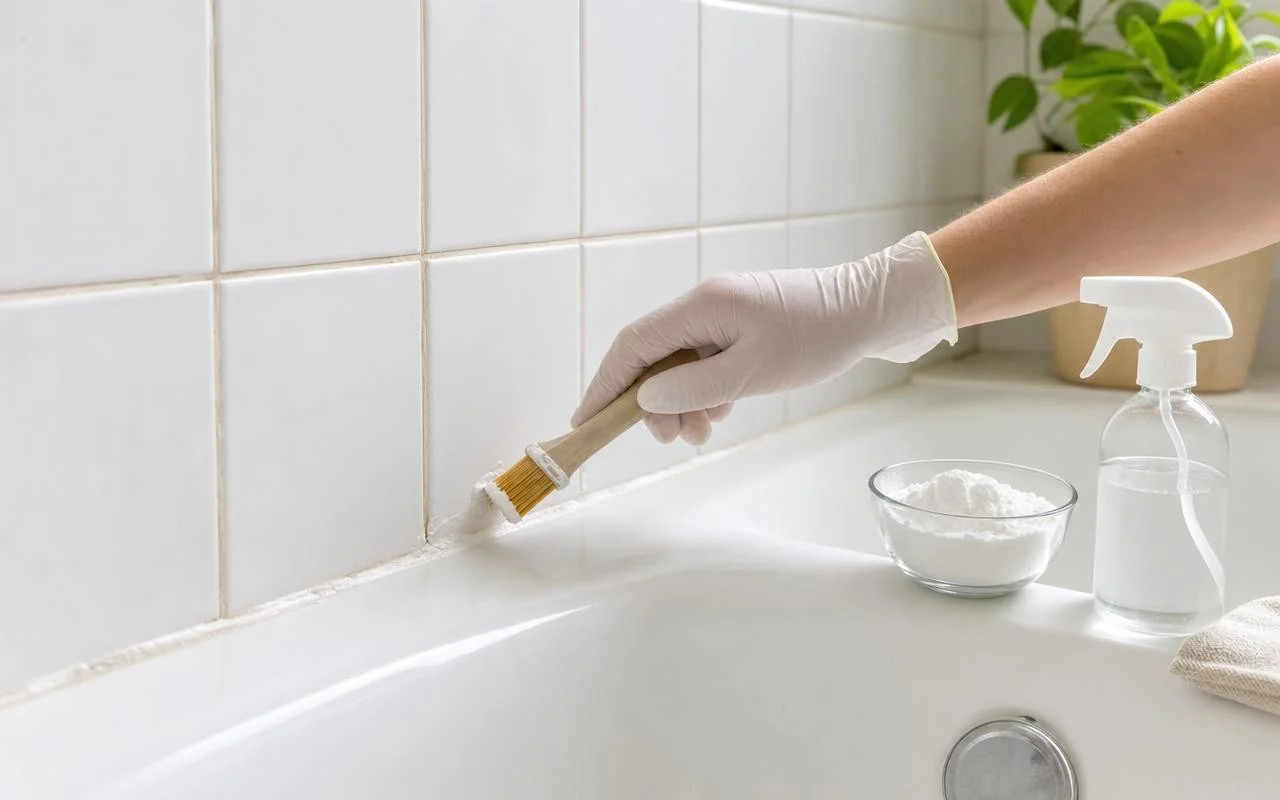
Before purchasing a specialized product, Colm Lalor recommends turning to baking soda, sold in supermarkets for less than £2 in the United Kingdom, roughly €2.30, and often under €3 in France. Simply mix a little powder with water to form a thick paste. Apply it generously to the affected areas, focusing on the tile joints and the silicone strips that border the bathtub or shower. Then let it sit for 15 minutes.
After this time, scrub gently with a grout brush or an old toothbrush, taking care not to scratch the coating, then wipe or rinse. Baking soda acts as a very mild abrasive that helps detach the mold on which the mold mites feed. The decisive step comes right after: thoroughly dry the surface with a clean, dry cloth. “While it’s useful to treat the problem in isolation, it’s also important to think about how you dry your bathroom to prevent mold and mites from returning,” explains Colm Lalor.
Preventing the return of mold mites in the bathroom
To dry the air, the exhaust fan in your bathroom becomes your best ally. Let it run for 15 to 20 minutes after every shower instead of switching it off when you step out. Regularly clean the grille with the vacuum cleaner nozzle, because dust and lint significantly reduce airflow.
In the long term, also track down hidden water sources: a dripping faucet, a cracked shower hose, a worn-out seal. If the same area keeps staining, have the installation checked by a professional. Finally, don’t pile towels and mats—hang them immediately, ideally on a warm towel rail, to limit the moisture available for mold and mites.
