
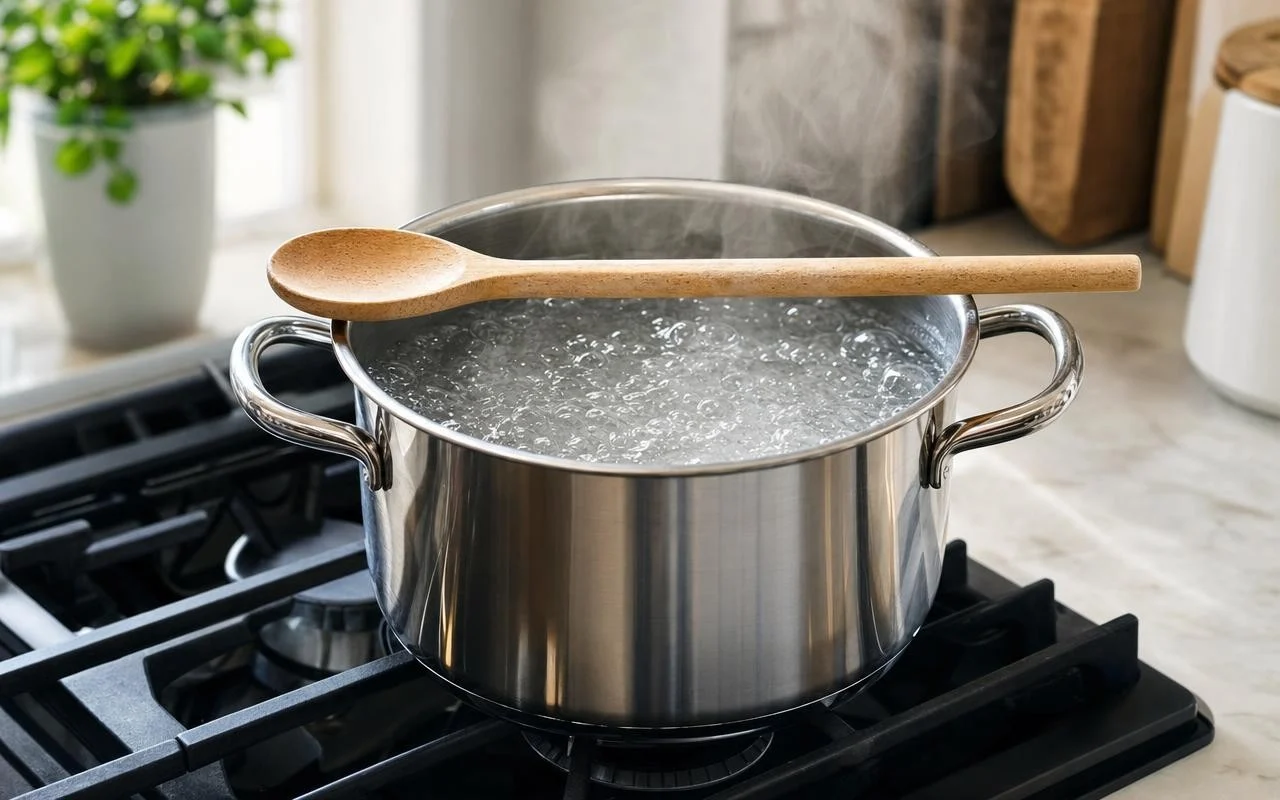
A pot of pasta on the stove, two minutes of inattention, and the foam climbs up before spilling onto the burner. Many cooks slip a wooden spoon across the top of the pot, convinced that this gesture will block the inevitable boil-over. The trick has circulated for ages, often presented as an obvious tip handed down from grandmothers.
In recent years, specialists in physics and cooking have studied this reflex to explain what it actually does, why it helps, but also where its limits lie. For the scene of the spoon resting on the boil tells only part of the story.
Pourquoi l’eau des pâtes, du riz ou du lait déborde si
facilement
When boiling only water, the steam bubbles burst quickly at the surface and the level stays relatively steady. As soon as you add pasta, rice, potatoes or legumes, these foods release starch that blends with the water. This starch gel coats the bubbles, forms a tougher foam, and allows bubbles to pile up on top of each other.
The volume of liquid then seems to swell and the white foam climbs toward the rim, especially if the pot is too full or the flame is very high. With milk, the phenomenon combines with proteins that create a thin surface film: the liquid appears calm, then suddenly rises. It is precisely this unstable behavior that makes people seek a simple, quick barrier.
À quoi sert la cuillère en bois posée sur la casserole en ébullition
Placed clean and dry, across the pot, the wooden spoon first acts as a physical obstacle. The bubbles that reach it collide with its handle, deform, and pop more easily. The foam then loses a bit of volume and falls back before reaching the rim, offering precious extra seconds to reduce the heat or stir.
Experts from Central Queensland University summarize this role simply: the spoon cools slightly the contact area, at least at first, and its porous surface helps to break the fine film that keeps the bubbles intact. The effect is temporary, because once the spoon is heated and moistened by the steam, it slows down much less the rise of the foam. Overflow can therefore occur if you keep cooking at full flame.
Pourquoi les experts privilégient le bois, et comment bien utiliser cette astuce
If one replaced this spoon with a metal spoon, some bubbles would pop too, simply because an object can cut their trajectory. But metal conducts heat very well and quickly reaches the same temperature as the steam. It no longer cools anything, remains smooth, and becomes even hotter to handle. Wood, on the other hand, heats more slowly and its irregular surface encourages the bubbles to burst.
To take advantage of this trick, experts recommend a fairly long, clean and completely dry spoon placed before the foam reaches the edge. Once the boil is reached, you should reduce the heat, do not fill the pot to the brim, and stir if the foam continues to rise. On gas stoves, avoid letting the ends of the handle extend too close to the flame, as direct heat can burn the wood.
