
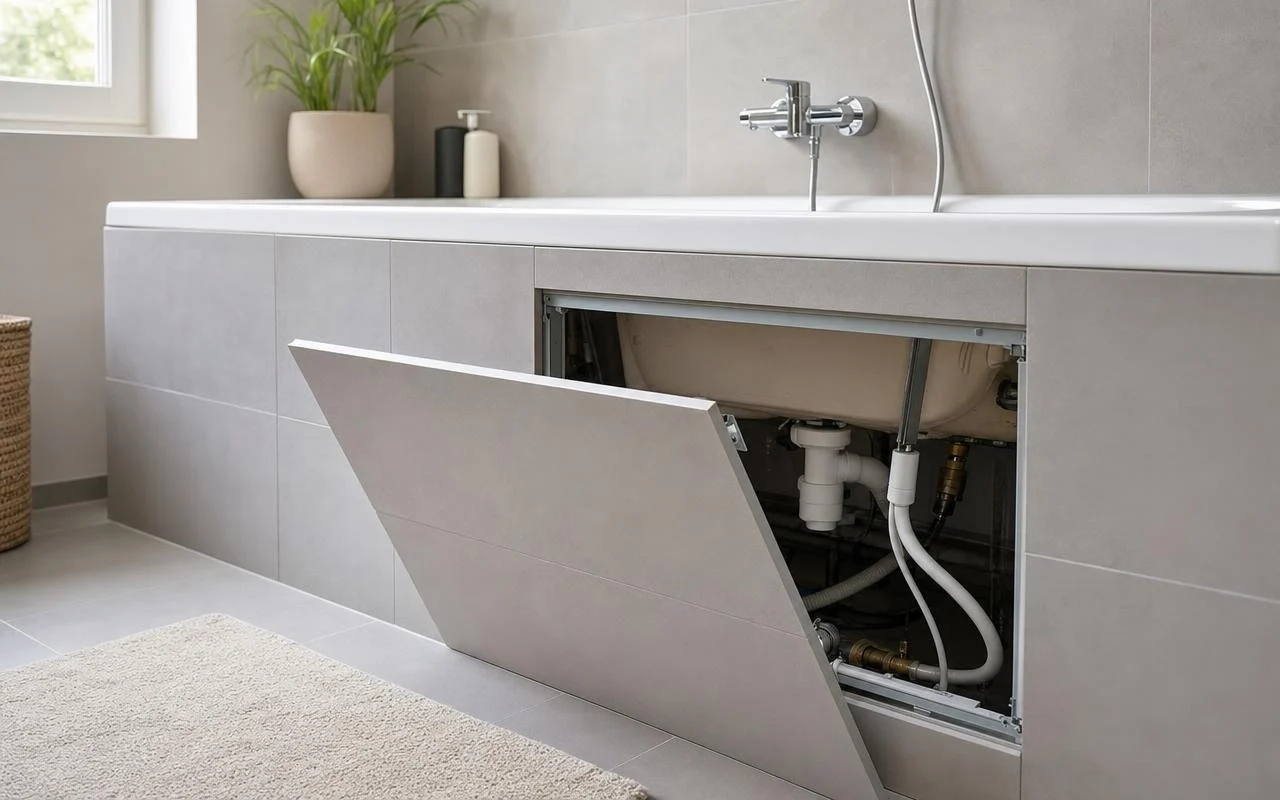
In many contemporary bathrooms, the masonry bathtub apron appears to be a smart idea: flawless tiling, no cuts, everything perfectly aligned. Ten years later, the same tub can turn into a nightmare when a halo appears on the downstairs neighbor’s ceiling and the plumber has to strike the apron with a chisel to reach the hidden leak.
As of 2026, most professionals now refuse to seal an apron without planning for a technical opening. For them, a completely sealed apron belongs to the past: either a bathtub access hatch is integrated into a tiled apron, or a removable bathtub apron ready to be unclipped at the slightest doubt. The objective is simple: avoid searching for a leaking siphon with a hammer and chisel.
Why the masonry bathtub apron without an access hatch becomes a trap
This seemingly innocuous apron actually hides the plumbing’s most heavily used points: drainage, overflow, supply hoses, and faucet connections. With every bath, the joints settle until one of them gives way. The leak does not drip onto the floor; it first saturates the screed and the concrete slab, then climbs via capillary action into the walls, sometimes several meters from the actual point.
Without access beneath the tub, it is impossible to quickly verify whether the siphon is cracked or if the drain stopper has loosened. When doubt arises, the only option is then to break the tiled apron to create a window into the work. On construction sites, plumbers often say that repairing the leak took twenty minutes, while restoring the tile and paints occupied several days and inflated the bill.
Access hatch or removable apron: the favored solutions in 2026
When the apron is made of acrylic or PVC panels, manufacturers offer a removable panel. The apron unclips entirely, giving total access to underneath the tub; there is no need to add an extra hatch. This type of product, trim-ready and held by profiles or magnets, suits renovations where a clean finish and easy maintenance are desired. Compared to a masonry enclosure, this kind of apron offers clear advantages.
- quick access to the plumbing;
- no tiling to break in case of a leak;
- PVC resistant to moisture rise.
As soon as the apron is masonry and tiled, the logic changes. Construction guides like MTS Construction recommend planning a bathtub access hatch of at least 30 by 30 centimeters, sometimes 40 by 40, positioned on the front of the apron, opposite the drain. The hatch can be white or tileable, with an aluminum frame and a magnet or clip system, the essential being that it can be easily removed with a tool and allows a bit of air to circulate, as DTU 60.1 reminds us.
Properly placing the hatch and correcting a tub apron already sealed
The hatch’s placement matters as much as its size. Plumbers typically position it as close as possible to the drain and siphon, in an open area where one can kneel to intervene. When the faucet connections are embedded in the wall, it can be useful to provide a second access or a removable device on the faucet side as well, so as to also inspect the hoses and O-rings.
In bathrooms already tiled without an opening, professionals do not redo everything: they neatly cut a zone above the drain, install a metal frame, and fit a removable panel held by magnets or hinges. This operation remains limited compared with a full demolition, especially if action is taken at the first signs, such as a skirting board that still buckles in the same place or joints that blacken along the apron.
