
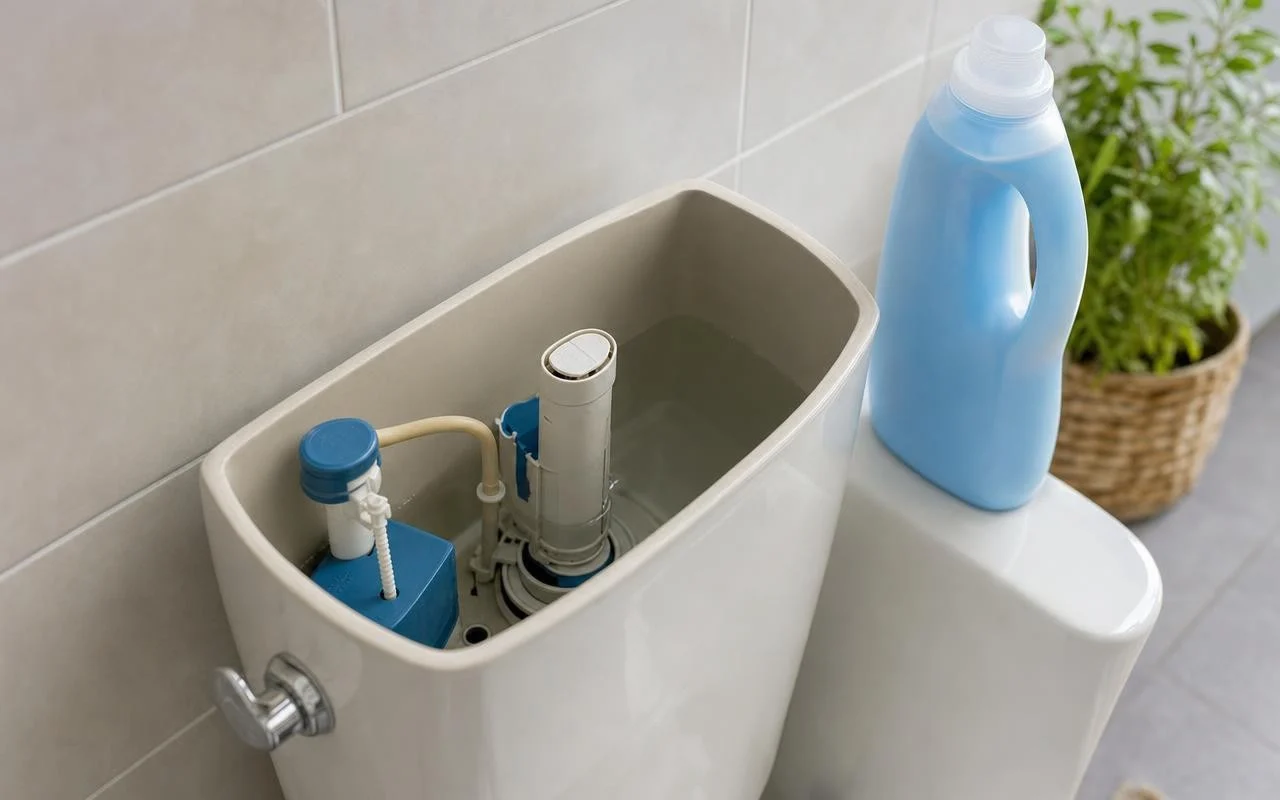
On TikTok and Instagram, a trick is going viral: pouring a bit of fabric softener into the toilet tank to perfume the bathroom with every flush. It’s an easy gesture, a pleasant scent, and the impression of killing two birds with one stone. But the tank was never designed to act as a diffuser for scented laundry, and the story is more serious than it might seem.
Toilets already account for a large share of our water use. The EPA estimates they account for nearly 30% of indoor household water use, with older models able to use up to 6 gallons, about 22.7 liters, per flush. When a mechanism goes awry, the bill climbs quickly, often without us noticing.
What the toilet tank is really for
Opening the lid reveals the float, the rod, the flush valve, and the seals. The principle is simple: the tank fills, the lever lifts a rubber flapper, water flows into the bowl, and then the flapper settles back to seal. The EPA notes that toilet leaks most often originate from this flapper that wears out, letting a thin stream of water continuously pass.
Pouring fabric softener into the toilet tank regularly, therefore, means keeping these fragile parts constantly soaked in a laundry liquid containing fragrances, surfactants, and sometimes dyes. The site Maison et Travaux warns about the formation of a greasy film and persistent foam that can gunk up the mechanism. On the flapper, this deposit interferes with contact with its seat, accelerates wear, and actually promotes those sneaky little leaks.
Silent leaks, water waste, and warranties voided
The figures give a sense of the stakes. According to the EPA, domestic leaks can waste up to 180 gallons of water per week, about 681 liters, and toilets are often to blame. A flushing leak isn’t always a dramatic noise: sometimes the water flows just enough for the tank to refill at regular intervals, with no one understanding why the meter runs faster and the bill follows.
Manufacturers, for their part, are very clear. In a manual, Kohler warns that “the use of cleaning products placed in the toilet tank will void the warranty.” Parts suppliers like Fluidmaster and Gerber also note that blocks left in the tank, especially those containing chlorine, can damage components and may void coverage. HQ Plumbing and Air also reminds us that no manufacturer lists fabric softener as an approved product.
Pleasant scent, septic tank and safer alternatives
For odors, the experts interviewed by Homes & Gardens remind us that a fabric softener is designed to be rinsed in a washing machine, not to linger in a toilet tank. A pleasant scent does not prove the bowl is clean. With a septic tank, the North Gaspé Water Council even classifies detergents and fabric softeners among products to avoid to preserve beneficial bacteria.
So what should you do for a bathroom that stays fresh without stressing the plumbing? The first rule is simple: do not add anything permanent to the tank, whether fabric softener, colored tablets, or other homemade mixtures. For the rest, a few habits are usually enough to keep the toilets clean and smelling fresh, with regular cleaning and, if needed, an ambient deodorizer:
- Regularly clean the bowl and, occasionally, the interior of the tank with products designed for toilets, following the manufacturer’s instructions.
- If fabric softener has already been poured, drain the tank, rinse it with clean water, check the condition of the flapper, and monitor any unusual refilling.
