
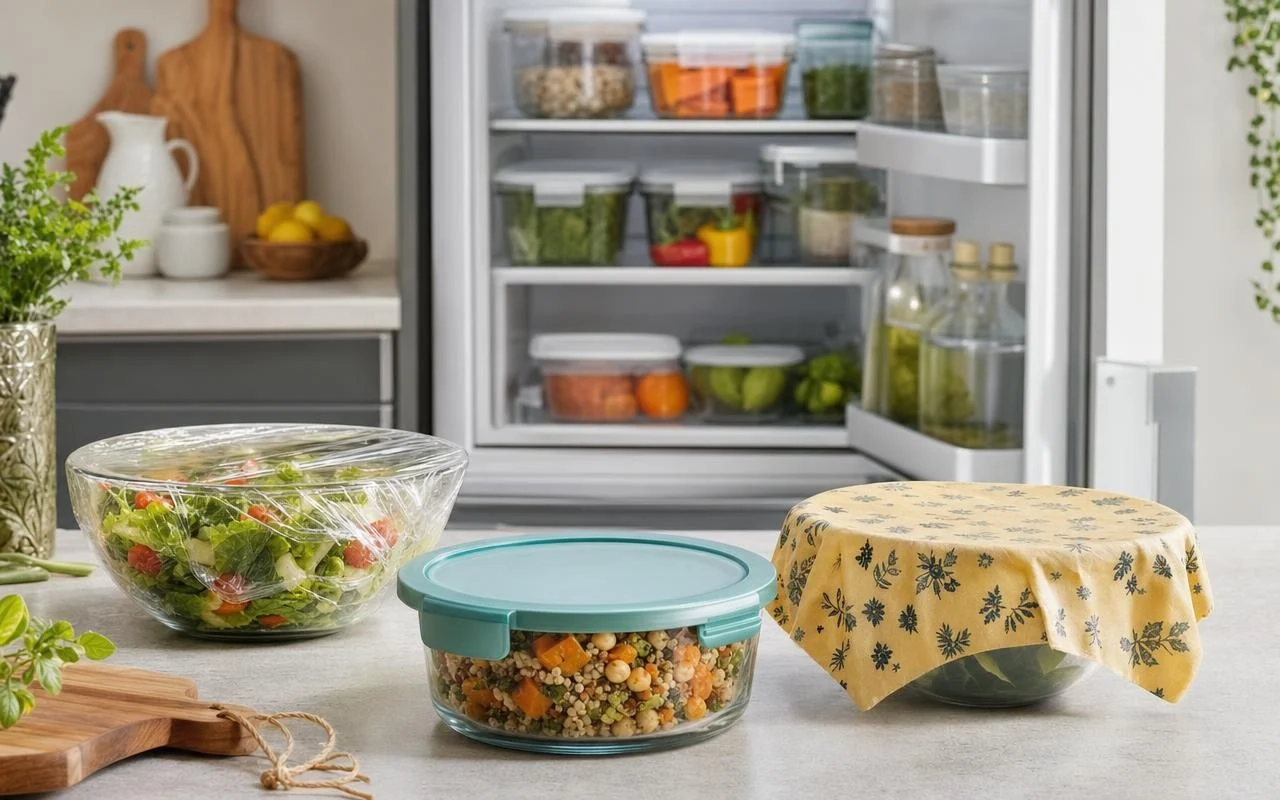
On the work surface, we often reach for plastic wrap without a second thought to cover a bowl or a dish. In France, the NGO GoodPlanet cites about 1.2 billion meters of food wrap used each year, a material that is very difficult to recycle. At the same time, ADEME reminds us that our consumption choices can reduce waste, energy use, and greenhouse gas emissions.
Between reusable lids, airtight containers, and wax wraps (often called bee wraps), the range has expanded. Yet not all of these solutions suit the same foods or uses: fridge, freezing, transport, hot dish, or leftovers for the next day. The right solution isn’t the same for leftover soup and for a piece of Comté cheese.
Hermetic or breathable: the first question to ask
A hermetic lid placed on a jar or a box creates a barrier that limits air entry. Preservation guides, such as those published by the IGA chain, explain that this seal slows oxidation, drying out, and the multiplication of bacteria. For liquids (soup, sauce, applesauce) or heavily odorous foods, a rigid container with a lid remains the safest and most practical solution, especially for transport.
The bee wrap works differently: the wax-coated fabric can be molded with the warmth of the hands and remains slightly breathable. This micro-ventilation is well suited to fresh or cut fruits and vegetables. On the other hand, it does not withstand heat: manufacturers indicate washing with cold water only and discourage oven, microwave, and contact with hot dishes. The plastic wrap, by contrast, conforms well to shapes but is not always perfectly airtight, and it remains for near single-use.
What packaging for which daily food
For liquids, stews, sauces, or saucy dishes, the reflex to keep is a rigid container with a properly fitting lid, in glass or in food-grade plastic. The same logic applies for freezing or transport in a bag: avoid any leakage. For a dish fresh from the oven, always let it cool slightly before covering, and never with a bee wrap or plastic wrap in direct contact with the hot dish.
For opened fruits and vegetables (half lemon, cucumber, rinsed lettuce), Luxembourg’s food safety authorities recommend favoring bee wrap. As soon as you move to greasy foods (cheeses, charcuterie, cakes), caution increases: Luxembourg and the German Federal Institute for Risk Assessment (BfR) note a risk of transfer of wax components to the food. It’s better to use a plate or a container with a lid. For raw meat and raw fish, the two bodies completely discourage bee wrap, as it cannot be washed at high temperatures.
Bee wrap, lids and plastic wrap: hygiene and precautions
Authorities remind that bee wrap should mainly be used to cover fruits and vegetables, already washed and cooled. Washing with cold water and a little soap is not enough to eliminate all germs related to raw foods of animal origin, hence the risk of cross-contamination. The BfR also recommends that the wax meet the purity criteria of Regulation (EU) 231/2012 and notes a lack of long-term data on certain additives like jojoba oil, which leads to caution. The stated lifespan is around one year before potential composting.
On the lid side, the Ma Cantine program document from the Ministry of Agriculture invites checking the label “suitable for contact with food” and the usage conditions. Some plastic lids should not be heated in the microwave, and the silicone seals must be properly washed and dried to avoid mold and odors. Glass containers with airtight lids adapt well to fatty and acidic foods, to freezing as well as to reheating. The plastic wrap retains occasional usefulness when no suitable container is available, but its widespread use and end-of-life complications encourage reserving it for exceptions and prioritizing reusable lids as soon as possible.
