
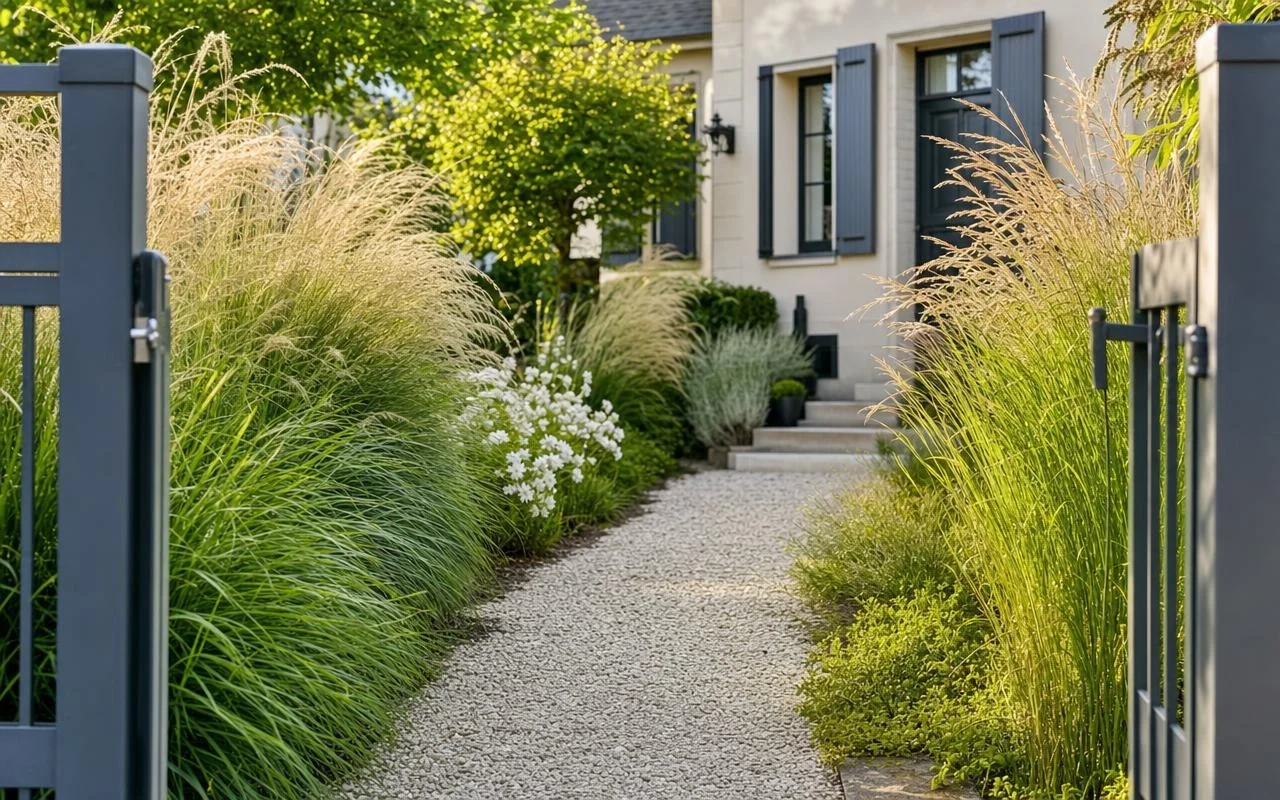
Initially, my driveway was merely a long gray corridor between the house and the gate. Clean slabs, gravel neatly laid, but no character. Despite tidy flower beds and a decent lawn, the eye always fell on that flat ribbon that cut through the garden. I wanted to change that impression without redoing the entire surface or embarking on an expensive project.
One late-summer morning, I took a simple gamble: border this driveway with ornamental grasses, bought in a few pots to test. No sophisticated plan, just the desire to bring movement to this passage that felt too tame. Three weeks later, the garden entrance was unrecognizable. Everything hinged on the choice of varieties and the exact timing of planting.
Grasses along a walkway: when the decor comes to life
A poorly showcased walkway often gives an unfinished impression, even when the rest of the garden is flawless. By planting grasses along this route, I bet on plants capable of transforming this purely functional area without touching the existing surface. Their delicate silhouettes and their movement with the slightest breeze immediately change the mood.
These plants tolerate varied soils, and once established, require little watering and almost no maintenance. Their appearance evolves with the seasons, from green tufts in spring to more golden forms in autumn. Along a walkway, they draw a leafy corridor that guides the gaze and connects the house to the rest of the garden. Essentially, the idea is to achieve a true decor without committing to major work.
Miscanthus, Stipa, Pennisetum: three grasses that transform a driveway
I chose three real garden standouts for this. The Miscanthus, first, for its tall, structured silhouette that can reach between 1.5 and 2 meters at maturity. Planted in groups, it creates an ideal green screen along broad driveways where a little privacy is desired. Even when young, its upright form adds volume and immediately frames the passage.
On the other hand, the Stipa displays a finer appearance. Its flexible leaves flutter at the slightest breeze and form airy clumps that do not encroach on the path, ideal for narrow walkways. The Pennisetum, for its part, stays compact, generally under 80 centimeters, and is distinguished by its fluffy spikelets from the end of summer. These three grasses share one valuable trait: once installed, they require very little attention.
Planting in late summer: the express method for grasses along the driveway
To ensure this test was conclusive, I followed a simple rule: plant in late August, when the soil still stored the heat of summer. The roots then have several weeks to settle before the first frosts. The setup happened in one morning, with an easy-to-reproduce method:
- Loosen the soil along the length of the driveway to about 30 centimeters
- Space the plants 40 to 60 centimeters apart depending on the grass
- Mix a bit of compost or potting soil into the soil
- Water with between 5 and 8 liters of water per plant
- Finish with a light mulch to retain moisture
After planting, I simply watered regularly during the first weeks. At the end of three weeks, the change was clear: the roots had colonized the loosened soil, the Miscanthus gained volume, the Stipa rippled with every breeze, and the Pennisetum already showed a few silky spikes. To keep the experiment successful, avoid a few traps: planting too late in the season, crowding the plants to the point of restricting air, neglecting initial watering, or leaving soil too compact. In terms of maintenance, one guideline suffices: wait until the end of winter to prune, so you can enjoy the tufts all through autumn.
Sources
- Pleine Vie
“This hidden system used by landscapers installed in November blocks weeds for years in your gravel driveway.”
