
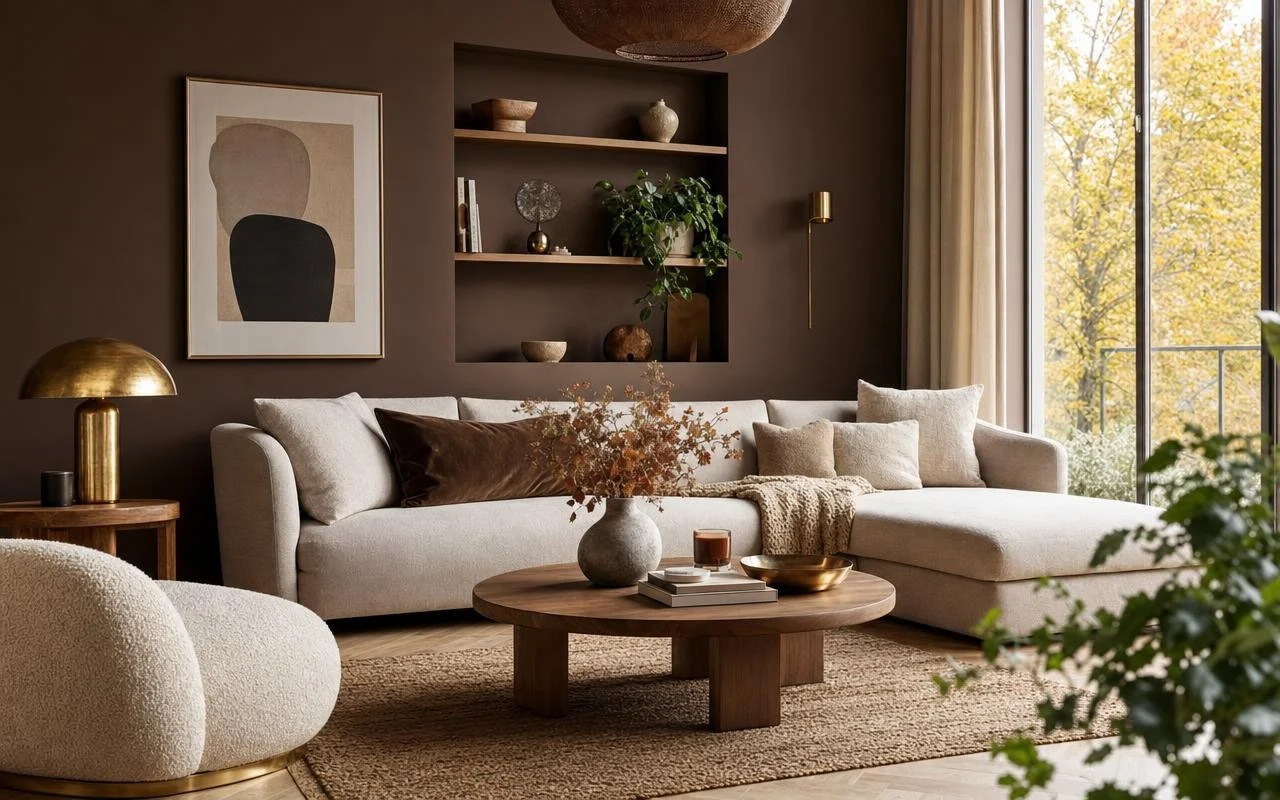
In many French living rooms, the delicate green wall that once seemed so modern a few years ago is starting to bore. The sage green, installed for nearly five years on kitchen facades, headboards, and living room walls, has invaded catalogs and decorating networks to the point of sometimes making it feel like you’re constantly looking at the same interior. Many people today want to turn the page, even if they don’t yet know which color to head toward.
In DIY stores and among interior designers, the pattern repeats: requests shift toward deeper, more enveloping tones that warm the room when the light fades. Autumn 2026 clearly marks this pivot, with a desire for a cocoon-like ambiance and living rooms that resemble a refuge more than a perfectly well-behaved Pinterest board.
Sage green: why this living room color makes you want to change
The success of the sage green was nothing mysterious. This soft, slightly greyed shade evoked houseplants and nature without aggression, perfect for calming minds after turbulent years. It adapted to almost anything, from a light Scandinavian style to bohemian with rattan and linen cushions, which made it a safe bet for real estate agents as well as major retailers.
But with its omnipresence, the color lost its wow effect. It appears in furnished rentals, on social media inspiration pages, in kitchen showrooms; what once stood out has become the norm. Another limitation noted by decorators: in winter light, especially in north-facing rooms, the sage green can drift toward a rather sad gray. Hence this desire for deeper nuances that hold up better as days shorten.
Chocolate brown in the living room: the new cocoon shade for autumn 2026
In this context, professionals all point to the same family of tones to replace the tired star: a deep chocolate brown, offered in chestnut or hazelnut variants depending on the desired intensity. This dense color envelops the room like a blanket, without appearing black or oppressive when used in moderation. It recalls raw wood, patinated leather, the leaves that fall outside, and even the cup of hot chocolate placed on the coffee table.
This chocolate brown fits into the wave of earthy colors already visible on furniture and textiles, while remaining sober enough to traverse several seasons without dating the interior. In a very light Scandinavian living room, it adds depth behind the sofa. In a Haussmannian apartment, it emphasizes the moldings and highlights an old parquet. With a vintage seventies sideboard, it strengthens the warm ambiance sought this year, while terracotta tends to become more of a small accent in cushions or ceramics.
Adopting chocolate brown without darkening your living room
To adopt this palette without turning the living room into a cave, decorators often recommend starting with a simple accent wall. You then choose the wall that is most visible from the entry or behind the sofa, keeping the other walls in a warm off-white or linen beige. In a small living room or a dimly lit space, a chestnut or hazelnut shade works better than a very dark chocolate. To maintain a warm balance, a few pairings work particularly well:
- Light wood such as oak or ash
- D etails in brass or copper
- Textiles in linen or boucle wool
- A large cream rug to soften the space
A matte finish already creates a cocooning atmosphere in the living room, while a satin finish brings a bit of light to the corridors. Final tip: test the color on the wall and reserve the sage green or terracotta for a few accents.
