
You open the wardrobe door, and that musty, stale odor hits you immediately. The clothes are clean, the shelves neatly organized, but the air smells of cold dampness. Many reach for air fresheners or scented sachets, not realizing the problem lies elsewhere and that a simple kitchen ingredient can really help.
On September 24, 2026, an article from the Argentinian media TN highlighted several specialists, including Andy Fox, expert in filtration and indoor air quality at 3M, and Karina Toner, operations manager at Spekless Cleaning. Their message is clear: the damp odor in closets mainly stems from a lack of ventilation, not from laundry that is poorly washed. The question remains how to eliminate it for good.
Why the damp odor invades a closed closet
Closets are often small, enclosed spaces filled with textiles that retain water. When the door stays closed for hours, the air laden with humidity gets trapped inside. Andy Fox explains to Martha Stewart that reducing humidity and improving air flow are two major levers for driving away this kind of odor. The steam that comes from the bathroom or the kitchen can also lodge in the bedroom and in the cabinet.
Another point highlighted by the specialists: sometimes clothes are stored while still slightly damp, or hangers are squeezed too tightly. Air no longer circulates between the fabrics and moisture sets in, leading to that stubborn musty scent. Some sites from humidity-treatment professionals even recommend observing the evolution of the odor with the door closed and then opened over 24 hours, to understand how poorly the air renews itself.
Odeur d’humidité dans le placard : problème de ventilation ou infiltration ?
Before pulling out the tips, a quick diagnosis helps to avoid fighting the wrong battle. A specialized service like Servidos notes that a hygrometer placed inside the closet can provide a valuable clue: if the humidity exceeds about 65 to 70% with the door closed and drops markedly when opened, the issue mainly stems from a lack of ventilation. The odor then corresponds to stagnant humid air, not necessarily a leak.
Conversely, if the closet still smells bad even after airing, you should inspect the back walls. Dark stains, blistering paint, or wood darkening suggest infiltration or condensation on a cold wall, as described by several specialized articles. In this case, scented sprays and deodorizers merely mask the problem, and advice from a building professional becomes useful.
The baking-soda trick and proper closet ventilation practices
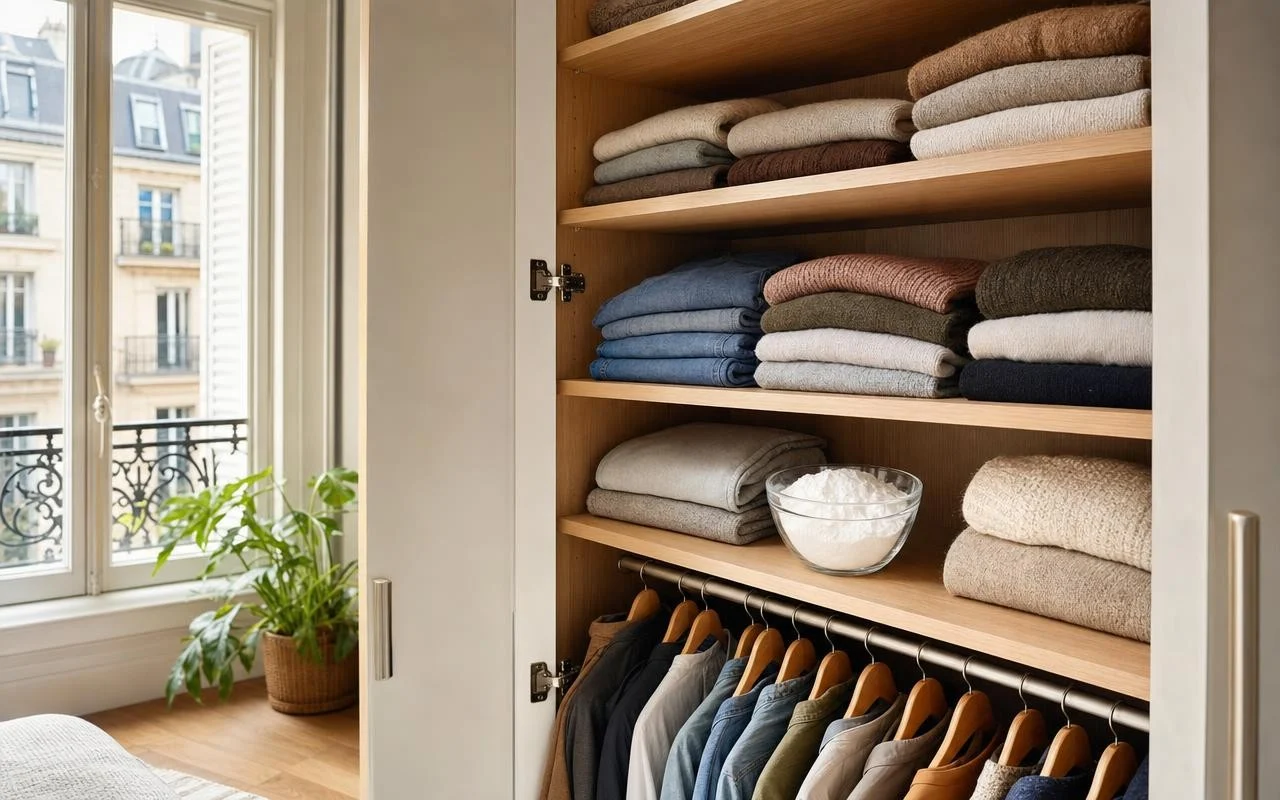
Once the main cause is identified, cleaning experts agree on a simple trick to neutralize odors: sodium bicarbonate. Karina Toner recommends placing open containers filled with bicarbonate on different shelves or, to avoid spills, small fabric sachets filled with powder. This product absorbs and neutralizes humidity odors. The tips from Martha Stewart suggest replacing it every six to eight weeks, depending on the intensity of the odors.
However, baking soda remains a supplement, not a miracle solution. To prevent the musty smell from returning so quickly, the specialists cited by TN remind of a few simple daily habits to adopt:
- Leave the closet doors open for a few minutes each day to refresh the air.
- Never store damp laundry or laundry that has just come out of the washing machine.
- Space out the hangers and avoid overloading the shelves.
- Regularly check the back wall for any signs of moisture.
- Install a small dehumidifier if the problem recurs often.
