
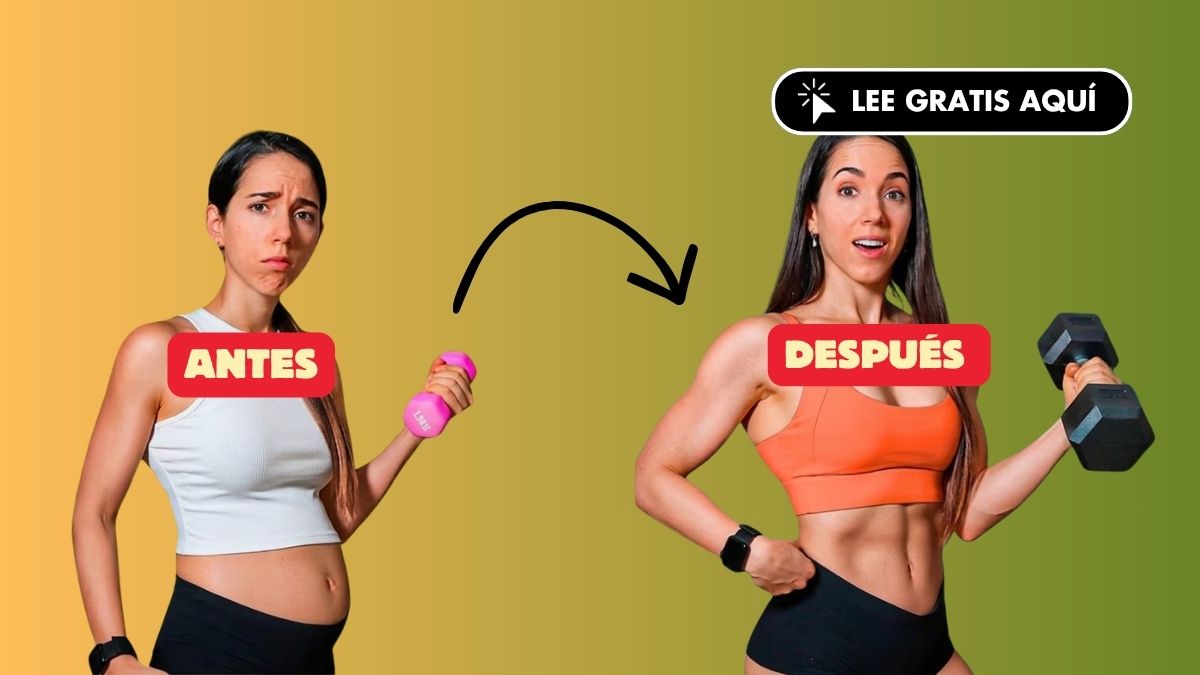
When you begin in the world of fitness, it is quite common to have days where you feel barely able to get up after pushing through an intense workout the day before. In fact, there is a general belief that in order to know you’ve trained well, feeling that pain is necessary. However, several experts have already taken on debunking this idea, including the dietitian and pharmacist María Casas.
The expert has discussed the topic in a video on her YouTube channel. In it she explains that if you are one of those people who has always sought to experience soreness after training, you should stop, because feeling that slight pain does not necessarily mean you are training correctly. “An immediate feedback that you might be overdoing it is that if you have a lot of soreness 12 to 48 hours after your workout, this is a clear sign that you have pushed too hard.”
The key is to have patience
When it comes to starting to train, the real problem is that people typically lack any patience. Everyone wants to start seeing results as soon as possible, which often leads to training excessively and without a clear plan. As the expert explains: “That living urge is always ready to emerge from our being at any moment,” which frequently results in overtraining, potentially damaging the muscles or even slowing down progress further.
Moreover, doing this not only over-saturates the body but also leads to soreness that can make it hard to move normally. For the expert, this is not ideal, since yes, you should push yourself in the gym, but “you should never leave it destroyed.”
The four pillars for building a strong body
Many women fear starting to lift weights because they think they will become “too big” or have “a masculine body.” Yet María Casas asserts that this is a myth. Naturally, women have between 10 and 20 times less testosterone than men, so it is biologically impossible to get excessively strong simply by training for strength.
To achieve that toned and firm body that everyone seeks, the expert explains that there are only four very simple rules to follow. First, you must train with real intensity; this means the exercise should be challenging, and you should finish each set feeling like you could have completed one to three more repetitions before completely tiring yourself out.
Second, you need to maintain a fair training volume; if you’re just starting, eight sets per week for each body area is enough, and if you already have experience, you can increase to ten, something that, according to the expert, women tolerate very well thanks to their hormones and natural body fat percentage.
Third, you should apply a “progressive overload”, which means you cannot always do the same thing; each week you should try to add a bit more weight, perform an extra repetition, or rest less between sets.
Finally, it is essential to manage rest and know when to stop, since you cannot train at maximum all year without becoming saturated; therefore, the specialist recommends “deload weeks,” that is, training lighter to give the muscles and joints a break, highlighting that “for women, an ideal moment to deload is during the premenstrual phase, the week before your period, when we are a bit more tired and life generally feels more burdensome.”
To design your ideal routine, avoiding unusual exercises that circulate on social media, María Casas advises always choosing the basics and most effective, such as squats, lunges, push-ups, or the famous hip thrust. The first thing you should do is organize yourself according to the days you have free: if you can only train two days a week, the ideal is to do two full-body workouts; if you have three days, you can do a leg day, another for arms and back, and a third for full body; and if you have four days, the best is to alternate two leg days and two torso days. To know if you’re using the correct weight, the expert shares a very simple trick: after passing half of the repetitions, you’ll notice that your speed decreases because it costs you more, and at the end of the set you should emerge panting a bit and with a thirst to drink water. If you see that in less than a minute you’re already completely ready to start again, it is a clear sign that you’re not using enough weight.
