
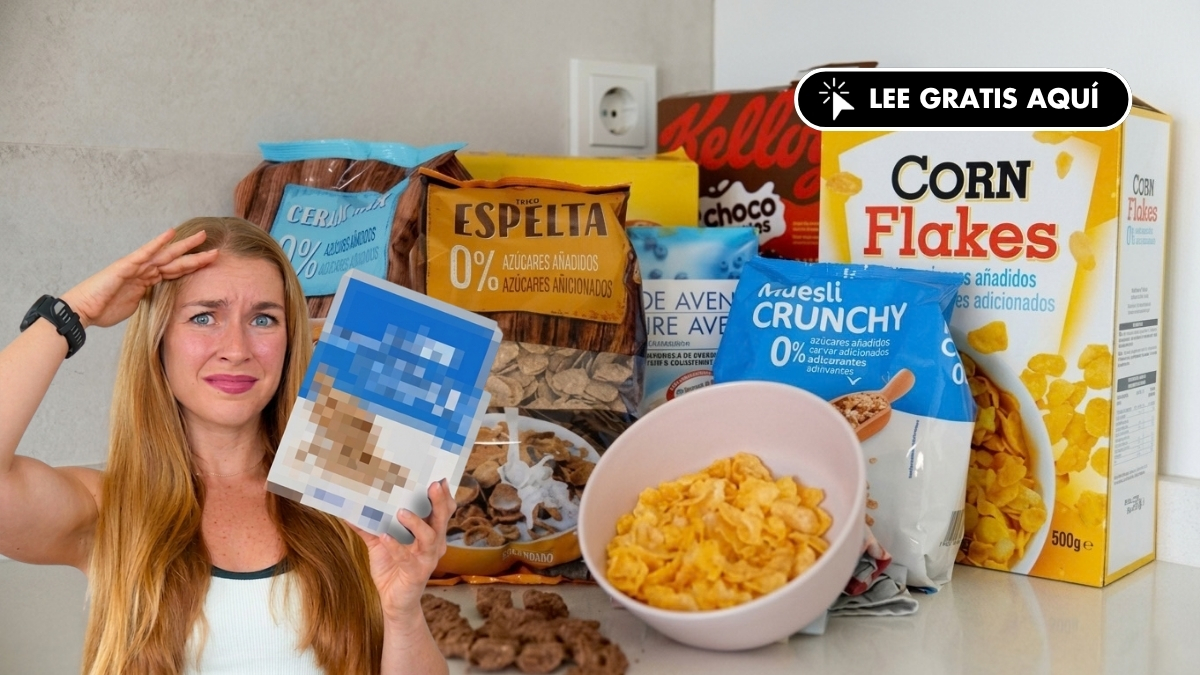
Finding a healthy breakfast option inside supermarkets like Mercadona may seem a difficult task at first glance; however, it can prove much simpler than you think. With the aim of bringing some clarity to this topic, the dietitian Lara Ibarra has undertaken an analysis of an essential food for many people’s breakfast: cereals. That is why she has created a ranking, taking into account all cereals, mueslis, and granolas in the supermarket, and has arranged them from those you should avoid to those options that everyone should buy.
The «worst» on the list
At the bottom of the ranking lie the most popular options among the public, which are, of course, characterized by their high content of refined sugars and low-quality fats.
Rank 12: Milk-filled cereals or chocolate and hazelnuts
With 38 grams of sugar per 100 grams (equivalent to about 10 sugar cubes), they occupy the last place in the ranking Lara has made. In the words of the nutritionist: «I would not consider these cereals a healthy option, something to have frequently, but rather an occasional dessert when we fancy it».
Rank 11: Chocodays or Choco Crispies
They provide around 25 grams of added sugar per 100 grams (more than 6 sugar cubes). Although they use wholemeal flour, they still carry too much sugar: «They raise our blood glucose levels very abruptly and the result is that we feel hungry again quickly».
Ranks 10 to 7: “Falsely” healthy options
Certain products look healthy at a glance because they contain fiber or dark chocolate, but they hide several ingredients that it’s better not to consume:
- Wholegrain cereals with dark chocolate (Rank 10): They contribute 20 grams of added sugar (5 sugar cubes) per 100 grams.
- Fruit muesli (Rank 9): It accumulates 27 grams of sugar (7 sugar cubes) due to dried and sugared fruits, plus 14 grams of fat from refined sunflower oil.
- Low-sugar granola (Rank 8): Although it contains not much sugar, it includes 23 grams of fat coming from the sunflower oil used in baking.
- Cereal with fiber / All Bran (Rank 7): They have the advantage of being whole grain and not contributing added oils, but contain around 10 grams of added sugar (almost 3 sugar cubes).
The best supermarket alternatives
Climbing higher in the ranking are options that contain a number of ingredients that are much more interesting when it comes to looking after health:
- Muesli 0% sugars and 0% sweeteners (Rank 6): Made with high-oleic sunflower oil, a fat profile that is better than traditional refined fats.
- Cereal Mix 0% added sugars (Rank 5): A mix of cornflakes, puffed rice, spelt, and oats with no added sugars or fats.
- Avena Crunchy (Rank 4): Made with whole oats and no added oils. They include only about 4 grams of sugar per 100 grams.
- Corn flakes (Rank 3): A very versatile option (usable for breading or eaten with milk) with no added sugars or fats, although it loses points for not being made from whole corn.
- 0% added sugars spelt wheat flakes (Rank 2): A filling alternative made from whole grain spelt flour, with no oils, sugars, or sweeteners.
The indisputable winner: Oats flakes
The top spot on the list goes to one of the most common cereals that often goes unnoticed: rolled oats. “This gold medal goes to them because they have no added sugar, no added fats, no sweeteners, and only one ingredient: rolled oats,” explains Lara.
Rolled oats (traditional or gluten-free) are affordable, very useful for a variety of meals (porridges, pancakes, cakes, or breads) and stand out for their high content of beta-glucans, a type of fiber that helps control blood glucose and reduce LDL cholesterol.
The 10-second rule for choosing cereals in any supermarket
If by any chance you have to shop at another supermarket and want to be sure you’re doing it right, the expert offers three very simple aspects you should look at when reading the labels before buying them.
Main integral ingredient
The first ingredient on the list should be wholegrain flour of the cereal in question, not refined flour to which bran has been added later.
Control added sugar
Ideally the product contains less than 5 grams of sugar per 100 grams. Up to a maximum of 9-10 grams can be accepted. If it exceeds 10 or 12 grams, it should be considered a dessert and not a daily breakfast.
Little added fats
A conventional cereal does not require added oils. In the case of mueslis or granolas, it is advisable to prioritise those that use high-oleic sunflower oil and whose fat values stay close to 10 grams per 100.
