
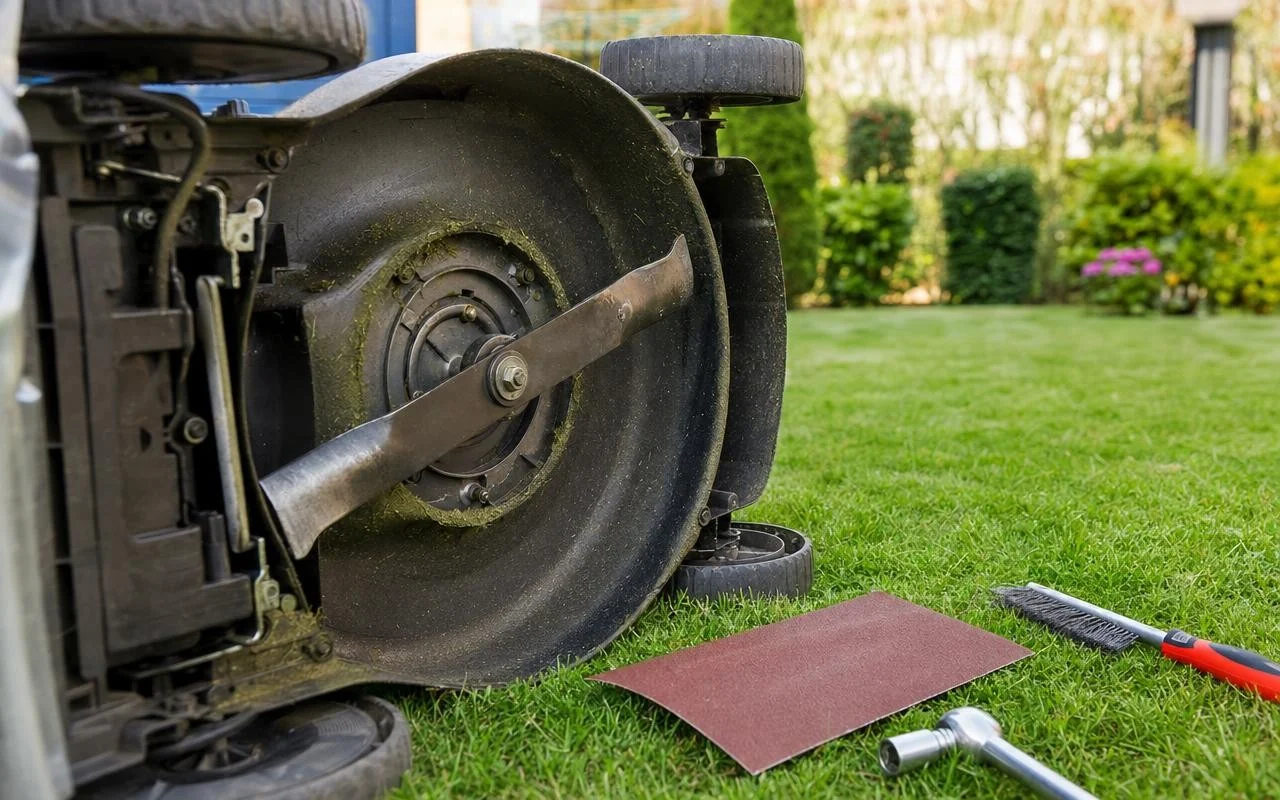
A yellowing lawn, torn blades of grass, and a mower that struggles: very often the problem simply stems from a tired blade. Many gardeners think they must haul out the big guns or go to a specialized workshop, which quickly becomes discouraging. Yet, for a blade that is only slightly dull, there is a quick touch-up that can be done in the garage in just a few minutes.
Regularly maintaining the mower blade helps achieve a clean cut and keep the lawn dense, without brown tips that show after mowing. Official guides mention grinders, metal files or dedicated sharpeners, very useful for a proper sharpening. But for a simple refresh, a tool you already use for DIY is enough: sandpaper, with the right grit and used with the right method.
Refreshing a mower blade with sandpaper: when is it a good idea?
A well-maintained blade cuts the blades cleanly, which limits diseases and the yellowing appearance of the lawn, Lidl’s practical guides remind. Conversely, a dull blade tears the grass, leaves frayed ends, and forces the machine to exert more effort. Using sandpaper is suitable when the edge is simply rounded, without deep chips, cracks or visible deformation.
For a blade that is very worn, with pronounced nicks or a bent edge, light sanding is not enough. Specialized sites remind that it’s better to switch to a metal file, to a drill-mounted sharpener, or even replace the part if the steel looks worn by age. Emery paper remains a touch-up solution, not a miracle cure for a blade at the end of its life.
Which sandpaper to choose and how to prepare the mower safely
Not all abrasive papers are equal. Quick tutorials by FastPlus specify choosing a metal sandpaper with a medium grain, ideally between 80 and 120, rough enough to erase small imperfections without digging into the edge. A coarser grain would remove too much material, while a grain too fine would be more suited to finishing. This refreshing work generally takes barely a quarter of an hour.
First and foremost, safety matters: for a gasoline mower, remove the spark plug; for an electric or cordless model, unplug the plug or remove the battery, as HouseDigest and FastPlus remind. Experts also advise tilting the air filter housing upward to prevent leaks, then removing the blade following the manual. Gloves, goggles, and a dust mask remain strongly recommended.
Express steps to sand the blade and keep a well-balanced mower
Once the blade is removed, clean dirt and grass residues with a brush or cloth, then clamp it in a vise with the edge facing upward. The sanding is done following the existing angle, without creating a new bevel, in small regular motions and without forcing. STIHL recommends then removing any burr with a finer emery paper. Finally, repeat the same motions on the other side to remove the same amount of metal.
